
Standfirst: Fresh from winning the HICAP Tech Challenge, Martha Waslen is taking DayAway back to its B2B roots with an AI-ready platform that promises to replace hotels’ fragmented systems, unlock revenue beyond the room and make experiences discoverable by the next generation of booking agents.
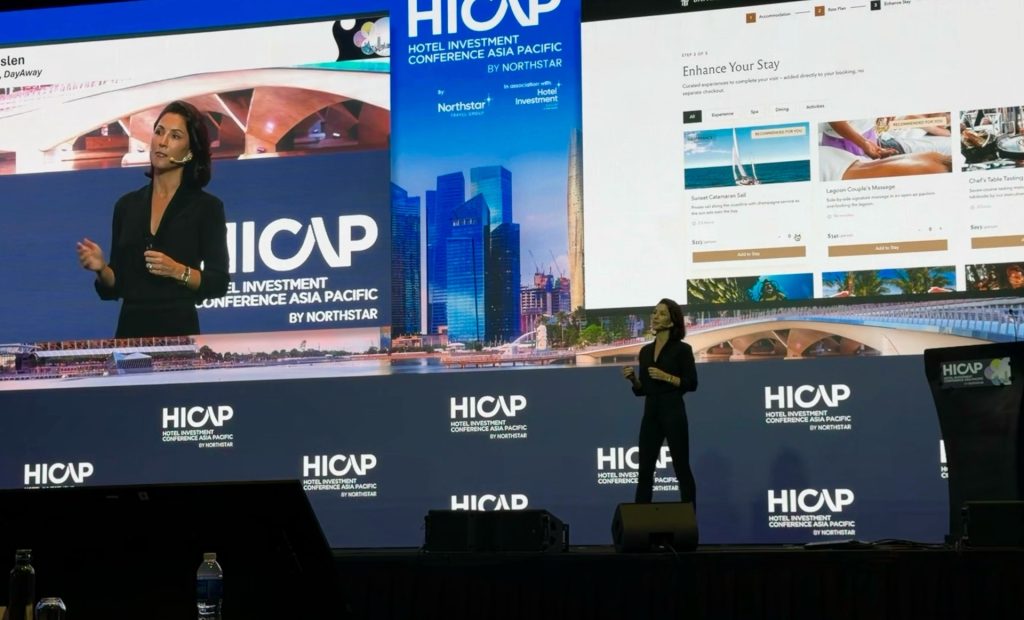
Martha Waslen did not expect to win but when her startup, DayAway, took the top prize at the HICAP Tech Challenge in Singapore recently, competing against giants such as Stripe, RateGain and Canary Technologies, she took it as validation for the new platform she’s built.
“The audience in the room were decision makers,” she says. “They recognised the value of what we’re building.”
What DayAway is building is aimed at replacing the tangle of tools hotels use to sell everything beyond the room. “Most hotels are using between eight and 10 separate systems to manage things like spa, dining, activities, gifting, upselling,” Waslen says. DayAway’s pitch is to swap them for one unified, AI-optimised platform at a fraction of the cost.
The early days of DayAway
DayAway was launched in 2020, during the pandemic, to sell day hotel experiences to consumers who suddenly couldn’t travel outside their own borders. It signed Raffles Singapore as its first hotel partner in 2021 and grew its consumer marketplace beyond Singapore.
It made the pivot to B2B about a year ago “because as a B2B2C marketplace, we were always serving two sets of customers and spending so much to acquire and service both, so ultimately we chose the hotels as our primary customer and we feel our B2B solution is the best way to serve their interests long term”.
But Waslen, who came from the luxury ecommerce space, does not regret the consumer years. They taught DayAway how guests want to buy experiences from a hotel, and how they want them packaged. As the business grew, hotels began asking it to plug into more of their back-end systems so they could bundle spa, dining, gift cards and activities, and cross-sell between them.
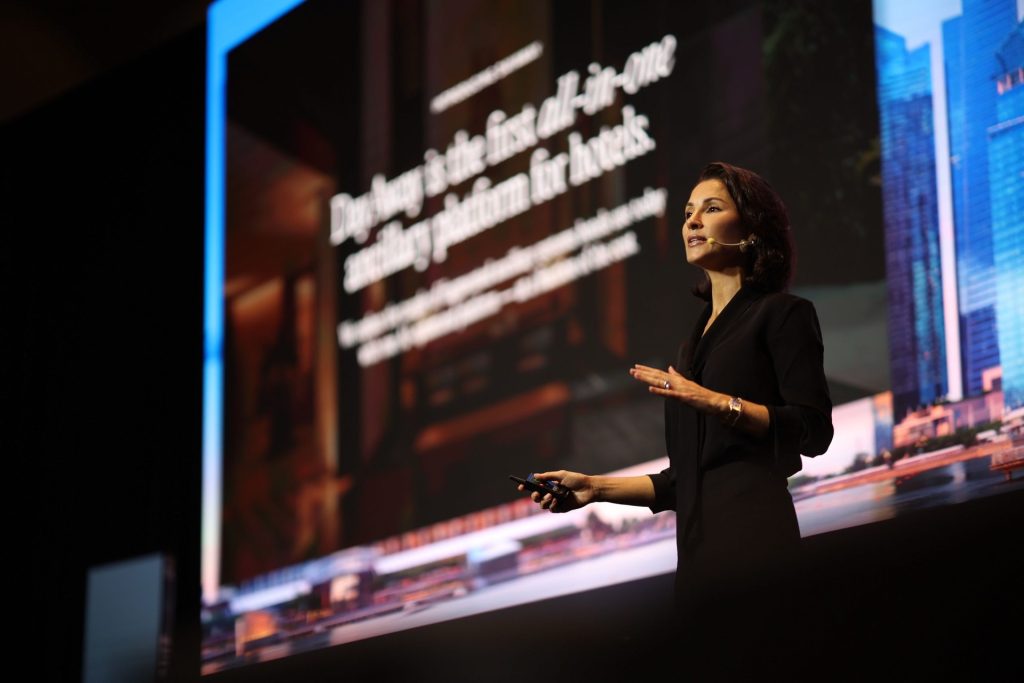
“That is when we saw behind the curtain,” she says. “Every department ran its own system, and packaging across them was hard.”
That’s when it started building the single, AI-optimised platform that brings data and inventory into one place. “Now hotels can use AI to package, price and upsell dynamically, and guests can plan the whole stay in one journey,” she says.
In a sense the company has come full circle, she adds. “DayAway always meant to be a B2B product. But during COVID we could just move faster as a B2C platform. This is coming full circle to our original goal.”
Right place, right time
The timing is working in DayAway’s favour. “Hotels are actively looking for vendors that help them consolidate systems,” Waslen says. In her view they want five things:
- Lower software costs
- Simpler operations
- A better guest experience
- More revenue, as the focus shifts from RevPAR to revenue per available guest
- Unified data and inventory, so AI can package, price and upsell dynamically
She adds a sixth benefit that hotels are only starting to weigh. Once ancillary inventory sits in one system, it becomes far easier for AI booking agents to see. In a world where agents shop on travellers’ behalf, a spa slot or a dinner package that no machine can discover may as well not exist.
One stack, China included
DayAway’s first targets are independently owned and operated hotel groups in Asia Pacific, specifically those with properties in China. The company has launched servers in China and says it complies with the country’s data privacy rules.
Waslen sees that as an edge over US and European rivals. “Most hotels have to have one tech stack for China and another for everywhere else,” she says. “DayAway is truly global.”
The product can serve brands headquartered anywhere, but groups with a slice of their portfolio in China get the clearest win: one stack across every property. Closer to home, the team is working the network it has built over six years across Singapore, Hong Kong and Tokyo.
A first major contract has been signed and will be announced shortly.
The product suite is also getting bigger. DayAway has acquired Inipod, the development company that built its platform as a contractor in the early years. Inipod had already built its own suite of hotel operations tools, covering concierge, housekeeping, turnover management and in-room dining. Those now join DayAway’s offering.
The team stays lean, about 10 people split between Singapore and a tech centre in Ho Chi Minh City. “Luckily, in the age of AI, we’ve been able to keep the team small,” Waslen says.