Which doctor to call? Hepstar’s here to help.
Most travellers will nominate their chief concern when travelling overseas – along with losing their passport – as the prospect of needing medical help. Who to contact? How much will it cost? Can I trust a local doc?
These concerns are being addressed by Hepstar, an API-based technology company, in a partnership with Air Doctor.
Hepstar distributes multiple travel ancillary products and performs revenue optimisation through its platform for travel partners, while Air Doctor connects travellers to local doctors around the world using its multi-lingual, location-based App.
The service enables users to access a network of more than 20,000 doctors across 75 countries for qualified medical care.
Travellers can book clinic and home visits or phone and video consultations 24/7 “with trusted doctors, wherever they are,” Hepstar says.
The Air Doctor App is translated to seven different languages and the video consultation is available in 21 languages.
Hepstar adds, “The Air Doctor offering addresses a void by providing accessible and discounted outpatient consultation and treatment opposed to emergency, inpatient coverage synonymous with most travel medical insurance offerings.”
Let me think: Did I book this tour with Expedia or Google?
Roughly half of people who book tours and activities online don’t recall which company they booked through. Was it Expedia, Viator or GetYourGuide?
Forty percent think they booked “through Google”, and almost one in five believe they booked through social media apps – “places that don’t typically sell tours and activities”, according to research undertaken for a report presented by Arival and Phocuswright.
‘The 2023 Experiences Traveller’ report comes ahead of the Arival 360 Conference in Berlin, the global conference devoted to tours, attractions and travel experiences.
The report revealed a general lack of awareness of operators and online brands that sell tours and activities, “reflecting the fragmented nature of the market, and how competitive the online landscape is”.
“Finding and choosing things to do remains stubbornly difficult for travellers,” said Douglas Quinby, co-founder and CEO of Arival.
“It’s clear from our findings that the sector suffers from a lack of brand awareness, and the online marketplace is also far more competitive,” continued Quinby.
“This shows just how important it is for travel experiences brands to have robust marketing across multiple online and offline channels, making it as easy as possible for travellers to find and book their experiences.”
The Arival 360 Conference takes place in Berlin from 5-7 March.
Cruise ships get up to speed with Starlink.
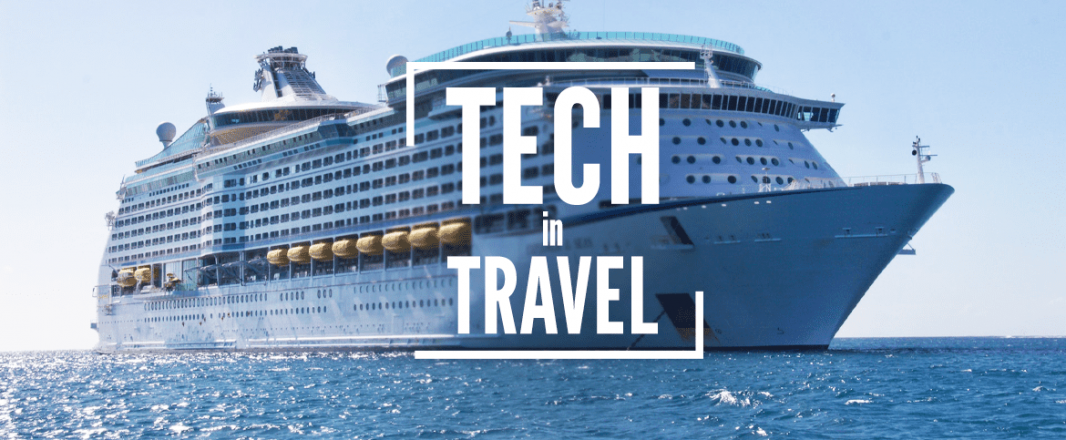
Cruise ships are moving quickly to bring online connectivity to passengers that matches their internet experience onshore.
SeaDream Yacht Club and Royal Caribbean Group’s brands (Celebrity Cruises, Royal Caribbean International and Silversea Cruises) have announced that they would implement Starlink for improved internet connectivity
Utilising low Earth orbit (LEO) satellites and operated by SpaceX, the technology offers a more stable and faster connection for small-ship operators, as well as the largest cruise companies.
Carnival Corporation is in the process of rolling it out on its worldwide ships, beginning with Carnival Cruise Line and Aida Cruises since December 2022. The plan is to expand it to Cunard Line, Holland America Line, Princess Cruises and Seabourn Cruise Line, as well as P&O Cruises (Australia), Costa Cruises and P&O Cruises (U.K.).
Hurtigruten Expeditions is another independent company to employ Starlink onboard, offering the service for free to both guests and crew.
Source: Travel Age West
Hotels hold their ground with OTAs
SiteMinder’s Hotel Booking Trends report has found that travellers continued to book directly with hotels last year with research revealing hotel websites globally were more important as a revenue source in 2022 than in 2019.
Hotel direct bookings had risen in almost 50% of markets in 2021 and were down in 42% of markets in booking channel lists in 2022. However, hotel direct was on a par with 2019 in 72% of markets and still ahead in 28%.
Hotels bookings via global distribution systems (GDS) increased with the resumption of business travel in 2022 with the channel ranking higher in the Top 12 list across 47% of travel markets analysed.
The GDS channel also re-entered the top five in France and Germany for the first time since 2018, according to the report.
Airbnb gained further ground as a booking channel in the report with the accommodation site ranking on 89% of 2022’s Top 12 lists compared with 28% in 2019.
In about a third of destinations analysed, Airbnb ranks seventh in the lists of highest booking revenue sources.
James Bishop, vice president of ecosystem and strategic partnerships at SiteMinder, says, “Our new Hotel Booking Trends analysis shows a clear shift in the accommodation industry toward a holistic hotel commerce strategy that ensures hotels can attract the right guests at the right time.
“From our Top 12 lists, we see hoteliers globally adopting new and established channels — both direct and indirect — to truly optimise their distribution approach, allowing hoteliers to be seen and booked according to evolving seasonality and changing traveller preferences.”
SiteMinder analysed data from more than 100 million hotel reservations last year to reveal Booking.com as the most popular booking channel across its Top 12 lists of highest booking revenue sources.
Overall, OTAs were ranked in the top two positions in 79% of SiteMinder’s Top 12 lists in 2022, climbing from 37% of lists in 2021.
Source: Phocuswire