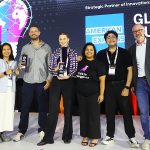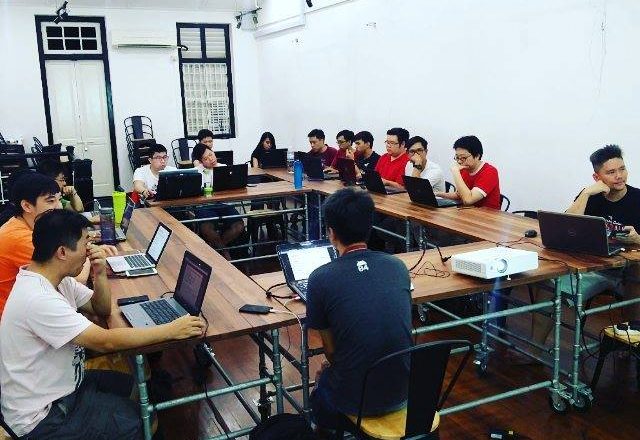
It is simply not enough to earn a classic degree from a prestigious university anymore as digital technology ‘disrupts’ virtually every industry, from farming to hospitality.
The pace at which businesses produce new technologies that are capable of changing the way we live and operate is incredible and shows few signs of slowing down.
Scuttling through the maze of startup booths at Echelon Asia 2016 could only be proof of that, as hundreds of individuals proudly displayed their life’s work, in hopes of securing funding to take their ideas to the next phase of development.
We live in undoubtedly exciting times, but the question arises as to how long we can keep up this level of innovation. The need to incorporate digital skills into our education system is now more pressing than ever. If we are going to keep up the momentum, we need to feel confident that the next generation is prepared!
One individual taking matters into his own hands is angel investor and serial entrepreneur, Douglas Khoo, who opened his own coding and programming academy in Malaysia.
“As an angel investor, one of the key issues that I always find is that there isn’t enough developers out there… I thought maybe it’d be good for us to put up an organisation where we can actually train young adults,” he said at Echelon Asia.
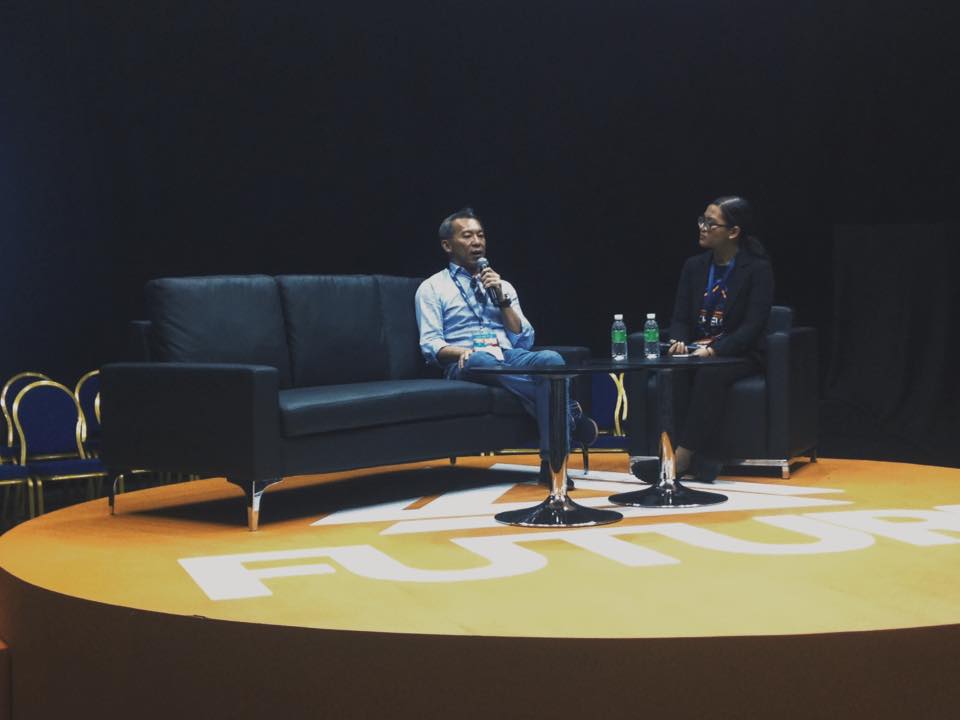
Khoo started The Coding Shophouse in Penang to provide young 20-somethings with the opportunity to develop essential programming skills that would prove useful in the new digital economy. “It’s for anyone who is above 20 years, currently working in Starbucks or a McDonald’s but wants to learn a different profession.”
The Coding Shophouse provides short (2 to 3 months) coding courses ranging from basic programming to how to build an Android app. The courses are heavily subsidised and followed by internship placements in Malaysia-based startups.
It is easy to envision a world in the not so distant future where programming is as natural as a second language but Khoo predicts that “any student of the future, when asked what language they speak, will include coding language. It’s going to be the norm in 10 years time.”
After having been successful as a serial entrepreneur (most notably co-founding Qunar.com), Khoo saw The Coding Shophouse as a way to give back. “There’s a need to pay it forward. Given that I was fortunate and because I came from a poor family and didn’t have an education, so I thought if someone gave me that opportunity early on, why can’t I give those opportunities to many other people? That’s why we started The Coding Shophouse.
“It’s not so much the need to generate any more money, but to have access to startups and provide mentorship to them,” he added.
Walking around the startup booths, overhearing buzzing conversations about ‘cloud-based platforms’, ‘UI’ and ‘UX’ at Echelon Asia 2016, it’s almost difficult to believe that there is a shortage of programmers and IT engineers in the world.
Numbers are indeed growing as coding academies and free online courses are becoming more accessible than ever. However, Khoo envisions programming courses being implemented in the public education system, starting at a primary level, and not just a recreational activity.
“That is the purview of the government, a long term thing. We want to be able to satisfy short-term needs now, which is why we’re focusing on young adults… we need a bunch of people that will be prepared for the next economy.
“I think every entity, whether a government or private sector, or even individuals, needs to participate in some form to educate the next generation.”
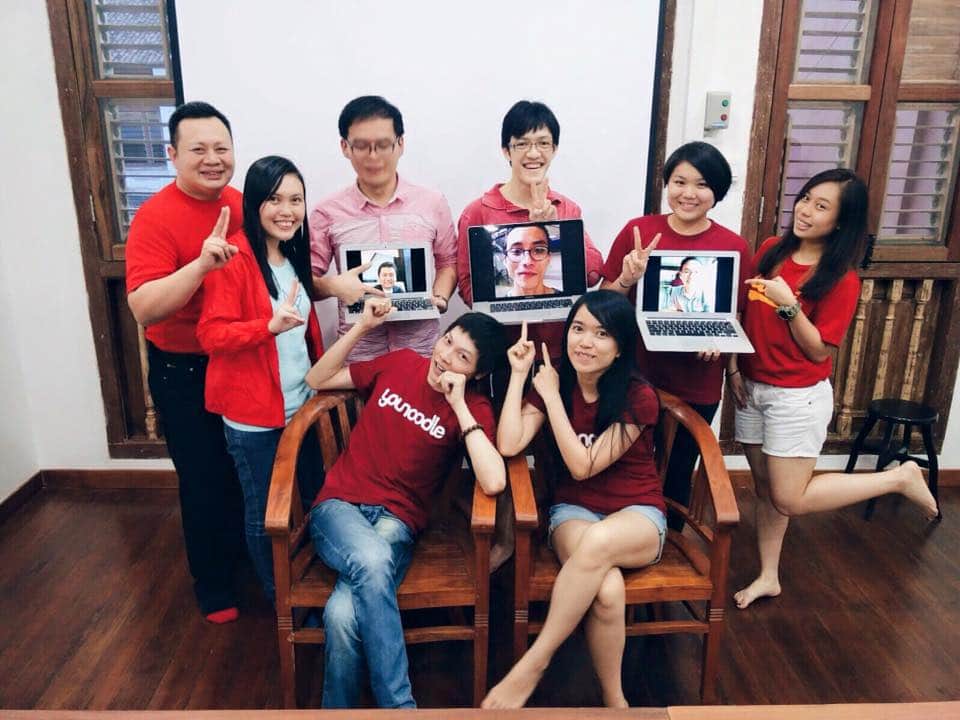
As with everything, there is a limit to what can be taught to students. While programming language can follow a very systematic and structured curriculum, skills like creativity and problem solving can only be nurtured, never taught directly.
“It’s basically down to exposure and experience. The more you are exposed to other cultures, languages and interests, the more creative you become. We need to be able to provide [students] with a conducive environment where they can experiment and learn new things,” said Khoo.
What is particularly admirable about Khoo’s approach to educating the next generation is not just his devotion but how he views it as a tool to empower students to take control of their own future.
He hopes that it will enable them to pursue their own business ideas in the future, confident in the fact that they have the necessary skills to give it a real shot.
One sceptic in the audience argued that cultivating a culture of perhaps overly ambitious individuals more keen on pursuing ‘every little idea’ rather than settling for a traditional job role could ultimately create another dotcom bubble scenario.
Yet, it would be close-minded and unreasonable to assume that a proficiency in IT and programming will only lend itself to people creating fun and playful apps of no particular social value.
It equally ignores the influence technology has fundamentally had on most job roles and on working culture as we know it.
Khoo argued that “what may not work now, may work in the future,” arguing that it would be very difficult for any single individual to tell what idea could “be the next Facebook or Twitter.”
Staying open and receptive to new ideas and possibilities is arguably the very crux of innovation.
“Now more than ever, the failure rate is going to be high [but] I don’t think it would appropriate for any of us to try and stop people from dreaming big,” said Khoo.