Ten years ago, we struggled to get the word “inspiration” mentioned at online travel conferences. Everyone was more interested in clicks, conversions and transactions.
I remember a debate we had at the WIT Conference over “Inspiration vs Transaction” and the dreamers among us voted with our hearts but those who voted with their heads won the day.
So it was interesting that at Phocuswright Dublin I started hearing threads of conversations on stage around inspiration except of course they don’t call it that, they call it “upper funnel”.
“Upper funnel” is the part of the value chain where online travel companies have failed to monetise – ie make money from. No one wants to pay for content that helps them dream (Freud would have something to say about that) – and countless startups have tried and failed to crack this piece of travel dreaming and planning. Most of them with “Trip” in their name …
Over the last 10 years, profits have been made at the transaction piece – when we click and book. And these are profits not to be scoffed at –Booking.com makes nearly 1m transactions a day, one third on mobile and 1 in 5 are corporate bookers.
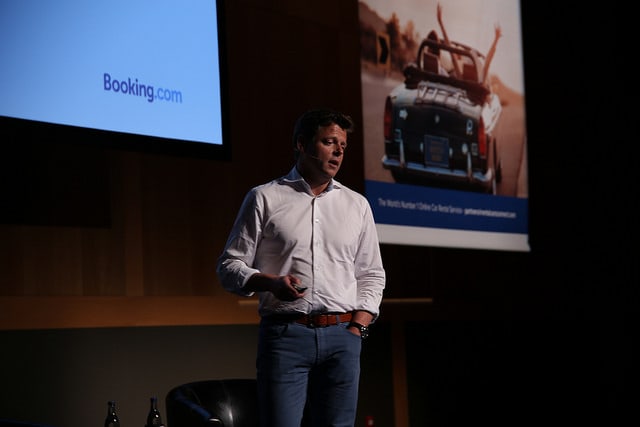
Peter Verhoeven: Ramen recommendations now part of the Booking.com repertoire
But even Booking.com is getting into the “upper funnel”. At Phocuswright, Peter Verhoeven, managing director, Europe, Middle East & Africa, talked about how the company was using content to inspire travellers and give them recommendations through its Destination Finder. He showed a video – Booking loves Ramen – of two friends on a quest to search for the best ramen.
Even on the meta-search panel, inspiration got a mention. Asked what his key differentiator was, CEO of Momondo Group, Hugo Burge, said he wanted to offer “more inspiring search”.
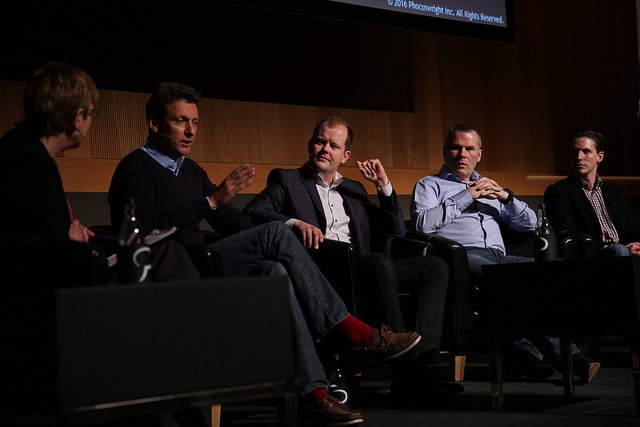
Momondo’s Hugo Burge (second from left) making his case for more inspiring search on the meta search panel
He reminded us that Momondo’s roots came from “owning the leading guide book in Denmark. “Momondo guides and places were all about experiencing travel like a local,” he said. The company’s kicking off a campaign around the value of travel – its Tripfinder product asks people for their personal tastes and recommendations – and in Germany, “our differentiator is about creating more emotional impact and inspiration”.
Skyscannner’s chief marketing officer Frank Skivington also talked about “using content to get further up into the funnel into the destination piece”.
This is in line with trends playing out in Asia too where Japan’s meta search business, Venture Republic, started working on the content piece more than a year ago and has created a travel blogger network of 600 for both its Travel.jp Tabiness and Trip101 businesses.
“Traffic to our Travel.jp Tabiness site has significantly increased. We’ve seen a non-stop over 50% of YOY growth in number of visits.
“The user’s journey in travel is long and complicated. We like to position ourselves to serve them at every different funnel of that journey, not just at the one for booking. That could provide a very different level of experience to users which would ultimately enhance our brand and competitiveness.”
He’s seen first hand evidence of how stories on his site have created emotional connections with users – citing an example of a woman who went to Japan specifically to pick blueberries because of an article she read on his site.
This move towards “upper funnel”, “inspiration” and making “emotional connections” in a world that’s ruled by clicks, data and conversions is being forced largely by how expensive it is getting to acquire traffic through Google, which happens to be not only travel’s most powerful platform but also its biggest nemesis.
Yes, it’s been said before – but it bears repeating especially at a time when the world’s gone mobile and life is being broken up into micro moments and guess who owns the bulk of those micro moments in our lives? Google, Facebook, messaging apps … (Booking.com has also launched messaging features in its customer service, by the way)
So it stands to reason that travel brands cannot keep feeding the Googleplex which threatens their very existence and have to find other ways of winning new customers and keeping old ones. The “churn and burn” model is expensive when margins are getting slimmer, now you’ve got to “win and keep”.
The talk by Google’s Oliver Heckmann sharing its plans to become everyone’s personal travel assistant – which scared more than a few people – has given this need more urgency, and we all know fear is a mighty powerful motivator.

Gary Morrison – touching hearts with Dream Adventures
Expedia Worldwide’s Gary Morrison also showed their Dream Adventures video where the team used 360-degree camera technology to bring the world to kids too sick to travel.
It seems that in minding their heads, online travel giants are having to tap into their hearts to win ours.
Looks like Game of Thrones, Season 6, also just started in online travel.