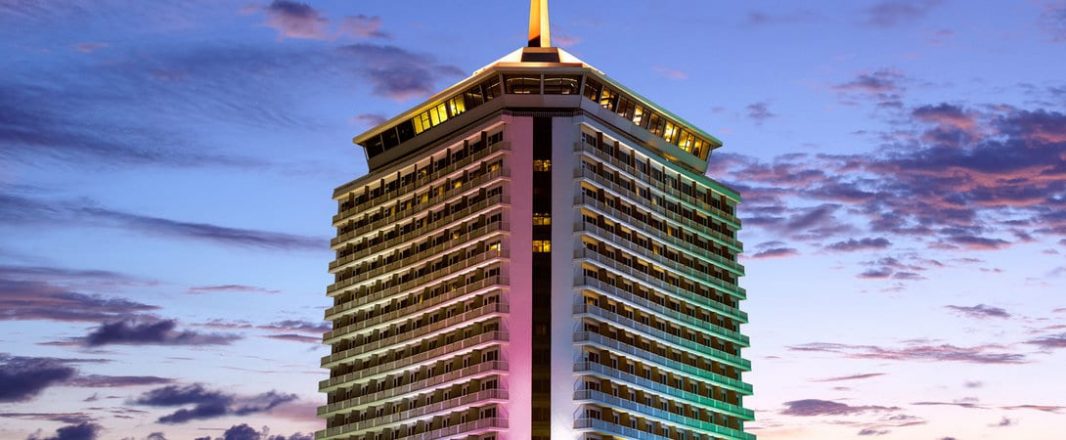

The Thai government has, after all, declared this “Miracle Year” and has set aside a US$200 million budget to make it so and hoteliers are hopeful that an aggressive and high-profile campaign to promote the country, combined with individual initiatives by the private sector, will do the trick.
General manager of the Dusit Thani Hotel, Bangkok, Alex Willats (left), is forecasting an uplift both in the high end corporate traveler and MICE segment supported from regional destinations.
“One would hope that those companies, groups and travelers who have not visited Thailand due to situations preventing this in recent years, will choose the destination sometime in the coming year.
“It is important to note that positive publicity and a very public and well drilled marketing and promotion campaign by tourism bodies needs to be in place to drive awareness regionally and globally to help support the domestic initiatives already in place.”
His confidence in the regional MICE segment is based on sound ground. Research recently conducted by American Express Meetings & Events shows that while meetings demand across the world is on the rise in 2012, activity is strongest in the Asia Pacific region.
Of the meeting planners surveyed, 57% of respondents from the Asia Pacific region expect the number of meetings to increase this year, compared to 42% of North American, 50% of Latin American and 51% of European respondents.
In addition, budgets within the region are also expected to increase, with 30% of respondents anticipating this trend, compared to just 20% globally.
Higher travel and meeting costs are anticipated, driving the need for companies to focus on striking the right balance of cost effectiveness and meeting success when selecting venues, according to the inaugural American Express Meetings & Events 2012 Meetings Forecast.
This is where things could swing in favour of Bangkok where prices remain competitive in contrast to other cities such as Singapore which have become increasingly expensive and space is hard to secure.
Said Willats, “Bangkok is an extremely competitive city in terms of supplier pricing and with new additional supply at all levels of the market this year, it will certainly make this more demanding.
“This year already we have seen an uplift in average rate with no price resistance and this can be attributed to the fact that other major capital cities in particular in South-east Asia have a far higher selling price than Bangkok which continues to offer excellent value for money in comparison to competitor cities such as Singapore, Hong Kong and Kuala Lumpur. ”
There is no doubt though that confidence in Bangkok as a destination needs to be restored and meeting organisers remain nervous that their events could be disrupted by incidents, whether natural or political.
Willats said the recent bomb blasts in Bangkok did not result in “a significant softening of the booking pace nor have we received cancellations as a result of these recent events in isolated suburbs of Bangkok”.
“Of course, if these indiscriminate actions were to continue, I am sure this would have an impact on inbound business particularly as countries would initiate travel bans/ warnings which would automatically lead to travelers rerouting to other destinations for both business and leisure as we have seen happen in the past.”
The floodings of late last year had a major impact on business in the city. “As like many businesses we took steps to protect the building, our guests and staff as a precaution should any waters have reached us. Thankfully the waters did not breach the city centre and in fact it remained a very good time to visit the city,” said Willats.
He said that there has been “some recovery in visitor numbers typically led by the corporate segments although a resurgence within the leisure market is now starting to develop”.
“We are currently seeing daily revenues generated similar to those of 2008 which demonstrates a confidence in the consumer and a preparedness to pay the price. We continue to remain buoyant about the outlook ahead for 2012 and certainly see opportunities to develop our business channels across a number of new and mature segments.”
He said the hotel would develop its presence and business network across key geographic segments in South-east Asia. “We have strengthened our sales and operations teams with both Mandarin and Cantonese speaking staff and we have implemented a number of amenities and benefits we believe will help us attract Chinese clients to the hotel.
“We believe it will be our regional travellers who will support us through the next 12 months and we have adjusted our marketing strategy accordingly to suit this.”