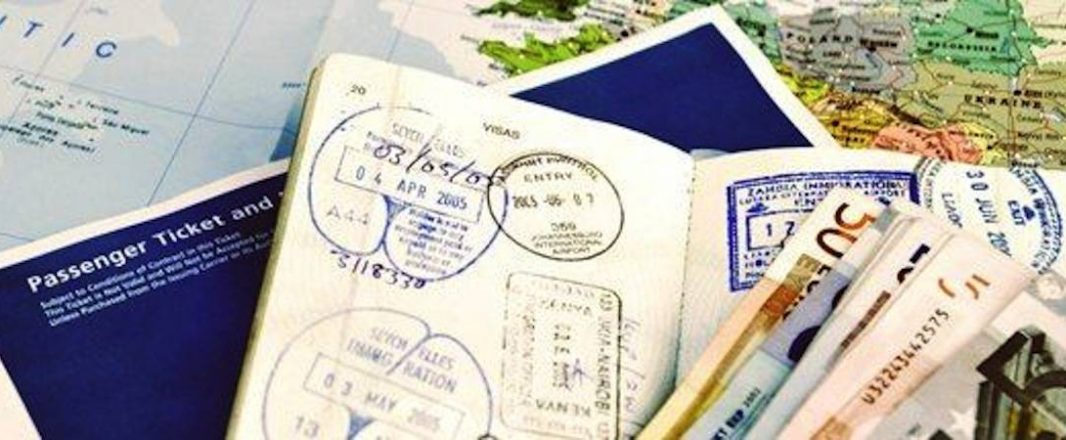
Imagine Asia Pacific travel without red tape? Why, the potential would be enormous. And the number one red tape that David Brett, President of Amadeus Asia Pacific, would like to see addressed is “VISA APPLICATION” procedures.
.gif)
David Brett
“There are still many countries across Asia Pacific, China and India included, that require getting a visa ahead of travel. I believe the industry would benefit greatly from streamlining these visa processes. This would require extensive collaboration between many key players,” he said.
Believing it is possible for the industry to work together to address this red tape which is impeding flow of tourism especially from huge markets such as India and China, Brett said, “It wasn’t that long ago that the industry relied on paper airplane tickets. In fact, Amadeus played a key role in changing the industry from paper to e-ticketing, which is now common practice for travel. Can you remember when you last used a paper ticket for travel? Collaboration is key to make our wishes come true.”
He added that countries would benefit from making the application for a visa a stress-free, seamless process. “Look at the positive impact to tourism following the change in visa processes for Chinese visitors to Thailand in 2009. Last year, Thailand received over two million Chinese tourists, up from 777,508 in 2009. The result is greater travel and increased spend. Something we can all benefit from.”
The second red tape Brett wished to see removed is “IMMIGRATION FORMS”.
“I often travel three out of every four weeks and so I am no stranger to these forms.”
WIT asked Brett what his two top wishes were, following the release of the Amadeus study, “Shaping The Future of Travel in Asia Pacific: The big FOUR Travel Effects”. The Red Tape Effect was the second of the four – the first being, Me (see article), and third and fourth being Leapfrog and Barbell respectively, which we will cover in subsequent weeks in this series of articles.
 In the Amadeus study, many travellers shared the same wish as Brett – the ability to travel seamlessly across Asia Pacific the same way they can in Europe.
The good news is that the walls obstructing trade and travel in APAC are slowly but surely falling due to greater economic convergence and integration, said the study, and this would lead to greater travel, be it for business or pleasure.
An indication of this liberalisation is in free trade agreements (FTAs), which increased from 53 in 2000 to 250 last September, with 103 now being implemented.
As FTAs draw economies together and stimulate trade, they also help increase travel between countries. This easing of trade restrictions across the region has stimulated intra-regional economic activity with intra-Asian trade accounting for over 55% of the region’s total Asian trade in 2011.
Visa requirements and air travel agreements are also being liberalised in the wake of FTAs, which will lead to huge growth, not just in numbers of people who are able to travel but also those who need or want to travel.
Regional governments are also seeking to cut the red tape that impedes travel, including restrictive visa policies and air transport regulations. Currently 6% of travellers cite visa restrictions as their main impediment to travel, ahead of others such as lack of funds, lack of time or company travel restrictions.
.gif) Chinese and Indian travellers are especially affected, as they have to apply for visas to most APAC destinations. For them, this is one of the main obstacles to travel, adding time and increasing costs. Realising this some countries, such as Malaysia, eased visa application procedures and set up consular offices in more towns in these countries.
Chinese and Indian travellers are especially affected, as they have to apply for visas to most APAC destinations. For them, this is one of the main obstacles to travel, adding time and increasing costs. Realising this some countries, such as Malaysia, eased visa application procedures and set up consular offices in more towns in these countries.
APEC (Asia Pacific Economic Cooperation) is already making red tape less of an issue for business people through measures including the APEC travel card and visa waiver programmes.
With the implementation of the ASEAN open-skies agreement by 2015, governments are liberalising air transport regulations, allowing for new airlines to launch, as well as open more points within their countries.
An example is India, which relaxed the rules last September to allow for foreign ownership of up to 49% for existing local airlines. This has enabled AirAsia, Asia’s largest budget carrier, to set up AirAsia India, expected to start operations by the end of the year.
The Australian government is already looking at bringing down the red tape for Chinese travellers by introducing “label free visas” for Chinese travellers, which means they won’t require a visa that physically goes into their passports. Instead, information will be electronic and can be seen by Australian customs when they scan Chinese visitors’ passports.
“This will ultimately streamline access for independent Chinese tourists. Imagine if this process could be replicated across Asia Pacific?” said Brett.

The Amadeus report predicted that by 2030, India, China and Indonesia would dominate travel expenditure in APAC. At the same time there will be shifts in inbound travel markets, especially for business travel whether at the small-to-medium enterprise (SME) or corporate level.
China will also become an important inbound market due to its importance to the global economy, with strong traffic from North America and Europe as businesses place more importance on China as a growth market.
APAC is also becoming more important to businesses within the region, and this will act as a significant stimulus to drive intra-Asian travel as more business people travel within the region to meet customers, visit suppliers or business partners.
.gif)
Business travel to markets that currently are marginal, such as Papua New Guinea, Mongolia, and Myanmar will see strong potential for growth due to their natural resource base. Inbound arrivals are growing rapidly – from a small base of 7% annually in Mongolia and 12% in Papua New Guinea and Myanmar, notably from China as companies increasingly seek new sources of resources, and new markets.
But China will rule them all as travel patterns in the next decade will be dominated by China, which will be the key destination for both business and leisure travel, growing from what is still a relatively small base, said Jayson Westbury, CEO of the Australian Federation of Travel Agents.
“China is making huge investments in infrastructure and with the growing importance of China as a market and a source of supply, travel to China (business and pleasure) will grow exponentially. The main challenge is lack of English skills, but the Chinese are developing these and will work this out. Australia is in a box seat to be an important part of the China success story.”
Amadeus predicts that these barriers or red tape, will come down in the future.
For more, click on “Shaping the future of Asia Pacific travel – the big FOUR travel effects” – 29 January 2013
• Next instalment, Leapfrog Effect
• Photos & charts courtesy of Amadeus