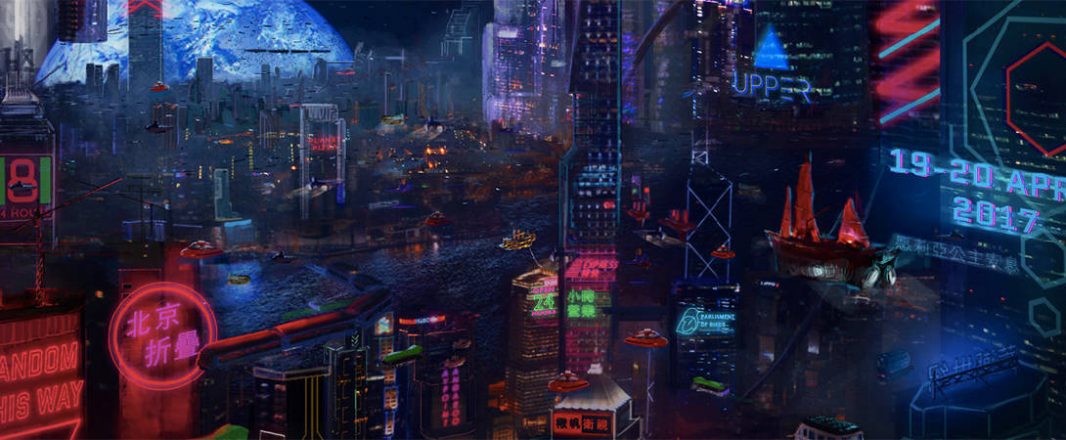
I believe every now and then we should venture into uncharted territory, whether that’s in travel or in life in general, and so when I was asked to get involved in the first science fiction conference in Hong Kong, I didn’t hesitate.
Melon, founded by Fritz Demopoulos, serial entrepreneur and co-founder of Qunar, aims to be the sci-fi bridge between East and West and, like WIT, addresses the digital disruption in this particular industry.
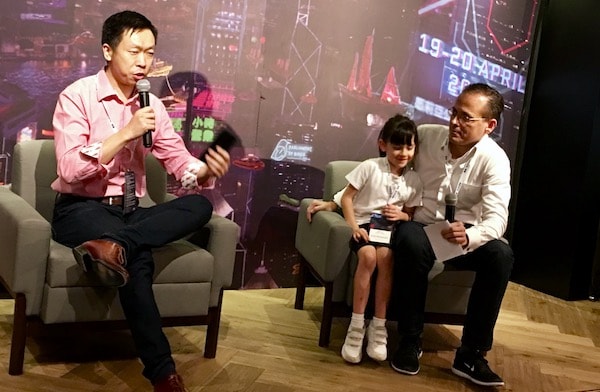
Founder of Melon, Fritz Demopoulos and daughter Emma on stage to interview Andy Tian, founder of UpLive, a Chinese live steaming site, the latest media phenomenon in China.
It’s a huge and fragmented industry (again like travel) because if you think about it, content cuts across multiple media these days – books, video games, mobile games, movies, television – and involves multiple stakeholders – content creators and owners, media, studios, production companies, etc.
At the heart of it is of course customers – and sci-fi has a huge fan base and a growing one, particularly in China where new authors are rising to make their mark, the most notable of whom is Liu Cixin, who wrote The Three-Body Problem, the first Chinese sci-fi breakthrough novel translated into English.
Lavi Tidhar, Israeli and London-based sci-fi author and commentator, said he never believed translated works would succeed and when asked why Liu’s work managed to cut through, said, “Honestly I do not know.”
But it clearly is a breakout moment for Chinese science fiction and, in general, works from Asia and Melon is perfectly timed to capture that inflexion point.
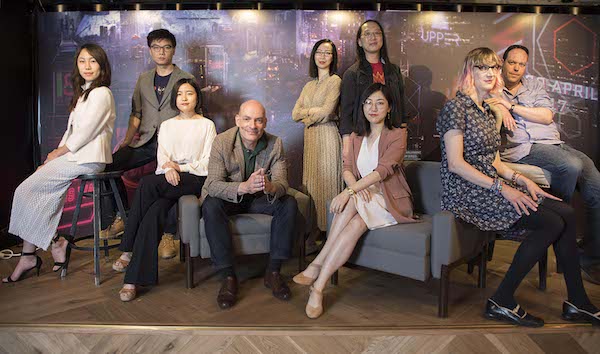
The cast of speakers at the first Melon in Hong Kong.
The one-day event, held at Eaton House, featured a sterling cast of authors and speakers from different fields – from lawyers to mobile games creators and from production studios like Lucas Films to new media like UpLive, a Chinese live streaming channel. The following day, authors went to local schools to meet and interact with fans.
As Demopoulos said in his opening, sci-fi is not a literary genre, it’s a state of mind, a state of being. It’s what I have always believed travel to be – that it’s not just about physical movement, about getting from here to there, but about a whole way of being.
As such, I found the conversations interesting and gleaned so many parallels between what’s happening in the sci-fi industry and travel and, to me, the writers (content creators) are like startups.
Here are the lessons I learnt that I felt could apply to the startup world.
1. Speak to your customers first before you start
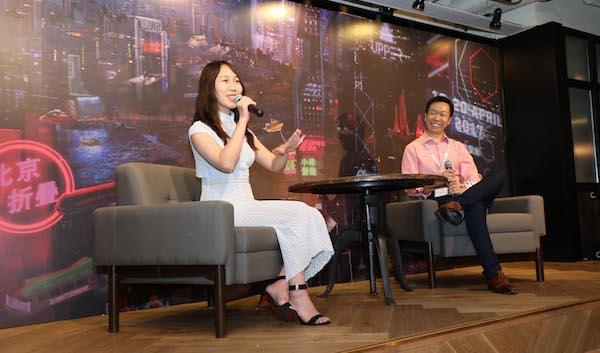
Hu Jingfang (left) talking about how “Folding Beijing” came to be.
It sounds basic but many startups start by solving a problem they think exist and then they create the product they would like.
Hu Jingfang, who wrote “Folding Beijing”, a novelette being made into a movie, was an economics researcher and studied astrophysics.
She recalled a meeting in Silicon Valley with a company which was coming up with a policy that could change the lives of tens of millions of people.
As she heard them speaking, she wondered, have you ever met the people you want to save? “They talk about global issues, and how technology can affect lives of workers, but have they really met then face-to-face and know their lives?”
And just as tech startups should live and breathe by experimentation, she sees sci-fi as “mental experimentation”.
2. Understand cultural differences
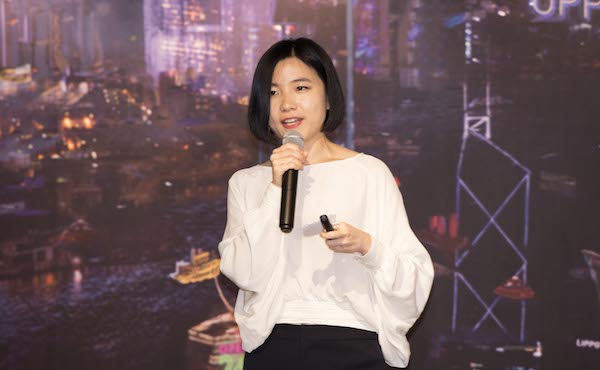
Anna Wu: “Chinese heroes do not have to drive a spaceship and do what they have to do to save the earth. Whoever fulfils their duties can be a hero.”
Writer and film and TV scriptwriter, Anna Wu, pointed out the difference between Chinese sci-fi heroes and Western ones. The former almost always embodies a strong sense of morality and fulfils a sense of duty.
“Chinese heroes do not have to drive a spaceship and do what they have to do to save the earth. Whoever fulfils their duties can be a hero,” she said. So if you’re writing for the Chinese audience, you have to understand what moves them versus copying Western stories.
In other words, know what it takes to be the hero of your own story.
3. It starts with a good story
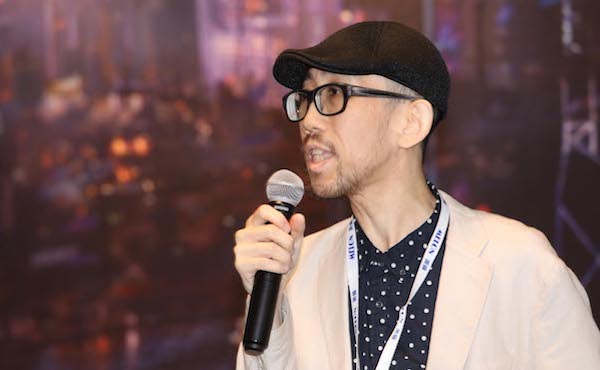
Albert Tam, author of “Humanoid Software” and film consultant on “Warriors of the Future”, Hong Kong’s biggest budget sci-fi movie at HK$300m, talked about the importance of a good story, over and beyond special effects.
“Not everyone knows what good sci-fi is, but everyone knows what a good story is. A story is about emotions, feelings – stories are global.”
Then you have to make the story accessible. “if you build a house, make sure you have windows,” he said.
4. Get emotional
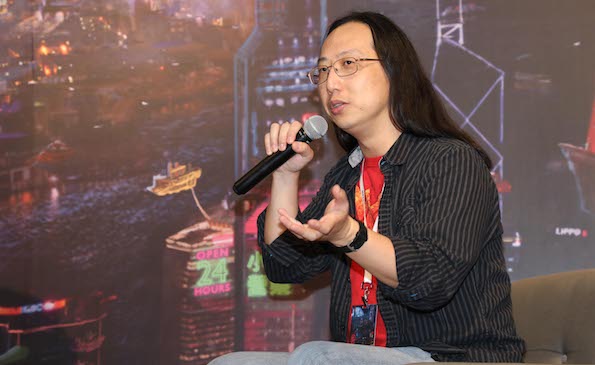
Coder Curtis Chen read stealth-read romance novels to learn about how to put emotion into his stories.
Curtis Chen, author of “Waypoint Kangaroo”, is a coder who loved to write. But he found he struggled with emotion so he stealth-read romance novels from his sister’s stash. It helped him put emotion into his stories. In this article, Chip Conley who joined Airbnb at 52 wrote of the lessons he learnt working with a tech company.
He wrote, “I’ll offer you some emotional intelligence for your digital intelligence.” Many young people can read the face of their iPhone better than the face of the person sitting next to them. I’m not saying young people don’t understand emotions. Our digital world is full of emojis, and the term “emo” didn’t exist back in my schoolyard days. But emojis don’t create interpersonal, face-to-face fluency. I was surrounded by folks who were tech-savvy — but were perhaps unaware that being “emo-savvy” could be just the thing to help them grow into great leaders.”
Beyond learning about emotion, Curtis also approaches his work with discipline and forces himself to write Flash Fiction, 500-word stories.
5. Get used to rejection and persist
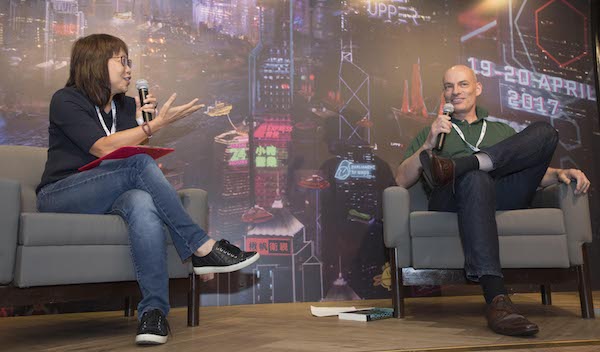
After many rejections, Andrew Bannister wrote three romance novels under a pen name to prepare him to become a sci-fi writer.
Andrew Bannister, author of “Creation Machine”, works in construction and in his first debut novel has created a fantastic world called The Spin.
It took him decades to get published under his own name and he go so fed up with rejection in the sci-fi genre that he wrote three romance novels under a pen name, which he wouldn’t divulge to me on stage.
His novel has been reviewed thus “… there’s enough great action, surprisingly morbid humour and great characters to make The Creation Machine an enjoyable and accessible ‘soft’ sci-fi cum space opera.”
He admits writing the romance novels made him a better writer.
6. Ideas should be universal but specific
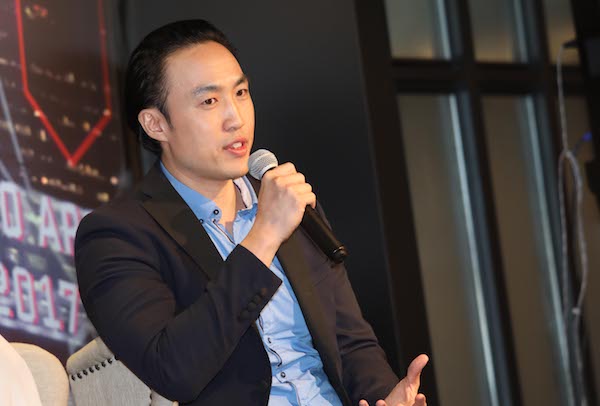
Derek Ting approaches his projects like a tech startup.
Derek Ting, actor, writer and producer of movies such as “Always”, “Agent” and “Supercapitalist”, approaches his sci-fi projects like a startup because he comes from the tech startup world.
He thinks of the idea first and “if am interested and curious enough to know more, I do tons of research”. Then he puts together a business model, thinks of partners who can bring it to life and seeks funding.
“Ideas should be universal but specific,” he said.
He sees an opportunity to tell Chinese stories generated by a culture that’s different from Hollywood, “Hollywood is grappling to understand that.”
Which explains why the movie “The Great Wall” collapsed by the box office.
7. It’s a full time thing
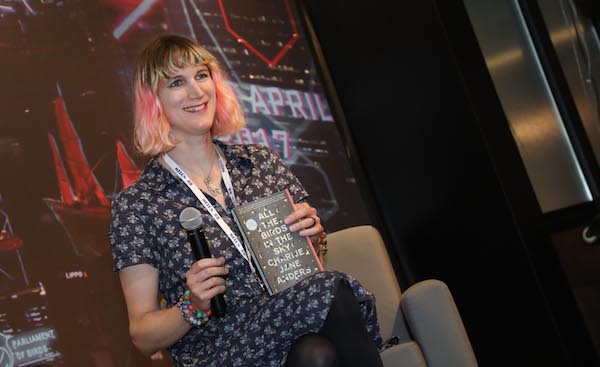
Charlie Jane Anders gave up her journalist job to focus fulltime on writing fiction.
If you’re thinking of keeping your corporate job and doing a startup part-time, forget it. Charlie Jane Anders, author of “All The Birds In The Sky”, was a journalist but quit so that she could focus fulltime on writing fiction.
It took her 10 years to get published and she sees new media channels like Netflix giving life to more marginal fiction like sci-fi.
Which is what we see happening in travel – the web and all its manifestations have given life to more marginal and niche startups.
8. Be original
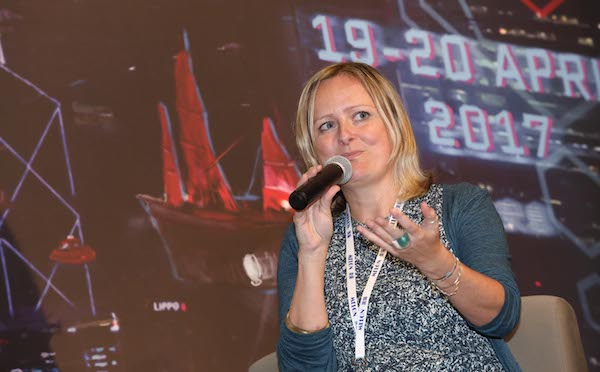
Jo Lusby: “Hunger for original content.”
Jo Lusby, who was, until recently, MD Penguin Random House, based in Hong Kong, said that the book publishing industry was being challenged – “how do we stay relevant, how do we capture people’s time?”
Interestingly the biggest growth is in children’s books and she believes this new generation of kids, who’re growing up in the digital world, may yearn for things analog.
With the Internet, she says it’s a great time to be creating content and think about how to apply it across different platforms and media. “There is a hunger for original content.”
She believes that so much that she’s launching her own startup to find and fund original content creators.
• All images credit: Melon