
It didn’t take long even for a software engineer (who is also a dancer) who had never been involved in travel to realise that the co-dependent relationships between large OTAs and small independent businesses, such as those in the tours and activities space, were unhealthy and imbalanced.
His thinking was, it is a segment worth protecting from unhealthy trade relations before it goes down the same dark distribution rabbit hole that hotels have taken. After all, it is a sector that is undoubtedly attractive to the big boys, its value well-researched and documented.
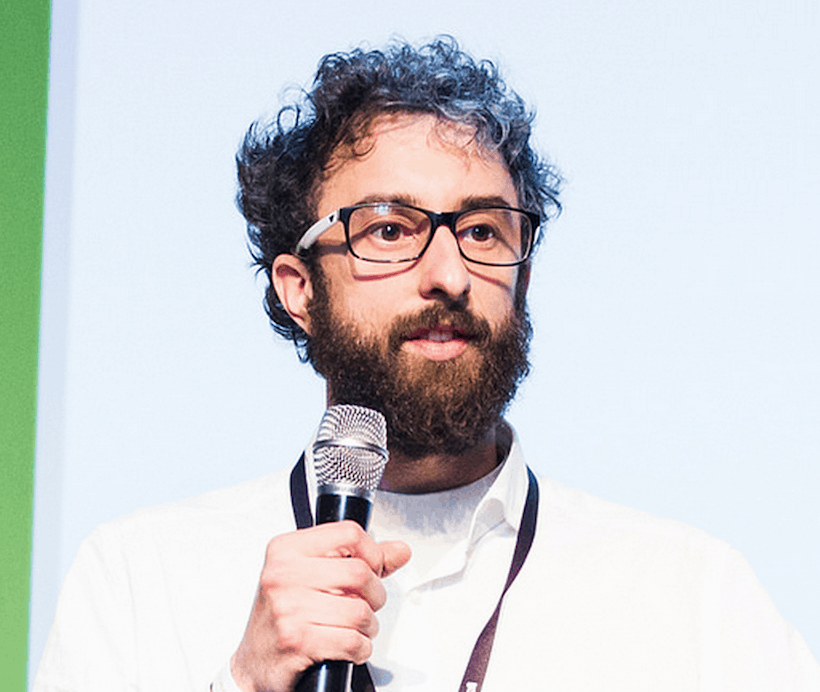 “In mid-2018, within 24 hours, with Booking and TripAdvisor buying reservation systems Fareharbor and Bokun in order to create a dominant position in the Tours & Activities industry as they did for Hotels, they had changed the dynamics in the tours & activities sector,” said Andrea Reginato (left), CEO of Exploring Experiences.
“Operators are entering a co-dependent relationship with OTAs owning distribution (direct relationship with customers), data (inventory rates and availability), technology (preferential listing placement) and brand (branded tours and activities),” he added.
“At the same time, independent reservation systems are having a strategic issue on-boarding new customers, because OTAs could offer similar services at “zero-cost”.”
Approached initially to work on a commercial travel project, Reginato found himself thinking of a social enterprise which could be formed around independent local communities of operators, digital experts and in-destination “actors” in order “to develop a more sustainable tours and activities sector”.
“People often talk and think about sustainable tourism as one that is more to do with environmental impact, but it is so much more than that – it is hugely complex and includes cultural, economic and social aspects as well,” said Reginato.
When he heard about how small independent operators were being held hostage by large OTAs’ commission structures and contract policies, he immediately understood that to keep local operator businesses sustainable, he needed to think about creating an eco-system that would see all commissions stay within the local community and where everyone would receive an equitable amount for the value they provided.
He calls this eco-system, a Decentralised Autonomous Travel Organisation (DATO), fashioned after the DAO which was a digital decentralised autonomous organisation, and a form of investor-directed venture capital fund. Launched in 2016 after a crowdfunding campaign, the DAO had an objective to provide a new decentralised business model for organising both commercial and non-profit enterprises.
“Today a 20% to 30% commission fee goes to big tech companies (e.g. TripAdvisor, Airbnb Experiences) that do not operate locally. This means that (at least) one-fifth of the generated economic value goes out of the destination,” he said.
In his business model, the 30% commission fee will instead be distributed to the local community actors and be split into three parts: 20% to local experts (content creators, social media marketers, contact managers, etc); 7.5% to local developers (tech professionals who take care of the tech platform development and maintenance), and 2.5% to local facilitators (those who will facilitate all the parties within the ecosystem). Having all these services in place, the operators – those who create and offer tours and activities to consumers – can focus on what they do best.
Meanwhile, Reginato, who was finding difficulty assigning purpose and meaning in his IT work, saw this as a serendipitous opportunity to undergo a personal paradigm shift in life purpose. “I was looking for something that would allow me to practise the values that I had defined for my own life,” said Reginato on why he chose to forgo a lucrative IT career to set up a social enterprise and “live off funds from family and friends” for this season.
In the last six months, Reginato has gathered a team of advisors from the trade and crystallised a plan and model.
“While an OTA focuses on maximising its economic value by creating a co-dependent relationship with the in-destination actors, a DATO focuses on maximising the distribution of the economic (and social) value by creating independent local communities where all in- destination actors (e.g. operators, photographers, writers, city councillors, magazines, hoteliers and more) work together to develop a more sustainable model,” he added.
The platform will consist of a reservation system with online booking capabilities, an activities marketplace, a local experts marketplace (so operators can connect with photographers, writers and other content creators), a local chapter that allows connections within the community for an exchange of ideas and for training, a local open library to share videos, photos and editorial content.
The technology will be open source. “By releasing the code as Open Source Software (OSS), we enable an increment of the platform value by involving developers and creating a distributed community that can work to enhance and improve the platform.”
He was further challenged by a paper written by Destination CTO Alex Bainbridge.
“To make a business unacquirable, you need to build using the approach blockchain companies have taken. Create a central foundation responsible for tech development, but not legally responsible for the operation of the tech. This means there is nothing for any commercial company to acquire,” wrote Bainbridge.
“A public blockchain provides transparency on how the contracts between operators, local experts, and all in-destination actors are defined, sharing with the customers how their money will be used and the social impact they have in-destination,” said Reginato.
Because Exploring Experiences is a social enterprise, it will not be well placed for classic venture capital funding. He will instead be tapping on government funds and support, crowdfunding, Impact investments, and philanthropists.
“There are definitely a lot of complexities to this and I’m not sure how it will all work out yet, but we will create a MVP (Minimally Viable Product) to test the idea. Where and for whom will this MVP be created?
“I will create the MVP in the performing arts community in Ibiza where I live. It includes people who teach dance, theatre, butoh, improv, clowns and more. We will call this community Exploring Movements.”

And how is the Covid19 situation impacting his plans? “Actually, it is positive because everyone is now focusing on local and sustainable activities and this is exactly what we are about,” he said.
Interested to discuss this concept with Reginato? Email him.
Featured image credit: @Ana G Hernando