So what are hoteliers overwhelmed by when it comes to leveraging consumer data and what are their priorities in an increasingly digitalised world?
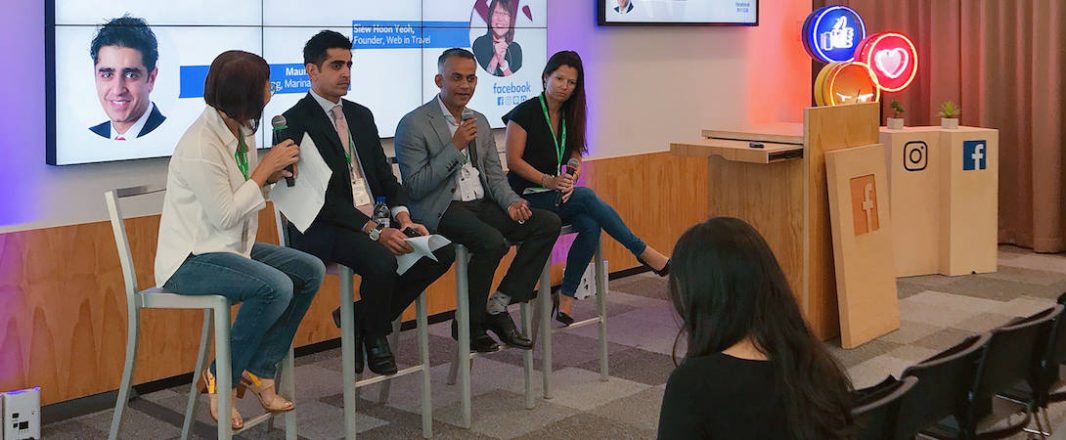
Some answers emerged during the Facebook APAC Hotels Summit held in Singapore in June during a panel discussion of three hoteliers – Emilie Couton (VP Digital Marketing APAC, AccorHotels), Maunik Thacker (SVP Marketing, Marina Bay Sands) and Prasad Iyer (Associate Vice President – Global eCommerce & Digital Marketing at Taj Hotels Palaces Resorts Safaris) and moderated by Yeoh Siew Hoon (Founder, Web In Travel).
First and foremost, Thacker made clear that for all the promises of the power of data, the real obstacle is knowing what to do with it. “The data that’s out there – capturing the right data, making sense of it, then doing some with it… really, how do you use the information well?”
Iyer ascribed some of this difficulty down to the challenge of attempting to understand a constantly moving target as customer needs and demands are never stationary. “The pressure is back on us as a company to really serve the evolving customer.”
Couton resonated with both of the panelists but added that understanding customers and data points only made up part of AccorHotels concerns as “it’s only part of the story. We have to spend money wisely. There are so many ads or ways of targeting the customer and it’s difficult to track if money is being used properly.”
On discussing what new skills would be handy to have, she argued for building a broader understanding of the “tech behind the advertising, so you can’t be [fooled]… Also, so you can explain in a very simple way to a hotelier how they are using their budget.”
On top of this, using data-driven insights also forces companies to find and toe the line between what is “cool” or “creepy” when it comes to guest personalisation and fostering deeper loyalty.
Therein lies the challenge of embracing the business utility of a platform like Facebook that can grant its clients with a pretty big peek into how consumers behave at all stages of the travel funnel, without overstepping the boundaries of ‘too much information’.
Thacker explained, “If you can track consumers through what they’re posting or saying, if they didn’t tag [your company], they might not want you to know. The concept of “surprise and delight” could backfire.”
However, Couton argued that instead hoteliers should consider more “responsible personalisation”, making sure that data that is collected is publicly available instead of companies digging for valuable truffles of potentially private information. It also involves having the ability to get a ‘read’ on people, differentiating between those who expect personalisation versus those who truly prefer to be left alone.
“[To understand] what it means to be personalised, you need to have a decent level of emotional intelligence.”
Iyer, by contrast, stated that personalisation is all about taking the customer relationship a step further. “Brand hotels will promise 10 things and deliver nine. Taj promises 10 and delivers 11.” He said that finding the balance really came down to getting a better understanding of how operations actually work in relation to collected data.
He recounted an example of a guest who posted to Facebook that tagged the property in a photo of a bachelorette party they had celebrated there. In response, the hotel sent the guests a bottle of ‘hangover cure’.
“Conventionally, it doesn’t cost us anything and it makes its way back on Facebook as an example of ‘taking service to the next level’. [We] have a goal of ‘one delight a day’ because that’s what brings people back.”
The panel also discussed the new GDPR rules in the EU and whether these new restrictions would pose a disadvantage to travel companies in their bid to leverage data to personalise.
It being a French company, Couton said that AccorHotels has ensured it is entirely GDPR compliant but believes it doesn’t necessarily put them at a disadvantage in Asia where similar rules are not in place.
“Before we use data, we are asking ourselves questions we weren’t asking before, so it may be taking us longer but maybe the goal is better.”
Countering Couton, Iyer believed that regulations do represent a setback to personalisation, however it puts pressure on brands to develop new ways to connect with the consumer.