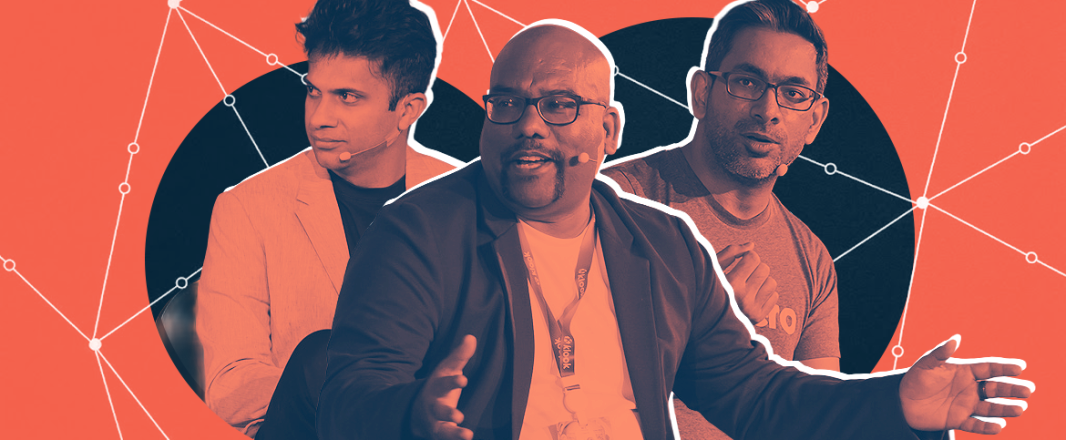
When Formula 1 Mercedes boss Toto Wolff farewelled seven-time world champion driver from his team after 12 years, his advice was memorable: “It’s most important to remember one thing: find your people,” Wolff advised Hamilton. “When you find your people, you don’t just beat the world – you change it.”
For each of these founders, those words ring true. Yet few collections of travel industry tales seem as diverse as the stories of ixigo, Headout and TourHero – further proof that when it comes to the travel industry, just as the wonderful collection of destinations it serves, there are so many different ways to find success.
India’s 20-year push for overnight success
When the news arrived in 2024 that travel company ixigo had achieved an IPO in India that can only be called a resounding success – making the company one of the most oversubscribed tech IPOs in India – some in the market dubbed it the “20-year “overnight success” story”.
Speaking to attendees at Sentosa Island during WiT Singapore’s Bootcamp, Aloke Bajpai, Chairman, MD and Group CEO of ixigo, framed the story in a characteristically colourful manner – and one that Toto Wolff himself would surely enjoy.
“Our story is a bit different from most of the OTA stories,” smiles Bajpai. “And to use Formula One analogy, it’s almost a story where someone starts with a bicycle in a Formula One race – and ends up on the podium.”
India, he says, is “so different” from other travel markets, it is almost impossible to explain. The IPO was then followed by the October 2025 investment of US$146 million into ixigo by leading global technology investor and operator Prosus (“MIH Investments One B.V.”) for a 10.1% stake. Those who know Bajpai will know that this news has most likely been greeted less as a personal vindication – and more as a massive vote of confidence in India’s travel market as a whole.
The way Bajpai frames the story of the company, now dubbed India’s leading AI-powered travel platform, is indicative of the sense of mission behind its success.
“We started back in 2006, and I consider myself a survivor more than anything else,” he says. “The only piece of advice I can give to all the founders in the room is that 90% of success is just surviving – and indeed, the market has evolved in various ways over the last 18 years.”
Talk to Bajpai, and he’ll tell you that his company was fortunate to preempt some of the changes in the market. Yet in many ways, others might wonder if any other business leaders would have been anything like as patient with the process as they were.
Some quick background is important. Even today, only 4% of Indians fly (compared to 37% in China and 80% in the US), an indication of the challenge facing this OTA from the outside.
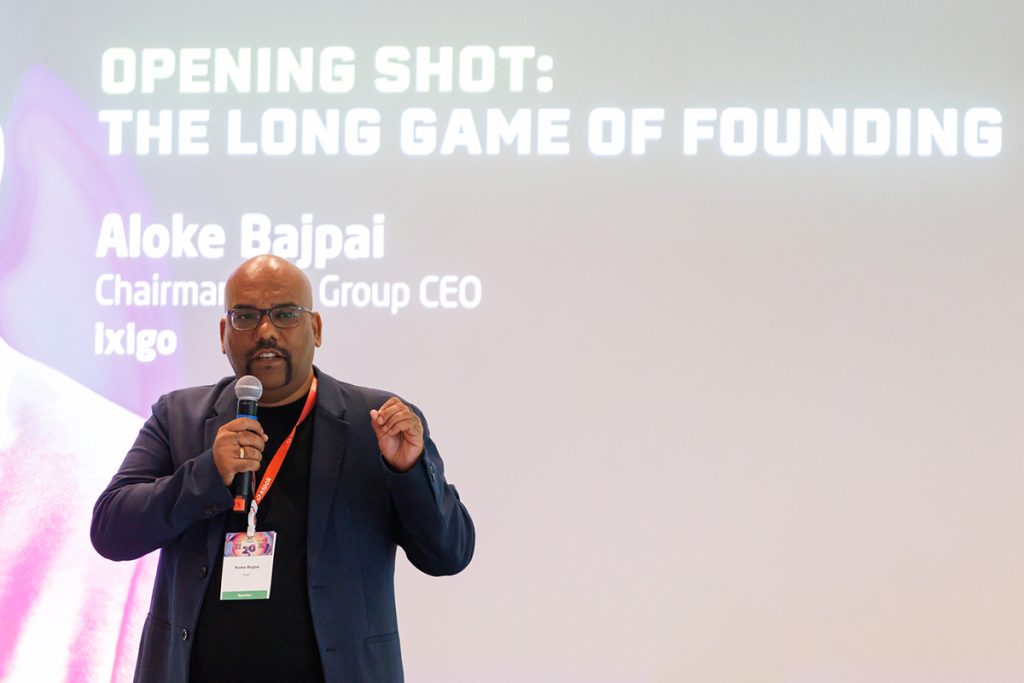
Aloke Bajpai: “The only piece of advice I can give to all the founders in the room is that 90% of success is just surviving, and indeed, the market has evolved in various ways over the last 18 years.”
Starting out in metasearch in 2006, one thing was clear. “India was going to play out very differently. This was not going to be a flight-first OTA market. That’s the bet we took in 2012, because 23 million people travel on a train every day in India, whereas even as we speak, there are just 450,000 [people flying] a day. If you want to win big in India, we need to take a stab on trains and buses. And that’s the stab we took back in 2012,” says Bajpai.
The other clear point of difference was the need for patience. “For the first 10 years that we existed, we did not sell a single ticket. We were just printing utility apps to help train travellers with a bunch of problems and pain areas they faced.”
Luckily for Bajpai’s team, what they were building in terms of infrastructure would prove invaluable to the maturing market, as the team added algorithms that predicted whether trains would arrive at the next station on time or not: and predicting whether a coach would be on the platform by crowdsourcing information from its users.
The bets would pay off. “Just this tiny bit of focusing on the main areas for the next billion travellers – the common middle class travellers in India – actually gave us growth we never imagined.”
As Toto Wolff had predicted, ixigo found its people. And its people would respond in droves. “We went from doing like a million downloads a year, to doing 100 million downloads a year over the next 6-7 years,” he recalls.
In that time, ixigo also evolved its business model. “Today, we don’t think of ourselves as a travel company as much as a data science or AI company,” he notes. “A lot of the products that we sell are just backed by the millions of data points we get every day from Indian travellers – that allow us to sell peace of mind.”
After being patient for so long, he is now thrilled by the prospects of his country. “The most exciting thing about India is, we are also now the most AI intensive country,” he says. “Already, 90% of the Indian workforce are using AI for efficiency in their day-to-day work, and we are the fastest growing AI market.”
What do the past two decades of patience and eventual success for the company prove to Bajpai? “Now is the time where, if you actually don’t disrupt yourself, somebody else will come and do that. But hopefully we will disrupt ourselves again, like we always have.”
Cracking Broadway and dancing with Dex
Another travel leader on the verge of success for his company is Varun Khona, CEO & co-founder, Headout, a platform that connects people to the world’s best real-life experiences – from expert-led tours to landmarks, live events and more. Under Khona’s leadership, Headout has grown to serve 40 million guests across over 100 cities worldwide, generating over US$3 billion in economic impact.
So how, Web in Travel asked him on the main stage, did Headout crack Broadway? “I wish there was a very simple answer to this,” says Khona. “But the fact of the matter is that you effectively need to look at where travellers are headed, and what they are travelling to. But also, look at your skills and strengths, and try and figure out that happy little intersection where you can see where the future is going to be.”
The key was working out whether Headout could “bring something novel, something unique as a perspective – and sort of figure out, how do you then serve that specific intersection in the most authentic and the most impactful way that you can?”
In the beginning, he says, the big effort was in convincing theatres to let them sell their tickets. “We had scores of people standing outside the box office on Broadway getting tickets – and then waiting outside the door to give the tickets to the guests,” he recalls.
“So, nothing of that transaction has been easy,” he says. “We’ve come many distances from that early, humble beginning.”
His advice? “If you’re creating something of true value, then easy is the last word that I have found in the last 10 years of doing this. This used to be known as ‘the last frontier’.”
So is an IPO in store soon? “The way I look at an IPO, we’ve locked in the relationship with it – we are engaged, and we’ve sort of got the ring on. But we are in no hurry to have a specific date for the marriage. Time will tell,” he quips. “We’re at a stage where if you wanted to, we could pull the trigger and get the process going.”
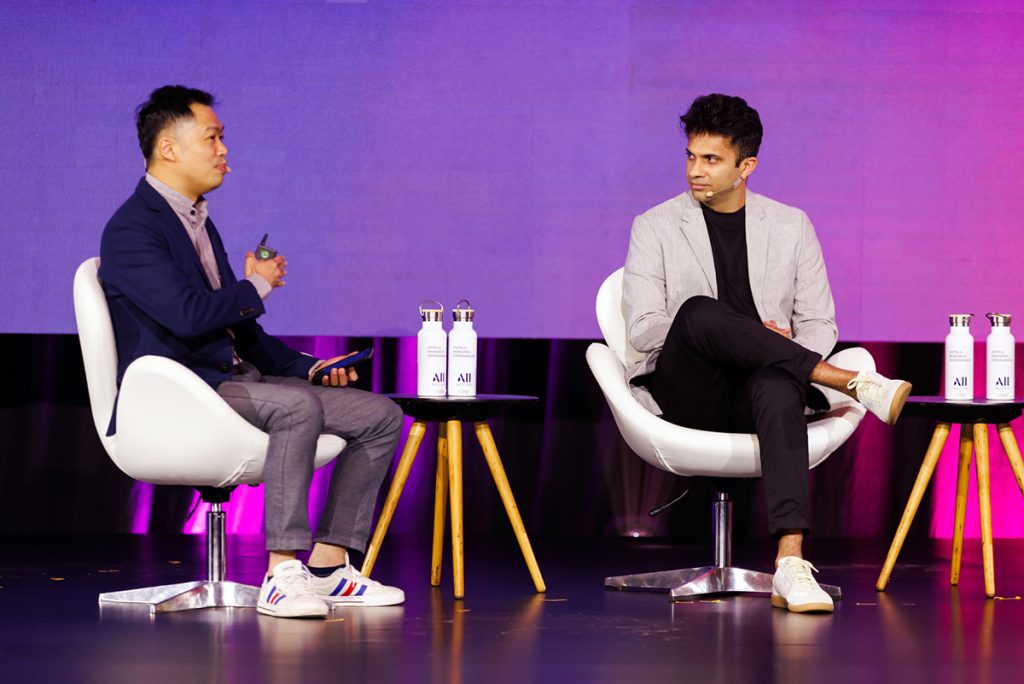
Varun Khona: “If you’re creating something of true value, then easy is the last word that I have found in the last 10 years of doing this. This used to be known as ‘the last frontier.”
In terms of trends, the one constant is change. “Consumers are increasingly looking for a wider, more diverse set of experiences,” he notes. “There is this increasing desire to explore a destination more deeply and authentically.”
Post-AI, many travellers are using Chat GPT as their instant city guide. “You start sort of trying to figure out, ‘What else can I do here? What’s interesting about this? Why is it this way and not that way?’”
“Suddenly there is this super-computer in everybody’s pocket, where they’re just able to converse and find a lot more when they’re traveling,” he notes. “That’s making the experience of travel more immersive, but also increasing the expectation that travellers have from a travel provider.”
“We believe the next structure in AI is voice, he notes. “Then it’s about an augmentation layer that gives you interesting stories of physical spaces, and that is further augmented by you getting very cool conversations with interesting characters,” he says.
“You’ll gain the ability to scan and learn anything. The ability to be able to get soundtracks and background scores. The interactive games,” he describes. “Suddenly, the experience of actually going and physically visiting a space has moved from sort of a docile one-way conversation – to something far more multi-modal, a lot more engaging and a lot more immersive.”
Dex by Headout is in private beta right now, he notes. “If there are venues who would want to jump on the bandwagon and see what AI can do to elevate the guest experience, you should register your interest with us.”
The eventual plan for Dex is an exciting one. “Every interesting physical space in the world should be augmented using Dex. That’s the end point. And I think that end point is not a very far end point – because AI really allows you to do this at scale.”
That destination seems just over two years away, he notes. Indeed, while Khona and team have been busy finding their people, soon it seems, many more will Headout. “In the next immediate 12 months, we should be available in all the 100 top cities that matter in the world,” he notes.
Overcome loneliness by finding your Hero
Tushar Kandewal, co-founder of TourHero, doesn’t necessarily speak like other travel startup leaders. Having previously co-founded and led Voyagin, which was successfully acquired by Rakuten, maybe it’s because he’s not looking to impress anyone. Or maybe, given that his favourite travel destination is Iran, he enjoys seeing the world in a unique and magical way.
Whatever the case, Kandewal does have an impressive sense of mission when it comes to TourHero, which is to help the world’s lonely find their people.
“I think we live in the loneliest generation we’ve ever had in the history of the world,” he told his panel at WiT. Cursed with social devices with more power than ever, people seem to have forgotten how to get together.
“We’re a society of humans that sits next to each other, scrolling Instagram, ‘liking’ things instead of really catching up,” he observes. “I call this generation ‘ghosts’.”
Clearly, Tushar’s mission goes beyond his customers’ phones. “To me, the antidote isn’t another app. It’s actually getting together in person. It’s anything from a run club to yoga on the beach, to dinner parties.”
Finding your people, to Tushar, is not just about likes and shares, either. “It’s not going to be synthetic friendships like others are working on. It’s going to be those that figure this out,” he notes. “The question has always been power. We spent a lot of time covering this: but it turns out the core law of belonging, is actually pretty simple,” he notes.
Simply put, what we all need, is a hero. “People follow people: and every powerful experience starts with a really passionate person. We call them ‘human magnets’ because we think their vibe draws you to them.”
As Tushar and his team have discussed, groups naturally form when there is an enigmatic person keen to gather folks together. “Imagine if it was easy to turn any community into a real-world travel experience,” he describes. “One in which you spend three days exploring a place together – instead of three months spent working on coffee catchups.”
“It can be anything: maybe fantasy book club lovers who really appreciate dragons,” he quips. “We think of TourHero as the first aid platform that turns community intent into instantly bookable, real-world travel experiences: and each of those experiences are led by this passionate human – the human magnet out there whose viable union makes this really beautiful effect out there.”
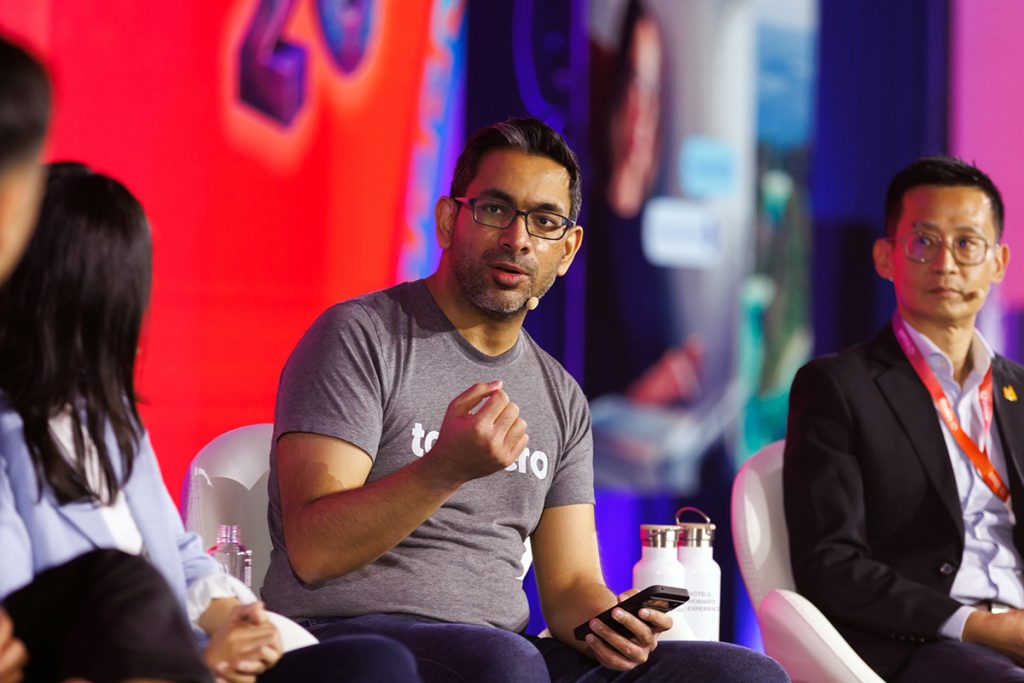
Tushar Kandewal: The antidote isn’t another app. It’s actually getting together in person. It’s anything from a run club to yoga on the beach, to dinner parties.”
Does the human magnet travel for free? “They do, and the average TourHero actually earns US$6.5k from a seven-day trip,” he notes.
Of course, AI has been a key asset in building the platform. “Each trip has to reflect the community’s taste. My team hates me for this, because we picked not just the hardest industry tours and activities,” he smiles.” We also tried to make everyone a TourHero. And we say, every trip needs to be hustled.”
“That is a hard, hard road. And so we were very fortunate when we started to partner with Sequoia, and they asked me, ‘How is anyone going to become a TourHero if you cannot make this easy to do?’ And I said, back then, ‘You don’t understand the industry – no one’s been able to do this. It’s not possible to do this for custom credits.’”
He grins again. “I was the most wrong I’ve ever been – and that turned out to be the more important part, in terms of how we enable anyone to do this easily,” he notes. “We changed our North Star,” he says.
“Previously we ran a traditional marketplace: it took 32 days to come in and curate a trip. Today, you’re able to get matched to a trip instantly. For 80% of cases, it’s in one minute,” he describes. “We enable that for our destinations: and we continue to roll that out to additional destinations as well. And we’re the first platform that I’ve seen that goes end-to-end, without giving you 20 links.”
Clearly, finding your people is a real mission for Tushar and his TourHero team. “I actually think the next trillion-dollar platforms are going to be the ones that power this community in real life.” And if the lonely do find their tribes, then profit and happiness as the dual results could eventually become TourHero’s most commendable outputs.