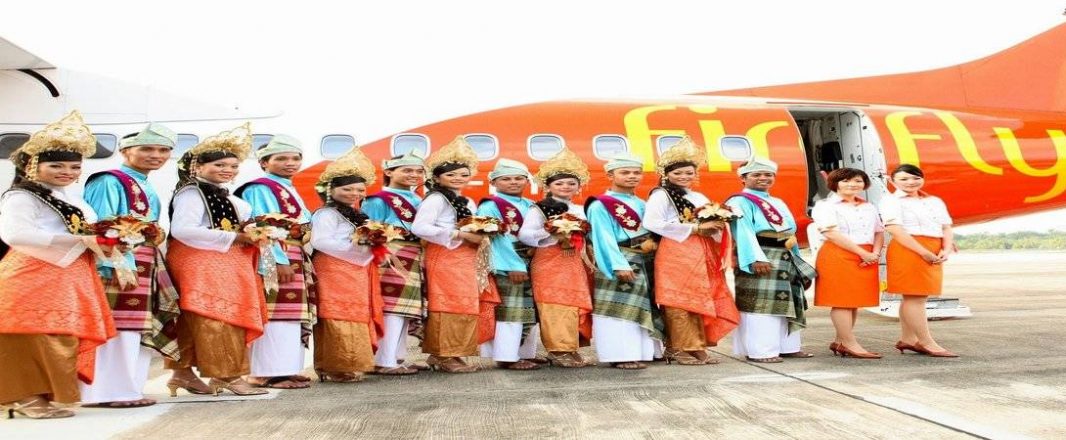
.gif) “The only thing we rationalised was the jet services flying out of KLIA. Our turboprop flights are intact. We are here to stay, and here to grow,” said Ignatius Ong, COO of Short-Haul Malaysia Airlines/Firefly.
“The only thing we rationalised was the jet services flying out of KLIA. Our turboprop flights are intact. We are here to stay, and here to grow,” said Ignatius Ong, COO of Short-Haul Malaysia Airlines/Firefly.
He reiterated that the turboprop aircraft operating out its two hubs – Subang (Kuala Lumpur) and Penang – remain unaffected,
Plans for growth are in motion, and that means expanding Firefly’s existing network and acquiring more turboprops to support the growth within the medium to longer term period.
“Firefly will continue to serve the community by connecting small towns and cities that otherwise would not enjoy the benefit of fast, efficient and safe air travel,” Ong added.
He clarified that Firefly is not a low cost carrier, but “a community airline, and our key selling point is the convenience of the airport we are based in.”
That was how the airline, a wholly subsidiary of MAS, began operations in April 2007, as a “community airline” to serve domestic points within Malaysia. It then had two Fokker 50 aircraft, operating out of the Sultan Abdul Aziz Shah Airport /Subang Skypark (formerly Subang International Airport).
Its simple efficient service, affordable fares plus operating out of Subang, which is close to Kuala Lumpur, made it very popular. It expanded quickly, adding Penang as is second hub. It replaced the F50 with turboprops and added Boeing 737-800 and 737-400 aircraft to its fleet.
The airline started flying to regional destinations, which include Singapore and within Thailand. It also launched services to Kota Kinabalu in Sabah and Kuching in Sarawak out of the KL International Airport (KLIA) in Sepang, using its Boeing aircraft. It added more routes within Peninsular Malaysia it
The airline’s rise led to a head-on competition with low cost carrier AirAsia, especially on routes from KLIA to Kuching and Kota Kinabalu.
However, when it seemed the sky could be the limit for Firefly, its wings were clipped with the network rationalistion programme under the MAS-AirAsia share-swap deal. While it continues as an independent brand under MAS’ ownership, it ceased its jet operations and operated flights with its fleet of ATR 72-500 turboprops.
MAS will set up a new full-service regional airline, scheduled for launch mid-2012, to take over Firely’s existing Boeing jet operations.
Currently Firelfy has a fleet of 12 ATR 72-500 turboprops, flying out of its Subang and Penang hubs to secondary destinations within the Indonesia-Malaysia-Thailand Growth Triangle, as well as providing air linkages between Malaysia and Singapore.
Ong said the airline is assessing the use of next generation turboprop aircraft, which can provide more capacity, better fuel efficiencies and lesser carbon emission.
The airline carried 1.5 million passengers last year compared with 1.35 million in 2010. It expects to fly 30% more passengers in 2012 as it takes delivery of two new ATR 72-500 turboprops.
In a related development, Firefly will reintroduce fuel surcharge for flight bookings made from March 21 to offset persisting high jet fuel prices. The surcharge is RM10 (US$3.20) for domestic travel for each leg, and RM20 for regional routes.
Ong said the airline had to reimpose the fuel surcharge, which was abolished in the last quarter of 2008, “due to unsustainable higher operating costs.”