PRICE and product were the two main levers hoteliers and tours and activities providers in Asia had to pull as they adjusted their businesses to domestic travellers. That, and adjusting marketing tactics to capture local demand wherever and whenever it popped up, with smart use of data.
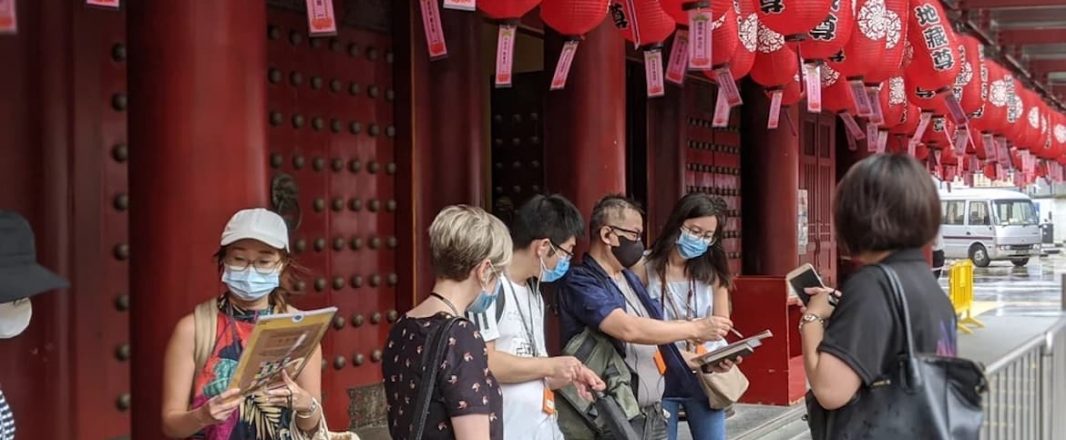
In Singapore, Sarah Wan, general manager of Klook, said it had to reshape products into those that locals would want to experience. For example, instead of presenting a Singapore tour in a traditional format, the operator now makes it more game-like such as solving a murder mystery in Chinatown. “One of the examples of innovation that we saw in the activity space.”

Klook has to reshape products into those that locals would want to experience, Sarah Wan reveals.
Klook, one of the five operators appointed by the Singapore Tourism Board (STB) to sell and distribute its SingapoRediscover Vouchers, also worked on price. Said Wan, “One of the initial advice we gave our activity merchants was actually the price point as locals don’t want to spend the same amount on a local experience as they would on an international holiday.
“So by lowering the price point, these merchants are able to draw greater volumes of customers, which sustained them through the past few months.”
Wan’s role was also switched from head of consumer marketing for the brand to that of a local operations role so that she could then be the link between product and demand for the tours and activities platform.
Wan was sharing her views in a Hosted Room during the WiT Travel Roadshow on March 25, where she and three other experts shared their perspectives on how to survive in a global world gone local.
Creative ideas pop up to give locals new discoveries
Katy Gallagher, commercial director, APAC, Sojern, added that she has seen a lot of creative thinking in Singapore and across the APAC region. She cited a personal experience of going on a ‘cruise to nowhere’ stating, “And I never cruised before in my life, so I think this is creating a really big opportunity for cruise lines to build that customer base and get in front of an audience that they hadn’t been before.”

Katy Gallagher has seen a lot of creative thinking in Singapore and across the APAC region.
Among other innovative offers in Singapore are fishing and then barbecuing the catch, hotels transforming their space into offices, and drive-in cinemas. “And it’s these creative ideas that are giving locals the experiences they have not seen before in Singapore,” said Gallagher.
To get these offers in front of local consumers Sojern focuses on building up a strong staycation audience, and using data to target those who are showing the highest intent to travel or have experienced a tour. “It’s been really great to see the creativity, not only behind the tours and the packages but how we can use data to target the consumers and then sell those tours and packages,” Gallagher noted.
Liviu Nedef, chief marketing officer of RedDoorz, said that it is “super important to listen to the market and talk to the customers as the situation is changing quite fast across the region.
“From a hotel perspective, we tried to come up with very different products to cater to the segments that are now able to travel domestically in markets like Indonesia and the Philippines. So we build new products for customers who prefer to work from hotels and for essential services workers, such as providing Internet and transforming some of our premises to meet their needs. This means figuring out the right type of packages for these market segments.”
Baidi Li, head of growth initiatives at Magpie Travel, feels that small tour operators and business owners with shoestring budgets can make use of the free tech solutions and free trails available to meet their business needs and adapt to the changing travel scene. “Let technology be your friend, don’t let this crisis go to waste. Tapping on any resource that is available to you is quite important.”
Working with governments became essential
Industry players also found themselves working more closely with governments than they’ve ever had to before.
“In the first phase of the pandemic in 2020 where there was a lot of mobility and travel restrictions across South-east Asia, the only type of demand that we could tap into was the essential worker segment. We moved fast and we struck up partnerships with the ministry of tourism and the ministry of health care in Indonesia, as well as with similar government bodies in the Philippines and in Singapore,” said RedDoorz’s Nedef.
That proved beneficial for the company as it managed to fill some rooms when travel was at zero. These cooperative efforts are ongoing, he added.
Klook’s Wan said the tours and activities platform has also been working very closely with governments in Singapore and across the region, as well as embarking on a few other partnerships with an eye to looking beyond domestic travel. “As we move into recover, governments will continue to play a very important role, especially when air travel bubbles start getting established.”
Domestic travel will have to sustain businesses till border reopens
The panel predicted domestic travel would dominate till the end of this year or maybe into mid-2022. As RedDoorz’s Nedef said: “I don’t think we will see drastic changes in terms of global travel resuming this year; the most optimistic scenario is probably looking at mid-2022.”

“… this year, I would say we still live in a domestic travel market.”
He estimated that 80% of travel within the region would be domestic, perhaps with some changes if major hotspots like Thailand’s Phuket allow fully vaccinated international travellers with no quarantine required from July 1, and Bali mulling doing the same. “But it will take some time for everything to come into play … this year, I would say we still live in a domestic travel market.”
So can businesses like theirs survive in a domestic world?
RedDoorz’s Nedef said, “Absolutely. In the APAC region, the domestic audiences are very large. Indonesia, the Philippines and Vietnam have hundreds of millions of consumers who are starting to travel or are about to start travelling – and that’s enough basically to keep the businesses afloat.
“You need to act fast and you really need to understand who your customer is and how can you add value during these times. We primarily cater to domestic travellers and not on inbound because that’s just how our product was built, and this puts us in a good position in the market and it’s enough to sustain us during this pandemic.
“I think 2021 is all about survival, being aggressive and capturing opportunities, most of which right now are still around domestic.
Klook’s Wan said, “We’ve always been looking at domestic and lifestyle – a category that we’ve always wanted to pursue. Covid has forced us into expanding into this sector in hyper drive mode. It has given us a very clear direction in terms of what the next one to two years would look like – accelerated expansion in some of the verticals that we previously wouldn’t have been able to focus on before with full-on international travel. We’re pivoting the business slightly, but retaining the focus on catering to both domestic and international travellers.”
Sojern’s Gallagher added, “It depends on each company case by case, but what we’ve seen with the partners that we’re working with is that by shifting the model and going after a different demographic, it’s certainly helping to sustain the business as much as possible.
“I don’t think that for most, it’s close to what they were achieving in terms of revenue pre Covid. But in terms of staying afloat until you can welcome international travellers by applying different tactics, we are seeing that they’re able to get by, absolutely.
“Now is the time to really go out into the market and try new opportunities, network with your competitors, ask them what’s working for them and what’s not. Sessions like these are really great to learn what new products and tools are out there. There’s a lot of Covid promotions where you might be able to get a discount or a free trial. So, it’s not the time to go silent. I know budgets are really sensitive, but I think there’s a lot of opportunities out there.”
The session ended on a positive note with this advice from Nedef: “Don’t lose hope. Better days are coming, that’s for sure. Now’s the time to really think out of the box, be creative, take risks.”
• Featured image credit (Klook’s Chinatown Murders Game Tour): Klook