Global tourism has grown by more than a third (37%) in inflation-adjusted terms since the downturn of 2009, outpacing world GDP (Gross Domestic Product) that grew by just a fifth (21%) in the same period.
Last year the GDP impact of the world’s Muslim tourism sector exceeded US$138 billion.
More than 10% of global tourism spending is generated by international Muslim travellers, accounting for US$145 billion in 2015. This (spending) directly supported 1.8 million jobs among the tourist businesses, and contributed more than US$18 billion in tax revenue.
These are the key findings of the inaugural Global Economic Impact of Muslim Tourism Report 2015 by Salam Standard, an online hospitality tool for Muslim travellers that displays Muslim-friendly amenities and services in hotels according to categories.
“To put this into perspective a GDP impact of $138 billion is larger than the entire economy of Morocco or Kuwait,” said the report’s author, Faeez Fadhlillah, co-founder and CEO of Salam Standard and sister firm, Tripfez.
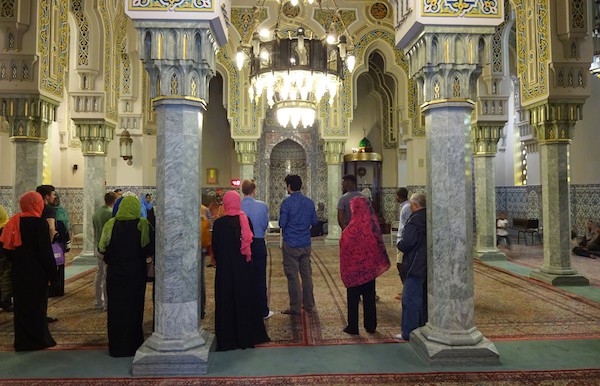
US is one of the main beneficiary of Muslim travellers spend (Image credit – Islamic Centre in Washington DC: Coast-to-Coast/iStock)
According to the report, the top beneficiaries of Muslim travel spending are the US and EU, netting nearly US$64 billion of inbound expenditure in 2015, or about 44% of the total. They also collect the most Muslim tourist-related tax amounting to US$12.5 billion.
The Middle East leads the pack in tourism spend overseas, accounting for 60% of all outbound Muslim tourism expenditure worth some US$60 billion.
Asia and Europe are the second largest markets in terms of outbound Muslim travel expenditure, each generating around 20% of total spend.
In direct employment, Thailand is the largest beneficiary with more than a quarter of a million jobs supported by the Muslim travel sector. Asia benefits the most with more than 2.3 million people employed in this sector.

Faeez Fadhlillah: Potential of Muslim travel sector yet to be unlocked.
“As the fastest-growing segment of the global tourism industry the Muslim travel market provides a wealth of opportunities for policymakers and businesses in both advanced and emerging economies,” said Fadhlillah.
He forecasts the Muslim travel sector to grow by 50% in volume and 35% in value over the next five years, “but its potential is yet to be unlocked.”
As such the sector’s power and potential should not be ignored, said Fadhlillah.
“We advise governments and tourism entities in key markets worldwide to put strategies in place that will foster the growth of their Muslim travel sectors and drive demand that will benefit their economies immeasurably.”
The report recommends destinations take ‘three basic steps’: understand the needs and preferences of Muslim travellers, provide amenities that cater to those needs, and communicate the availability of Muslim-friendly features as a unique selling point.
• Featured image credit: byheaven/iStock