
GlobalTix’s new payments product allows merchants to accept different digital wallets across Asia
You could call it a Covid baby but GlobalTix’s latest product, GT Pay, which allows merchants to accept up to more than 30 digital wallets across Asia, took a while to grow into its own.
Said CEO Chan Chee Chong of the Singapore-based tours and activities technology company, “We were brainstorming for ideas when we had time during the pandemic. We looked at AR, VR and payment and my staff said, there is a trend towards digital wallets. But we didn’t really have time to work on it then due to other pressures.
“However, when the markets started opening up, we started getting requests from merchants, asking, if we could accept digital wallets, we thought we should start working on it.”

Chan Chee Chong: “The market is really fragmented – there’s hundreds of digital wallets out there – we will aim to work with the top three in each market.”
About eight months in the development, the product, which allows merchants to “sell globally and get paid locally” came into beta mode late last year and was officially launched in February. Two months on, it’s been nominated as a finalist in the Business Innovation category in the Singapore Tourism Board’s Singapore Tourism Awards 2023, with winners to be announced next month.
“During the pandemic, adoption of digital wallets shot through the roof in markets like Indonesia, Malaysia and the Philippines. These are markets where the credit card and debit card penetration is low and they are starting to look like China where large chunks of the population use digital wallets and not credit cards.
“Thus, when they travel, they have trouble paying because they don’t have credit cards.”
The trend towards digital wallets was highlighted in this WiT report which quoted the latest Worldpay from FIS Global Payments Report 2023 examining how consumers pay today both in-store and online across 40 global markets.
In APAC, wallets represented 68.5% of regional e-commerce transaction value in 2021. That amount is now projected to expand to over 72% of transaction value by 2025. “While cards and digital wallets dominate e-commerce payments, a competitive mix of traditional and alternative payment methods make for a diverse regional landscape,” the report said.
GT Pay allows merchants to tap into this growing segment of the population by empowering their websites to accept up to 33 digital wallets across Asia. “They can now tap on a bigger pool of customers,” said Chan.
By year end, it is targeting to cover up to 60 wallets. “The market is really fragmented – there’s hundreds of digital wallets out there – we will aim to work with the top three in each market.”
It’s been a step-by-step approach to integrate each wallet onto the platform. “The good thing is, we’ve already been working with operators across the region, connecting them to their payment gateway of choice such as Xendit, 2C2P, Reddot or Ali Plus. So it was a question of bringing them onto a single platform, instead of connecting to individual payment gateways.”
The biggest challenge, he said, was convincing finance departments to accept GT Pay as another payment method due to the resulting additional back end work. “Other than the usual credit card, they now had to consider digital wallets – it’s one percent for PayNow, two percent for digital wallets and three percent for credit cards – so even if it’s cheaper for the companies and good for sales, it’s the extra work at the back end that puts them off.”
Of the markets, he said India, Vietnam and Cambodia were the most challenging to crack “not because of technology but due to currency controls and regulations”.
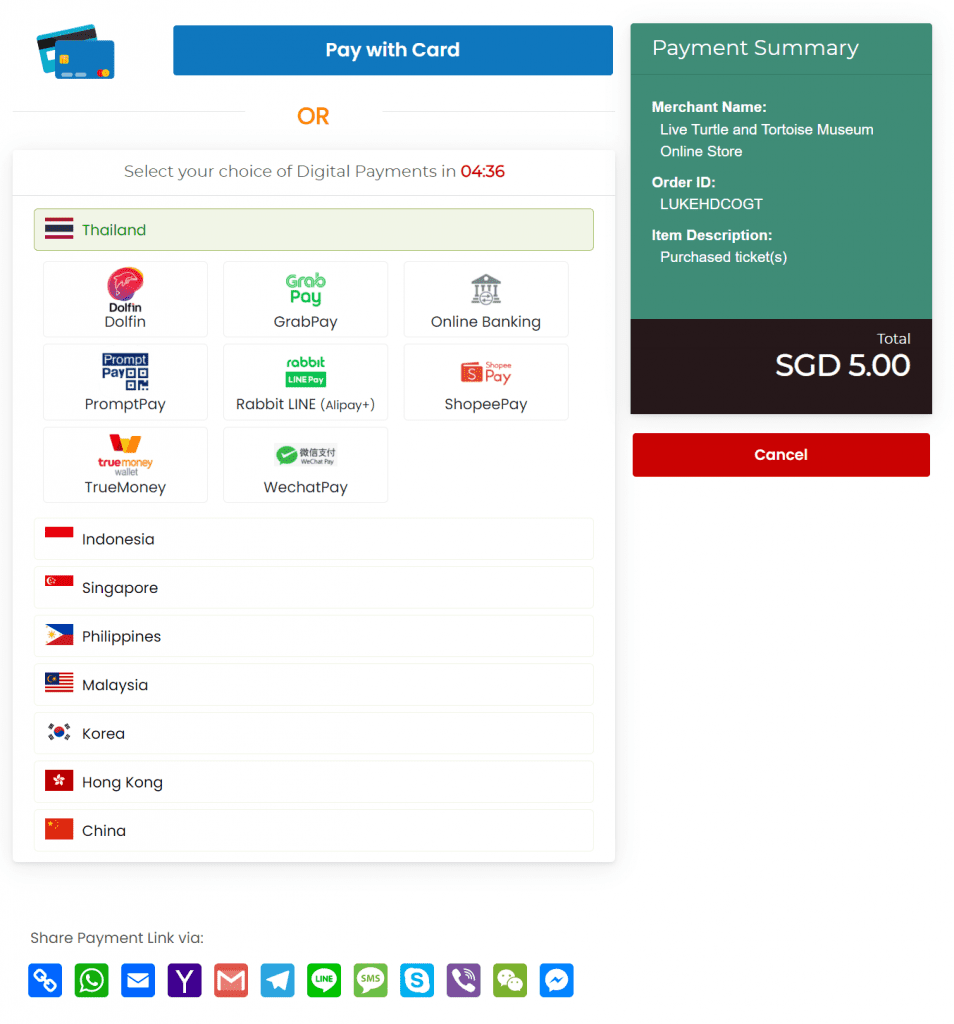 At the moment, it is onboarding its current list of customers, about 100, before it starts marketing the product to other merchants. “We are excited about it because it adds more firepower to our reservations tech.”
Chan is also excited about the opportunity to integrate generative AI such as ChatGPT into its reservations tech. “Our operators in South-east Asia are not so good at writing content in English and we also see it as aiding in translation. We will also explore how to use it in customer service, in our chatbots.”
Since the start of the year, GlobalTix has been seeing good recovery in the tours and activities market in Asia, especially from the online travel agents. “We are seeing good surges in numbers from the OTAs but the traditional agents’ pick-up seems slower. Our business is 40% OTAs and 60% traditional agents and the recovery from OTAs is definitely stronger and quicker.
“Bur while numbers may be better, the whole market is not fully recovered yet and that’s because China is not yet back – that represents about 20% of market share for most of our operators. We are optimistic we will see another pick-up in June.”
On GlobalTix’s part though, its business currently has exceeded 2019 levels “and that’s because we went into new markets and we have new operators coming onto the platform.