
Hoteliers have to reboot their mindset and “think beyond real estate”, said Colman Ho, VP Group Marketing of Century City Holdings, in the opening session at WIT Hospitality held in Hong Kong yesterday.
Ho said that as online travel brands such as Priceline and Expedia were making investments beyond their original areas of business, hotel companies needed to think more horizontally about where they invest and cited co-working spaces as an option.
Jean Luc Chretien, co-CEO of FASTBOOKING, said that OTA consolidation and the blurring of lines between online distributors and metasearch players were also making it more difficult for hoteliers, and that they needed to think harder about how to increase direct business and take bold steps.
He said OTAs and meta players were making investments in IT technology, which would further widen the gap between hoteliers and the end customers. Accor Hotels, which Chretien was with before he was named to head FASTBOOKING, responded to this trend by acquiring FASTBOOKING, and the French-based hotel company has also acquired 49% stake in Squarebreak and 30% in Oasis Collections to widen its range of accommodation options.
“Capacity to control and manage rates and inventory” as well as “capacity to raise expertise level and investment in ecommerce to keep direct business share” were also mentioned by Chretien as challenges facing hoteliers in the current fragmented distribution landscape.

WIT’s Yeoh Siew Hoon (2nd right) with the panel (L-R) Century City Holdings’ Colman Ho, FASTBOOKING’s Jean Luc Chretien, Booking.com’s Oliver Hua
Phocuswright sizes the global leisure and corporate travel opportunity at US$1.3T, which does not include another potential US$100B from Private Accommodation (i.e. vacation rentals and other alternative accommodations) and US$100B more from sectors such as local activities.
Globally, an estimated 63% of gross bookings occurred offline in 2015 (with around one-third of this being corporate), while 22% were supplier direct and 15% were via OTAs, showing plenty of growth opportunities for OTAs.
Geographically, more than three-fourths of Gross Bookings are within the big markets: Asia Pacific (27%), Europe (27%) and North America (25%). While these markets are currently of similar size, the growth profiles are quite different with Online Travel CAGRs (2013-2017E) of 19% (APAC), 10% (Europe) and 6% (US).
In APAC, Phocuswright data shows OTAs are on a growth streak and that they dominated hotel bookings throughout Asia (69%) in 2014, compared with 31% for air. Local OTAs however command a 81% market share compared with global OTAs’ 19%.
Oliver Hua, managing director, APAC of Booking.com, said the company was enjoying healthy growth across the region, and while mobile represented a third of bookings for the group globally, the percentage was higher in markets such as China.
He said only two percent of customers come back to book the exact same hotel and as such Booking.com was providing a point of acquisition for the hotel sector. He said relative to the entire market, Booking.com’s 870,000 accommodation listings (including 400,000 vacation rentals) was but a small share with plenty to go round for everyone.
With his previous experience in eBay, he said it was rare for retailers to have all direct business and what hoteliers should do is “differentiate your experience and focus on your swim lane”.
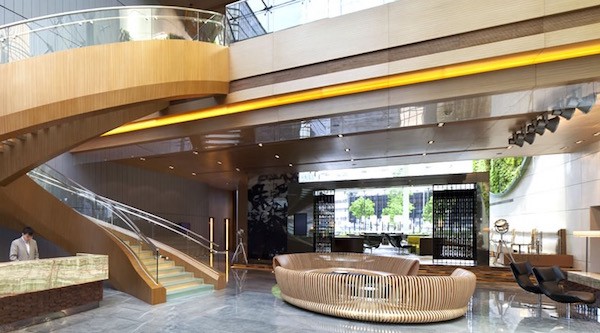
WIT Hospitality was held in partnership with Hotel ICON.
Opportunities have never been more plentiful and within reach of hoteliers, the panel agreed, with technology becoming more pervasive and they came up with this list of opportunities for the 180-strong audience of mainly hoteliers at the conference, held in partnership with Hotel ICON, which is integrated with the School of Hospitality Travel Management of the Hong Kong Polytechnic University.
- Create holistic, unique experience
- Mobile enables better loyalty marketing engagement
- Instant feedback
- Differentiation – guest experience, recognition, personalisation
- Decrease in IT costs
- Evolution of contractual conditions (Europe as an example)
- Rise of Chinese outbound
Ho was most enthusiastic about the possibility of mobile enabling hotels to have better loyalty marketing engagement with guests. The group is investing in CRM tools to boost its loyalty drive.