At WiT Indie, Andrew Dixon, owner of the private islands of Nikoi and Cempedak, off Bintan, Indonesia, shared how he pursues the four Cs – Community, Culture, Conservation, Commerce – prescribed by The Long Run organisation, to which his islands belong.
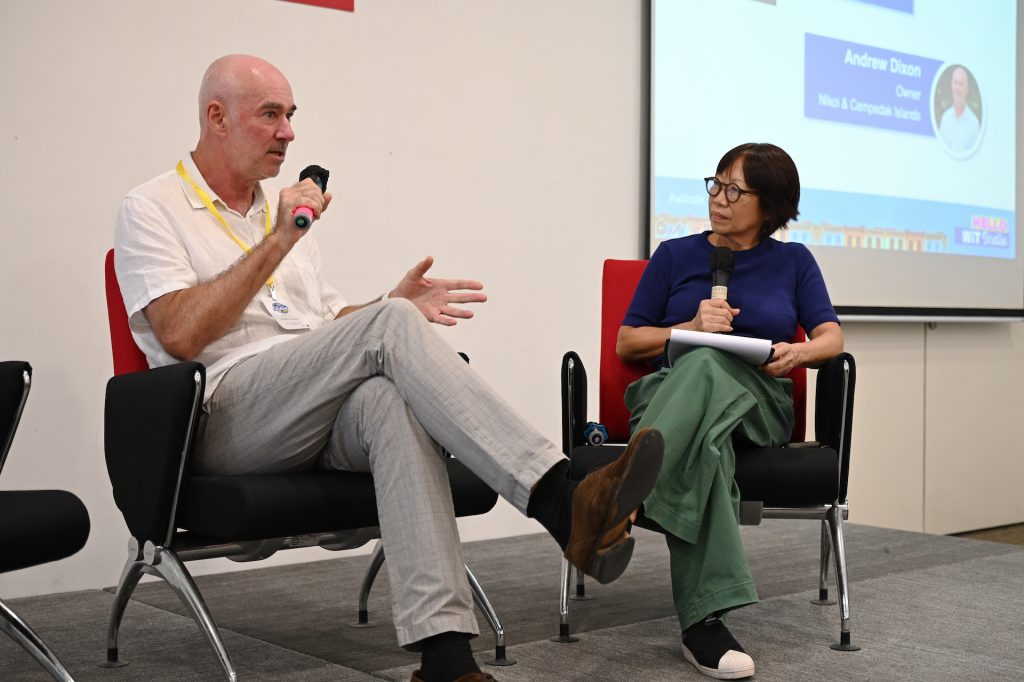
Andrew Dixon speaking at WiT Indie on the ABCs of executing the 4Cs – Community, Culture, Conservation, Commerce – of his islands’ sustainability journey.
Q: Let’s start at the beginning. How did you get started on the sustainability journey?
We took baby steps and learnt as we went along.
When we started in 2001, we wanted to be environmentally friendly because it made sense but it wasn’t until later that we got serious. You see beaches awash with plastic, fishermen taking turtle eggs – you want to change that.
When you run an island, you think sustainable from the word go – logistics are complicated so you want to simplify the process, and be sustainable in terms of how you operate. You operate within a small ecosystem and you start to realise, you are quite isolated and circularity makes so much more sense.
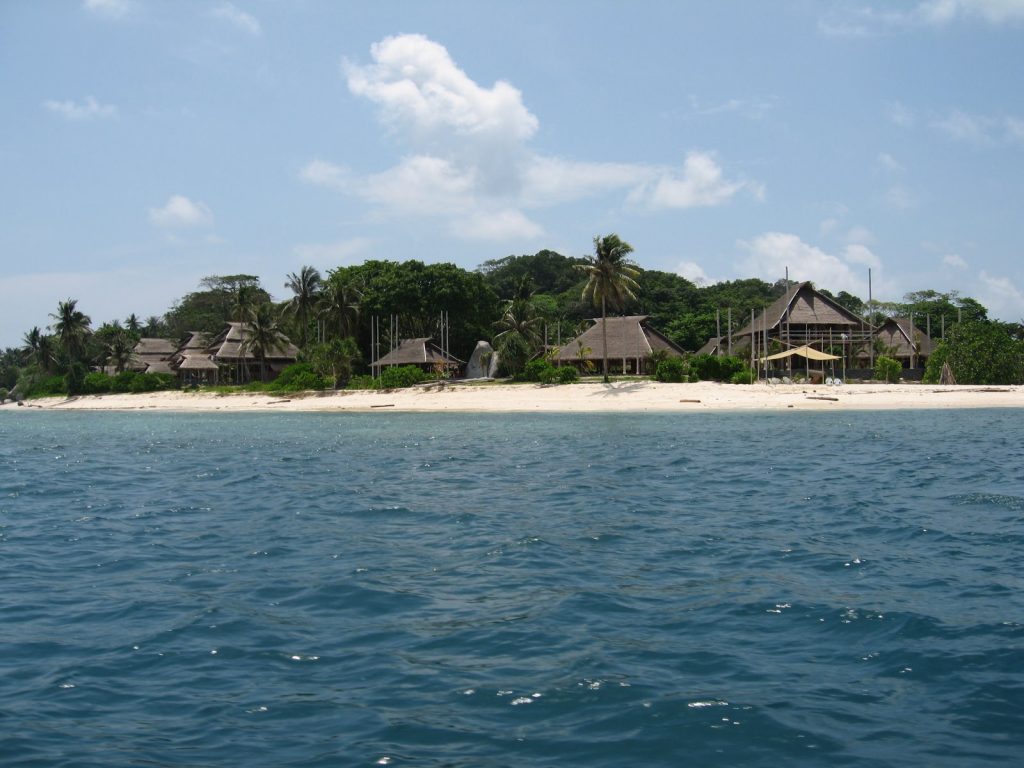
Nikoi in the early days. “Logistics are complicated so you want to simplify the process, and be sustainable in terms of how you operate.”
Q: Would you say joining Long Run in 2013 was a defining moment?
A: We had won some awards, and we were looking for some form of accreditation programme. Long Run was free then. The framework made sense, before everything was ad hoc, it helped us organise and put things in buckets under the four Cs – Community, Culture, Conservation, Commerce.
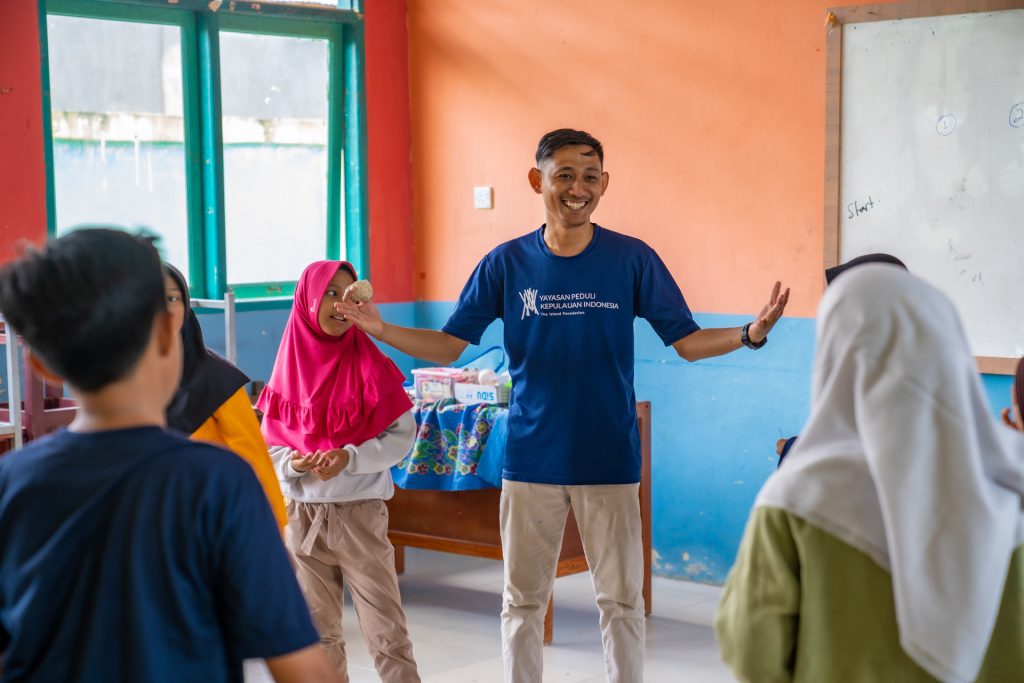
The Island Foundation operates 12 learning centres such as this one, and 1,500 school teachers have gone through its centres.
Q: Let’s start with Community.
We set up the Island Foundation in 2010 – education was identified as a major need by the island communities around us. Villages were asking for help with English, specifically. Finding English teachers wasn’t easy, so we evolved into more holistic education.
In total, we have 12 learning centres and 3,200 kids and 1,500 school teachers have gone through our centres. And we just got a grant to expand into Lingga, the next archipelago.
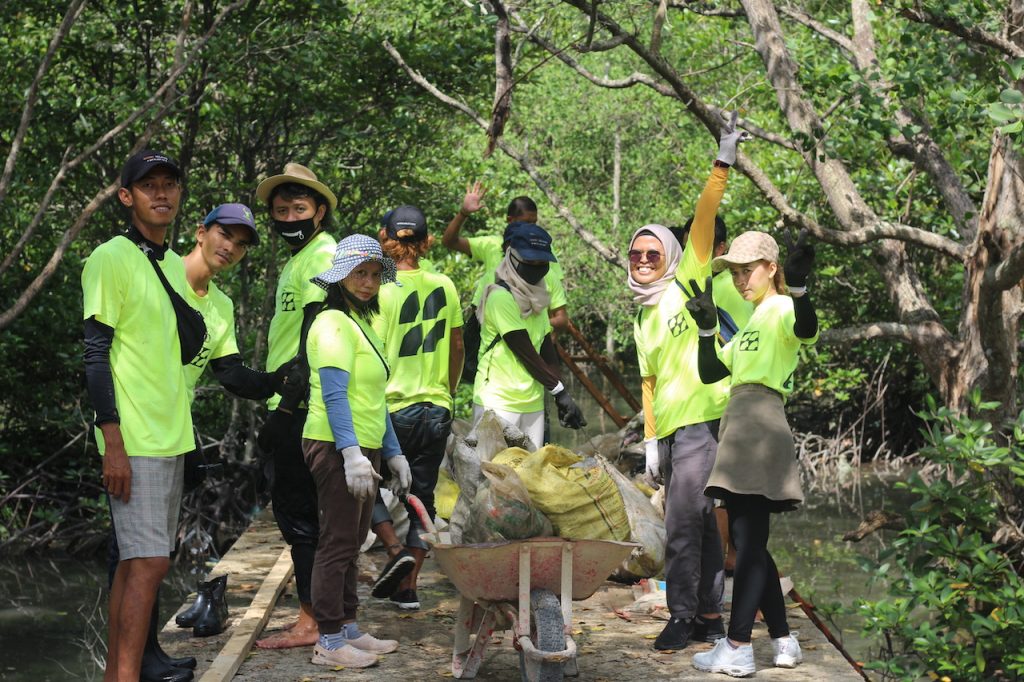
Staff cleaning up plastic in a collaboration with Seven Clean Seas. In total, they’ve collected 300 tonnes of plastic.
Q: Employees are also part of the community – how did you manage during the pandemic?
It was a challenge during Covid. We reduced salaries, cut back shifts and looked for ways for them to earn extra income. They made muesli, among other things, and we said they could take anything from the islands to supplement their income.
We formed a collaboration with Seven Clean Seas, which does plastic credits, and they paid half, we paid half – and our staff cleaned up the beaches. One or two clean-ups a week and in total, they collected 300 tonnes of plastic.
Now the staff have gone back to work, and they handed over the clean-ups to the local villagers who are being paid salaries to do this.
Q: Tell us about the Staff Fund you run for your 200 staff.
We set up it years ago – it’s a savings and loan scheme, staff put in certain amount, so they save and they also borrow from the scheme. It’s audited and run by the staff.
During the pandemic, we froze the fund for 2 years but we put in some funds so staff could borrow from it for emergency loans.
The great thing about it is, it stopped the practice of informal lending – it can get pretty messy, borrowing between staff. And the default rate is almost zero.
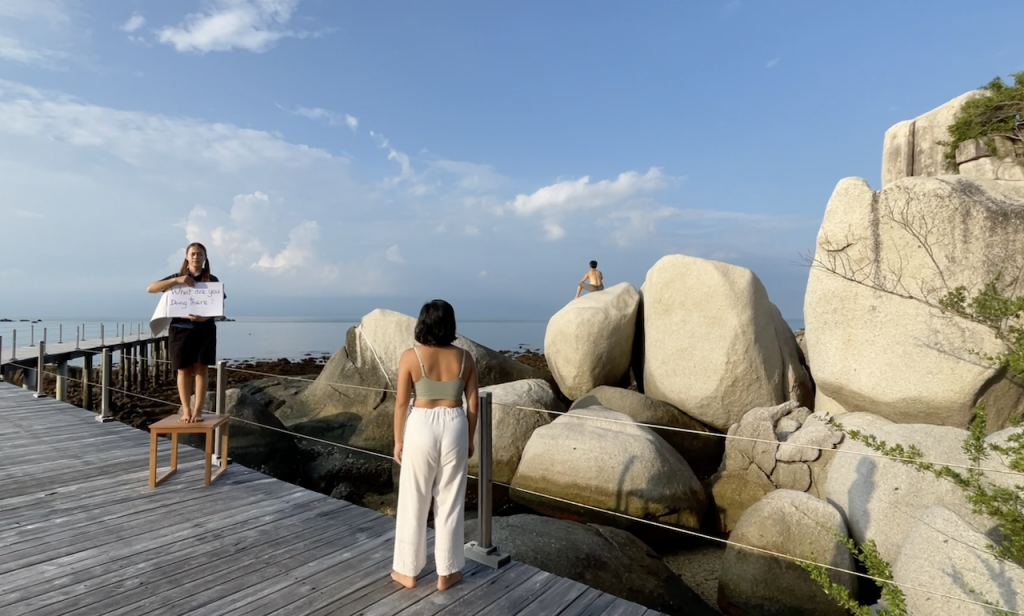
Artist residency programme to showcase South-east Asian culture.
Q: Let’s move onto Culture
Because our islands are so remote, it’s hard to show culture in the traditional sense. We showcase culture through our food, design and architecture (using local materials) – for example, Cempedak is made totally of bamboo. We also sponsor the local boat race.
SLIDE: ART RESIDENCY
We have just started an artist residency programme – we want to showcase South-east Asian culture. There is a history that connects the Orang Laut across South-east Asia, not limited by geographic borders.
Since we are in Malaysia, I’ll share a story – we had this Malaysian performance artist who wanted to do part of it naked. I tried to stop it but he said, it’s a distant view, you won’t see anything and it’s integral to the performance. So anyway, he went ahead – and thankfully, no one complained.
Q: Let’s have a conversation about conservation
Two aspects to this.
One is to minimise impact from burning fossil fuels and waste management. Measurement is a good place to start – a good question to ask is, what you have to minimise the use of electricity? So do what you can to reduce your loads in the first place, there’s so much low hanging fruit and you can find 10-20% savings everywhere.
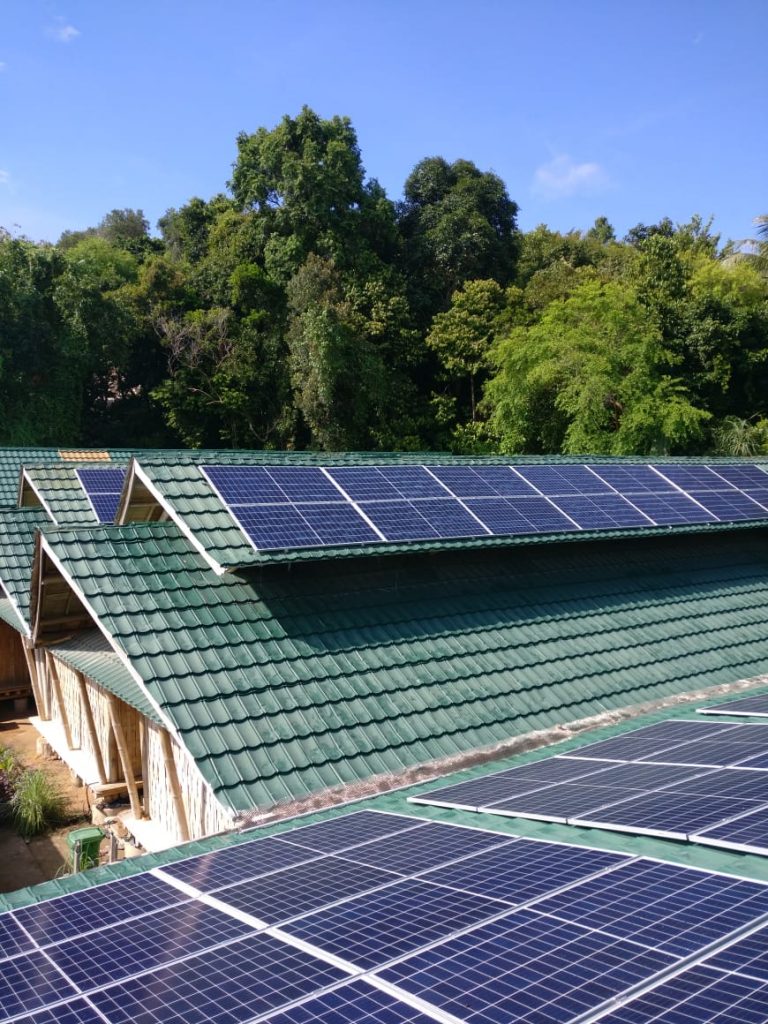
Solar panels – the islands are now running on less than 400KW hours per day, equivalent to eight hairdryers.
We are now running on less than 400KW hours per day – equivalent to eight hairdryers. At night, we can bring it down to two hairdryers. Water – we changed our showerheads and got a 20% reduction. We have a septic system that produces waste water which we use to irrigate the sub soil.Waste – we are actually waste positive, because of all the plastic we’ve been collecting.
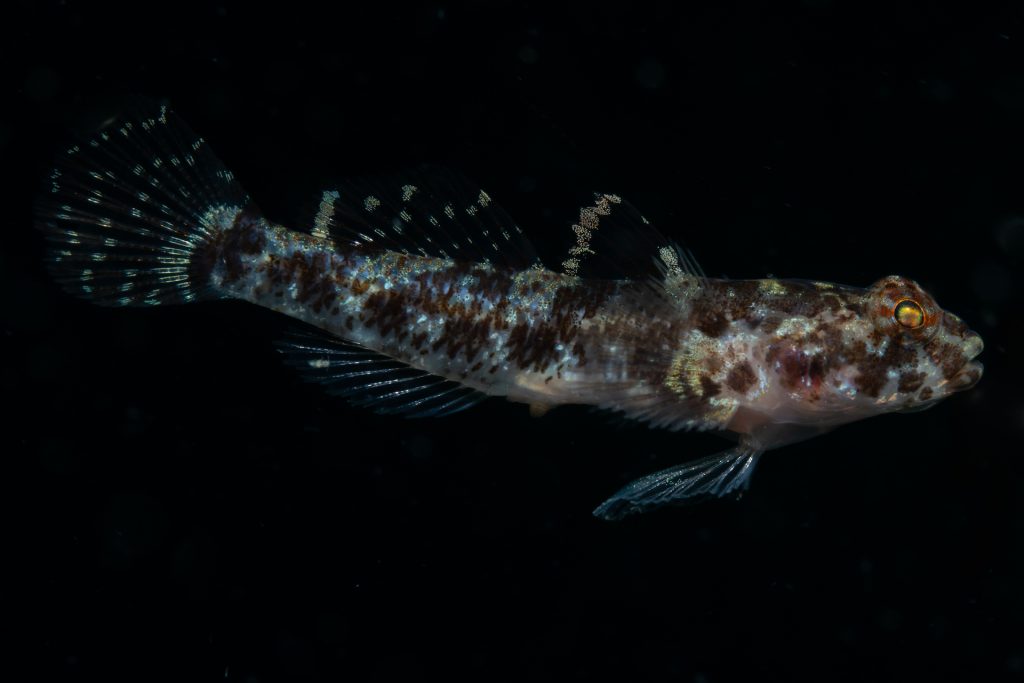
One of the 219 new species discovered in the area – out of which eight are possibly new finds to mankind.
Two, is marine conservation, we are in a marine protected area, twice the size of Singapore. We funded the survey work, socialised it among communities, and we were gazetted in 2022 by the government.
Through the survey, we identified 219 new species to the area and eight species are possibly new finds to mankind.
Q: Lastly, commerce – has it all paid off?
It’s hard to measure that but the premise is, a profitable business can invest in the other Cs. Community, staff, suppliers – everybody has to be profitable. You shouldn’t be doing this for altruistic reasons, but commercial reasons.
The question I get asked, is can I price the product higher because of what we do? If you talk to Long Run members, they will tell you it’s difficult to charge a premium.
But you could argue that we are selling at a premium. We are non-airconditioned resort charging four and five star rates. No TV, no mini bar, no hairdryer. When I first spoke to travel agents in Singapore, they asked, are you bonkers and obviously, that wasn’t the right way to sell it.
We sell space and privacy, a private island experience.
I don’t just want customers who care about sustainability. In fact the best customers are those who don’t care and we convince them to care.
One area where we cut costs plus lots of food waste is fixed menus – our customers like it, they don’t have to think. So if you can do things that benefit the guest experience and also reduce costs, that’s a good thing.
Q: Because we are at WiT Indie, talk to us about tech and distribution …
We just built a min-app on a generic platform. It offers menus, activities, island guide, spa, sustainability, like a mini website on your phone. Our guests love it.
80% of our guests come through word of mouth – high repeats, our website, social media, very few travel agents. We don’t use OTAs – I find it bizarre that OTAs charge more commissions than offline.
We have bounced back to 2019 levels – longhaul is a bit slow, because of high air fares, mid-week is tough. We are careful about adding staff costs back – margins now are stronger than pre-Covid.
So ought I to say, thank you, Covid?
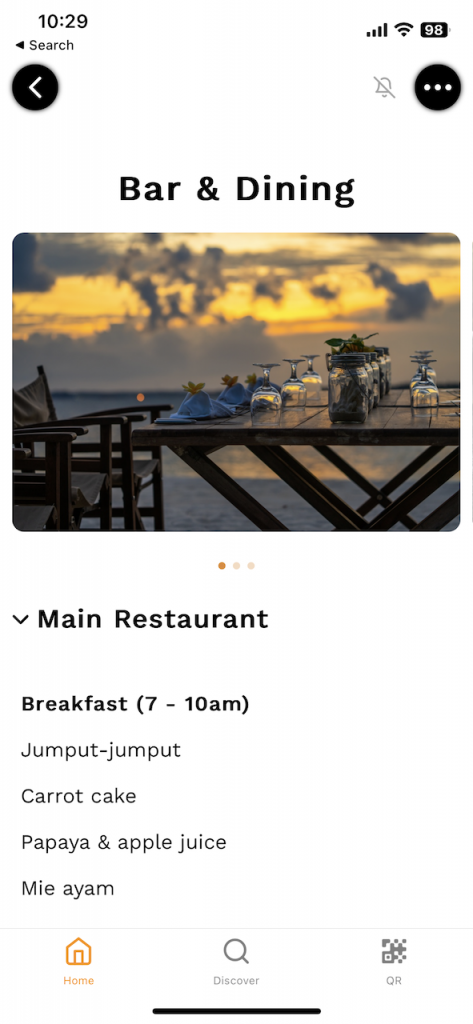
The mini-app developed inhouse