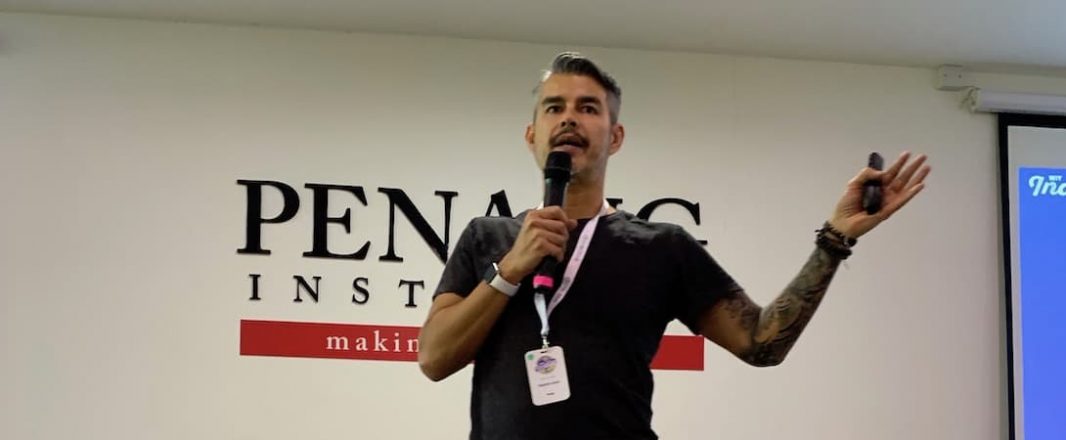
What a difference a week makes. Stephen Joyce, CEO of Rezgo, who visited Kuching, Sarawak, before turning up at WiT Indie, Penang, talks about how life changed in seven days, and what businesses like his will have to do to survive the storm. “We have been thrown on to a raft, adrift in an unforgiving sea, with no land in sight”.

When I arrived in Kuching, Sarawak on March 12, the day before my planned one-day workshop, the world was still in a relative state of calm. Although Germany had cancelled ITB the week before, the coronavirus had not yet taken hold with any great veracity in Western Europe.
By the time I left Penang a week later the world was in a veritable lockdown, the US economy was in a sharp decline, and I was being advised by the Canadian government to return home as soon as possible and to quarantine myself for two weeks upon my arrival. Normal was no longer normal, and life is not what it was just a week ago.
For businesses in the tour and activity industry, my company included, the new normal is scary. Small operators are seeing their booking volumes drop 50-100%, and with no idea of when the situation will improve many of them are wondering how they will survive this season.
For some, this is the first time they’ve faced a situation like this, but for others this is just one in a series of dips that many businesses have learned to face over the years. After all, the travel industry has been through 9/11, SARS, MERS, and H1N1, all of which had a drastic impact on the tour and activity segment.
Unlike the aforementioned events however, Covid-19 seems to be having a much broader and more intense impact. Part of that impact is due to the generally rapid response that governments are having to try and contain the spread of the virus, and therefore lessen the overall effects.
Yes, it means basketball games are cancelled, bars are closed and, for whatever reason, there is no more toilet paper in the world, but it also means that businesses that rely on tourism are being disproportionately impacted. We have been thrown on to a raft, adrift in an unforgiving sea, with no land in sight.
No matter how dark the night, the morning always brings light and hope. There are things that you and your business can do to stay afloat. It’s not going to be easy or painless, but you will be stronger and more resilient as a result.
Focus on your core
“It is not the strongest or the most intelligent who will survive but those who can best manage change.” ― Leon C. Megginson
When the human body is exposed to extreme cold the first thing it does is pulls blood away from the extremities and brings it to the core. In times like these, your business needs to do the same. Suspend all non-essential spending, any supplemental hiring and other activities, and conserve your cash. If you need to scale down your operations, do it now. In a best case scenario this situation is not going to resolve for another 12-16 weeks, that takes us into early June or July, which is the start of the busy summer season. Take the time to improve your operations, develop content, update your website and build a recovery plan.
Look to your neighbours
“Taking care is one way to show your love. Another way is letting people take good care of you when you need it.” — Fred Rogers (aks Mr Rogers)
Since your inbound travel customers are probably not going to come back right away, you’re going to want to adjust your marketing to focus on a more domestic audience. Everyone knows that this event is having a big impact on small business. Don’t be afraid to share your story, be vulnerable, and ask for support from your community.
After two weeks in isolation and the inability to travel for the next three to four months people are going to be eager to experience anything. Use the opportunity to focus on providing experiences for people who are already in your destination and desperate for social interaction. Be creative and think about what you can do to lift the spirits of others in your community. Take care of your neighbours and they will take care of you.
Don’t Despair
“Does anything in nature despair except man? An animal with a foot caught in a trap does not seem to despair. It is too busy trying to survive. It is all closed in, to a kind of still, intense waiting. Is this a key? Keep busy with survival. Imitate the trees. Learn to lose in order to recover, and remember that nothing stays the same for long, not even pain, psychic pain. Sit it out. Let it all pass. Let it go.” ― May Sarton, Journal of a Solitude
As with 9/11, SARS, MERS, and H1N1 this too shall pass. Soon enough, we will collectively forget the pain we are experiencing now. It is human nature to forget the pain, we don’t even recall the sense of it; it is how we cope. But what we cannot afford to do is forget the effect that this crisis will have on the world and our businesses specifically.
If you don’t have a disaster recovery plan now, you’ll have one after this is all said and done. I expect that you’ll pay more attention to that rainy day fund as well and you won’t be quite so complacent and comfortable with the status quo. But one of the most important things you can do now, is don’t despair.
Like the animal caught in the trap, there are things you can control and a lot of things you cannot. Focus on the things that are in your purview; your relationships with family and friends, customers, vendors, and suppliers. Take the opportunity to build those relationships (at a safe distance of course) and share your experiences. Remember that you are not alone and together, we will make it out.
Finally, I want to thank all of the amazing people that I met and talked to in Berlin, Kuching and Penang during WiT Indie over the last few weeks while the world was catching on fire. The reason tours and activities is referred to as “The Best Part of Travel” is because it is the people that make it so. Stay positive, stay resilient, and stay safe. We can share our scars the next time we meet.