
At a media conference to announce the launch of flights to Beijing, Ningbo and Hanoi, Buchanan said that while the 80s saw the growth of low cost in the US, followed by Europe in the 90s, and after that South-east Asia, the time had come for low cost to take flight in north Asia.
“We were the first to crack Japan’s distribution market with a low cost option and we are excited to take part in the growth that will come in this part of the world,” he said.
To ensure Jetstar grows its share from the current 20% in the Asia Pacific market, Jetstar is investing A$500 million into its Singapore hub and is expanding its Changi-based fleet by 50% over the next six months, with new capacity directed towards North Asia.
Given North Asia’s low low-cost penetration, it makes sense for the airline to focus its growth in that part of the region. It also means making way for Qantas which is said to be in talks to establish a Singapore-based full service carrier. Along with Singapore Airlines’ plans to set up a low-cost subsidiary, it makes for exciting times indeed for the region’s aviation scene.
Said Buchanan, “We have been doing this since 2006 so we are not surprised more are following. Look at our success – 20 million passengers in seven years, 20% market share, and compound growth rate of 17% a year. Like in the US and Europe, early movers have the advantage. There have been a few attempts that have failed such as Viva Macau.”
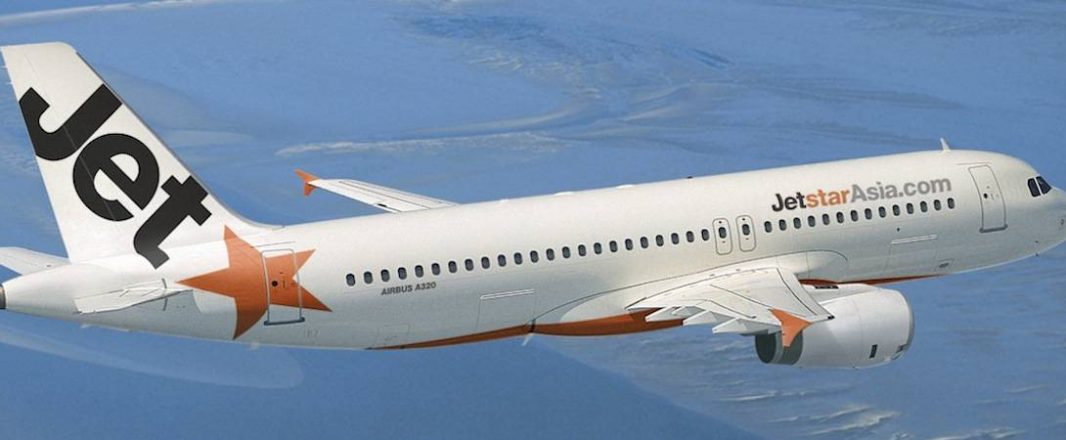
Jetstar plans to add five A320s and two A330s to its Singapore Changi-based fleet this year. As a result, its Singapore-based fleet will grow from 12 to 17 A320s and from two to four A330s by the end of 2011. One of the additional A330s will be used to open Beiing in November 2011. The fourth A330 will be used to launch a route not yet announced, which CAPA (Centre for Asia Pacific Aviation) expects could be Shanghai.
The five additional A320s are to be used in part to expand capacity on six existing routes from Singapore – Denpasar Bali, Ho Chi Minh City, Hong Kong, Jakarta, Kuala Lumpur and Taipei. The additional Singapore-based A320s will also be used to launch services to Hanoi and Ningbo as well as at least two other new unannounced cities, which CAPA expects could be Shenzhen and Guangzhou.
Buchanan said Jetstar has sights on 12 destinations in total in China. So far, it’s announced nine. “We are passionate about China. This is the decade of China. There’s a burgeoning middle class and there are cities now with critical mass of middle class that are creating this insatiable demand for travel. In Melbourne alone, we have 50,000 Chinese students.
“Our focus in China, as it was in Japan when we launched in 2007, is to build our brand, gain credibility and traction and create new demand.”
One unique attribute it intends to play up in the fight for market share is its ability to work with full service carriers as well as low cost airlines. “That’s one competitive differential we will exploit,” said Buchanan.
You could also call it the decade for ancillary revenues. Buchanan said it currently earned $24 per pax and next year, it intends to increase this to $32.
He said this in response to a question on his views on the Air Asia and Expedia joint venture and following that, Jetstar’s partnership with Agoda.
“When it comes to hotel content, we source it very directly, this is critical to our business. We are innovative with new products such as financial services. We have the Jetstar Mastercard, the iPad partnership with Apple, our holiday business and our dynamic packaging holiday business. We want to stretch the brand to new places.”
“We can do a lot more with ancillary revenues and this comes from building a strong and successful brand, having the right partnerships and know-how. We will be making more announcements in this area in future.”
When asked how Jetstar was globalizing its brand, Buchanan said his goal was to localize the brand, not internationalise it. “We have as strong a heritage in Singapore as we do in Australia. We want to be as local as we are global and we have a lot of localization of services.”
CEO of Jetstar Asia, Chong Phit Lian, gave an example of how even though the group has a common template for catering, it needs to customize to local tastes. For instance, it found it had a high wastage of rice on Perth services while on China services, it was sandwiches.
“These are things that we observe and adapt to ensure we localize our services,” she said.