Listen to the podcast here:
“When you live in it, you don’t see it.”My friend said this with a wry smile as she navigated the busy streets of Ho Chi Minh City. I sat beside her, wide-eyed, taking in the sweeping changes of a city I hadn’t seen since 2018.
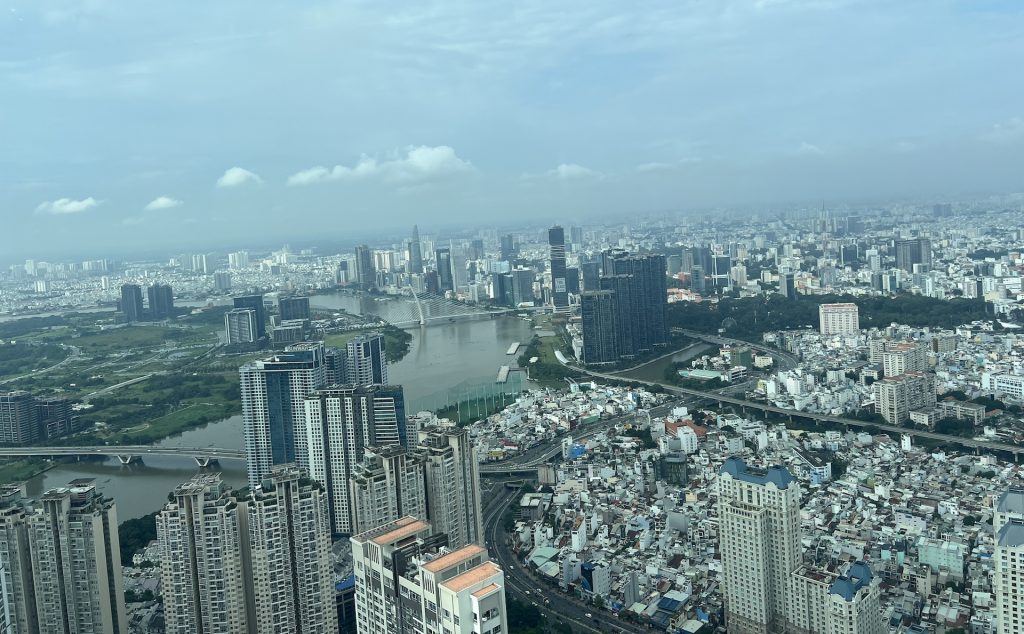
I was gobsmacked by the transformation – the brand new bridges, highways, skyscrapers – and I couldn’t help exclaiming and repeating myself everytime we turned a corner into a new district, “Wow, it’s changed so much.”
Amused, she said, “I suppose you notice it because you’ve been away for so long. I live here, so it’s just grown around me, and I’ve grown into it.”
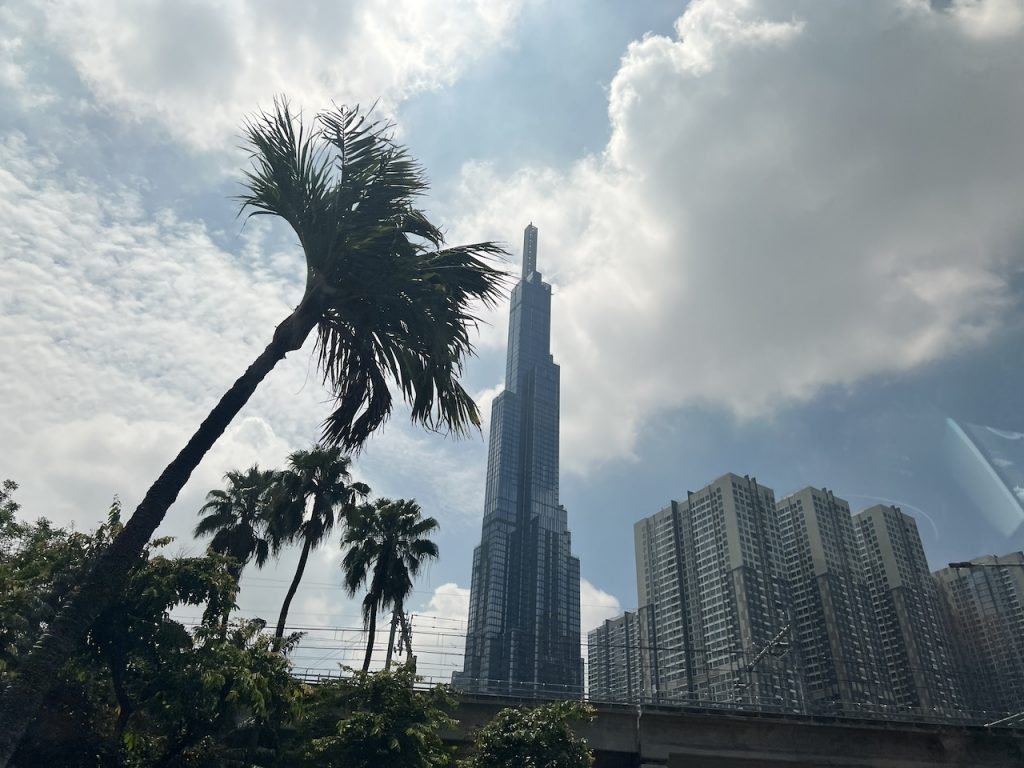
The Vinpearl Landmark 81: You can’t miss it.
Ho Chi Minh City today is unrecognizable from the place I first visited decades ago. Parts of the city seem to have sprung up seemingly overnight. Clustered around the river is an urban sprawl, not like those of Chinese secondary cities.
The hotel where I was staying, the Vinpearl Landmark 81, part of Marriott’s Autograph Collection, is in the middle of a huge development of posh residences, upmarket shopping malls and gleaming office towers, built by Vingroup, one of Vietnam’s largest conglomerates. The hotel is housed within the tallest tower in the city, you can’t miss it; it juts out like a gleaming needle in the midst of a concrete forest.
Vingroup has an interesting history – it was founded in Ukraine in 1993, and started out as a food company selling primarily instant noodles. Who knew noodles could be so profitable? I might have picked the wrong career. Today, Vingroup’s revenue accounts for nearly 1.1% of Vietnam’s GDP – a far cry from the days of their Mivina noodles.
There’s a new highway that stretches into the Thu Thiem New Urban Area, which is regarded as the “Pudong of Saigon”, because until a few years ago, nothing existed here except rice fields.
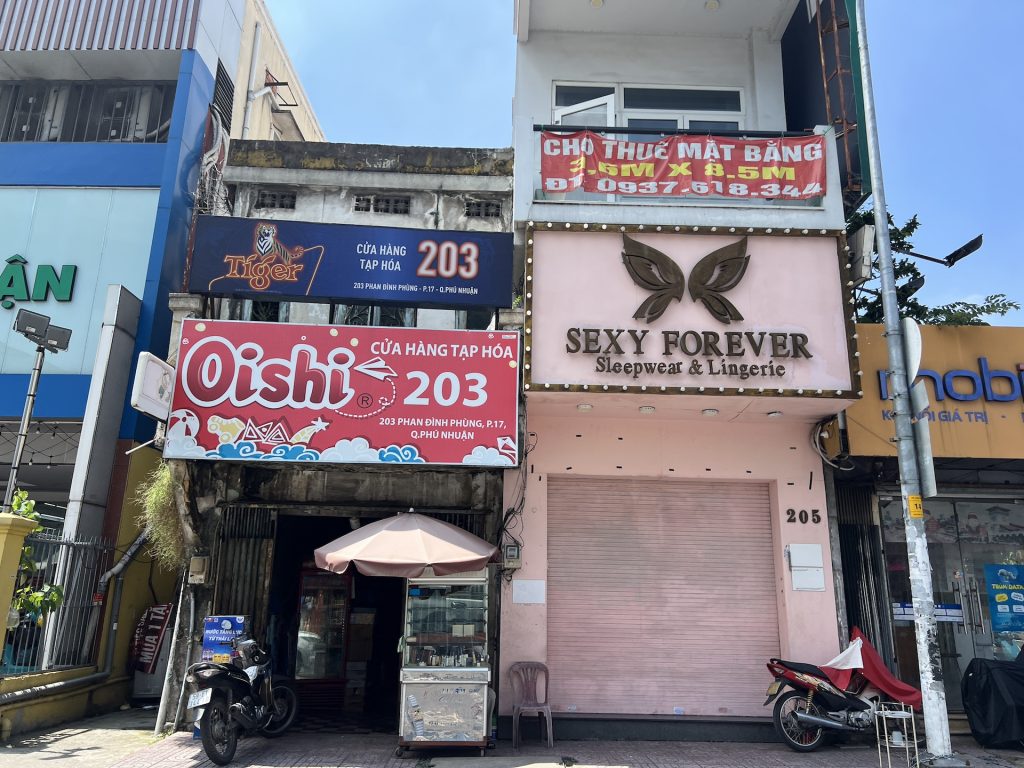
You still spot parts of old Saigon amid the modernity – the shophouses and their shopfronts, with their bright and loud signs advertising their trade, and the roadside food stalls where you sit on stools and slurp on noodles – but they are fast being swallowed by the urban crush.

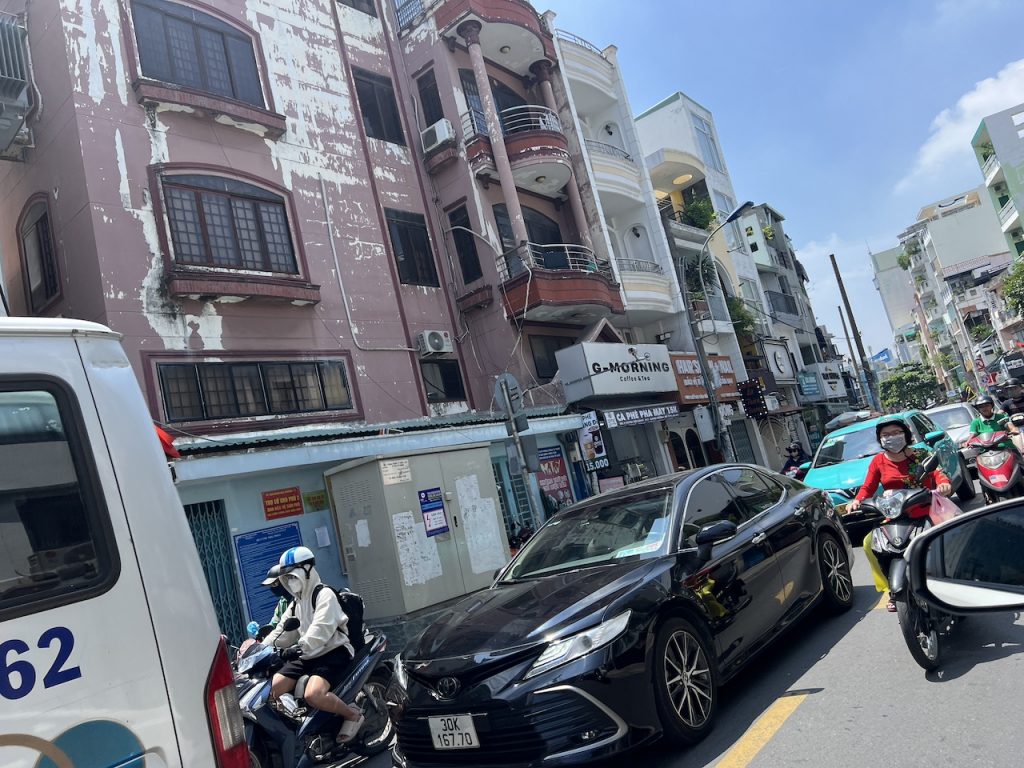
The only thing that’s not changed is the traffic.
There are more motorbikes than bicycles now, but they still buzz through the streets in their chaotic dance. It’s a kind of choreography unique to Vietnam – a perfectly unstructured structure, an inner positioning system that somehow prevents collisions. And my old strategy of crossing the road? Eyes closed, heart racing, and somehow, it still works.
But it’s not just the skyline that has changed. The visitors have too. Today, the largest source of tourists to Vietnam is South Korea, followed closely by China. Streets in District 1 are lined with Korean restaurants and bars, so much so that for a moment, I felt like I had been transported to Seoul.
This shift is more than just demographic; it’s shaping the very fabric of the city’s tourism economy. Contactless payments, for instance, have surged, rising from 15% to 33% at popular destinations, driven in part by the influx of the tech-savvy Korean and Chinese tourists.
The numbers tell a story too. Vietnam welcomed nearly 11.4 million international visitors in the first eight months of 2024, a staggering 45.8% increase over the same period in 2023. Korea alone accounted for over three million visits, while China contributed another 2.4 million. It’s a shift that’s visible not only in the city’s infrastructure but in the faces and languages that populate its streets.
One evening, I found myself at a seafood restaurant that doubles as a nightclub after hours. The air was thick with the scent of tamarind and spice. We dined on crabs in a tangy sauce, our hands sticky and fragrant, while a young waitress – her English halting but her smile broad –served us with the kind of warmth you only find in places still deeply rooted in tradition.
That same warmth extended to the staff at the Vinpearl Landmark 81, though I could do without the labyrinthine elevator system, you know the kind which controls you and what lifts go to which floor.
You often see guests wandering around in a daze, wondering what to do and which lift to take to which floor. One morning, a Japanese man in swimming trunks and a towel, clearly flustered, darted between lifts as suited conference-goers looked on, amused.
It was a small moment, but one that captured the mix of modern chaos and human comedy that seems to define Ho Chi Minh City today.
I was attending the Booking.com Click Asia conference for its partners from the region and it felt good to see so many young Vietnamese professionals in the audience, eager to build a future in digital travel.
In this country of nearly 100m people, youths, aged 10-24, account for 21% of the population, and the demographic window is projected to last until 2039, according to UNFPA, the United Nations Population Fund.
This segment is driving digital behaviour. I was told that domestic travel has largely shifted online, with local OTAs such as Vietnam.com, Chudu, iVIVU and Vinabooking benefitting from the migration. International giants like Traveloka, Agoda, Booking.com and Expedia are also active in the market, creating a pretty competitive scene.
The most important thing tourism has done is, it’s given ordinary Vietnamese, regardless of education or status, opportunities to build careers and enrich their lives.
Bui Viet Thuy Tien is one of the best examples I know. I hope she doesn’t mind me sharing her story because she always says, ‘I like to keep a low profile’, but I believe it is women like her who hold up half the sky in Asia’s travel industry.
Now, the managing director of Asian Trails Vietnam, she started out as a secretary in Diethelm Travel, and worked her way up, studying the inner workings of an inbound tour company. Her mentor, Luzi Matzig, spotted her potential and when he set up Asian Trails in 1997, asked her to run their Vietnam operations.
“I am always grateful to him because he gave me a chance,” she said.
Of course, it was her own hard work that got her this far but we always need a helping hand at some point in our careers.
For me, on this recent trip to Ho Chi Minh City, it was heartwarming to see such progress and development in a country which, when I first visited, was still coming to terms with its past. Now there’s only the future to look forward to