“Are we moving already?” We had not even put away our bags, let alone sat down and settled, when we realised the Shinkansen was already in motion. 11.35 to be exact.
We are headed to Kanazawa after an intense two days of WiT Japan & North Asia where the talk was about how tech was changing travel in Japan – Robot dances and Samurai Workouts that are now bookable online, superapps that keep customers within their ecosystem, payment options that make it easier for travellers to go cashless, and alternative accommodation being created out of empty homes in abandoned villages as Japan’s population declines by about 1,148 people a day, a data point we learnt from analyst Jesper Koll who gave us other interesting insights about the Japanese economy.
But more of that later.
Taking the Shinkansen out of Tokyo to anywhere in Japan is like taking a fast train back to the past. You are transported at bullet speed from a city that’s inspired science fiction writers like William Gibson to places that remain mired in traditions and retain a Japanese-ness loved by travellers.
To me, Planet Japan is made up of two worlds – there’s Tokyo which is like a space station orbiting out there where the future is being created and imagined, and the rest of Japan happy to remain as it is, with some places being reluctantly dragged into the future.
In Kanazawa, the train station looks like it’s been designed in outer space – fluid, flowing lines of steel and concrete that speak of Japanese engineering at its finest.
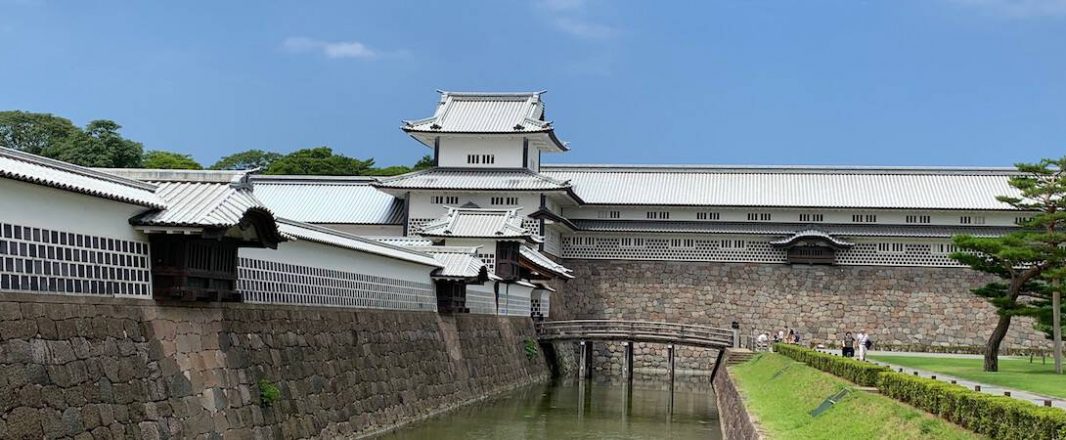
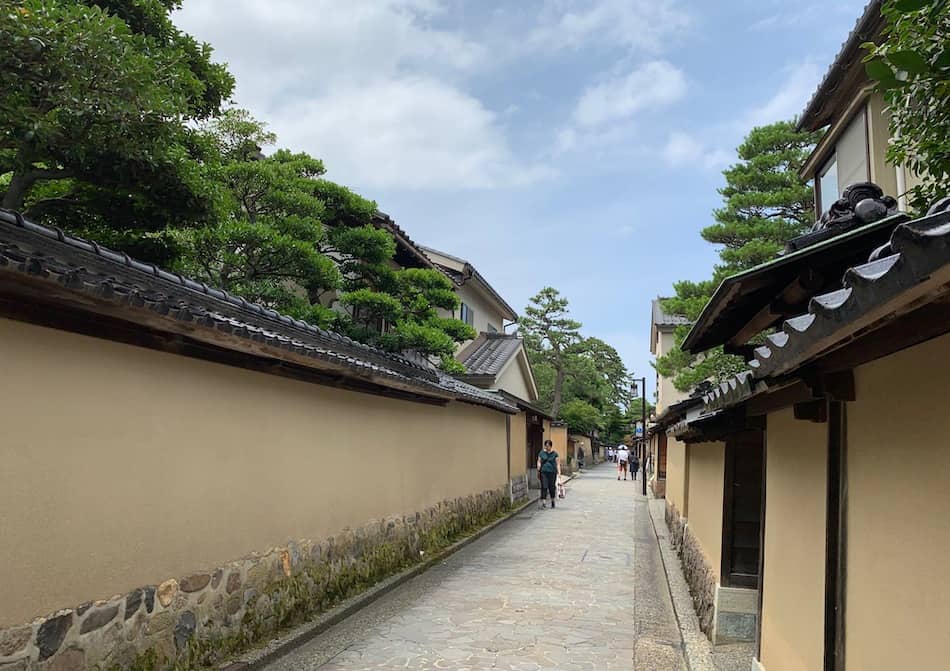
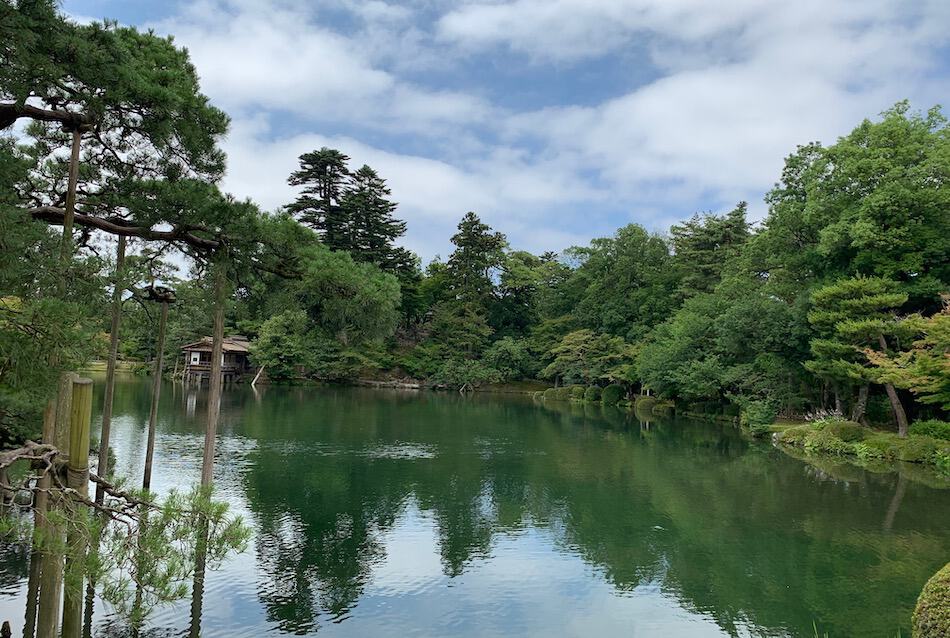
This city of under 500,000 people retains its Japanese traditions within the walls of its old city, canal walks, Kenrokuen castle and gardens and its Samurai district with its old houses and shrines. Most of the local restaurants take cash only. English is hardly spoken, although Google Translate is getting better at bringing down this barrier.
The hotel we stayed in, Uan Kanazawa, offers a lovely local and contemporary experience, with staff who serve with a graciousness found only in Japan.
The “kimono” moment – balancing tourism and traditions
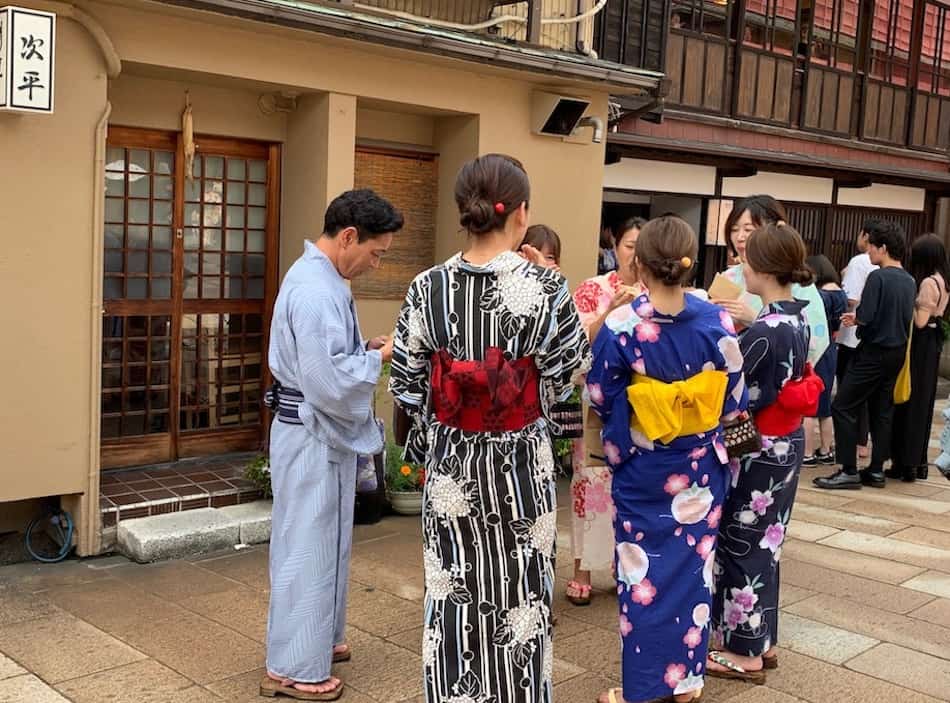
As with most destinations in Japan, Kanazawa, a three-and-a-half hour train ride from Tokyo, is seeing more foreign travellers who are discovering the charms of “Little Kyoto”. It’s easy to spot the tourists – they are the only ones wearing kimonos – and you see an equal number of East Asians and Westerners swishing their way along in Japanese robes.
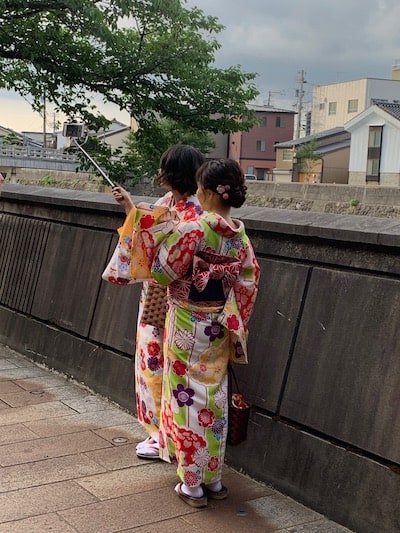
As in Kyoto, kimono rental is big business here – and I find myself wondering what do local residents think of this? Do they mind their national attire being usurped by foreigners so they can have “selfie” moments like this?
They certainly minded Kim Kardashian West naming her shapewear “Kimono” with the celebrity being accused of “cultural appropriation” on social media recently.
At WiT Japan & North Asia, beyond how tech was changing travel, there was also talk about how the growth in inbound tourism in recent years is changing Japan.
In Kyoto, where we hear of reports of over-crowding and local businesses being swamped by tourists during peak season, tourism authorities are running programmes to educate tourists on local customs and traditions. Okinawa has also seen an influx of foreign visitors – in 2017, it received nine million visitors, outranking Hawaii for the first time. Out of the total, 2.7 million were foreign tourists, who came mainly on cruises.
Miyuki Hirakawa, global marketing, Okinawa Convention & Visitors Bureau, said there were initiatives afoot to spread travellers out to other islands such as Ishigaki. “We are also doing a lot of educating of locals because to them, accepting foreign visitors is quite new. At the same time, it is important visitors are respectful of local traditions so that no tension is created between locals and travellers.”
Hitting 40m target not impossible, but it won’t be easy
Beyond trying to strike a balance between tourism and traditions, Japan inbound is facing another challenge – Inbound growth is slowing down, particularly from North Asian markets, and Tadashi Kaneko, executive director, global strategy of JNTO, said that while reaching the target of 40 million by 2020 “was still possible”, it won’t be easy.
Even though high growth is being seen from Europe, North America and Australia, the reality is 75% of visitors are from East Asia, and the high repeats from these markets – up to 85% from Hong Kong and 60% from South Korea – mean they will need more reasons to return.
Kaneko said the JNTO is developing a two-pronged strategy – promoting 100 local experiences for longhaul markets but relying on promoting “underlying strengths” of the main cities to visitors from East Asia.
Worrying too is what the Olympics 2020 will do for tourism with Kaneko showing historical data that shows that typically, visitors tend to decrease in Olympic years because travellers feel they should avoid the event period.
Even in Kyoto where the media keeps reporting on the ills of over-crowding, Kazuya Fukuhara, managing director, Kyoto City Tourism and MICE Office, said annual tourist numbers peaked at 56.84 million in 2015, and the number is slowly decreasing. The good news is, the difference in numbers between low and high season was also decreasing – from 3.6 times difference in 2003 to 1.5 times difference in 2017.
Masashi Takahashi, CEO of tours & activities provider, Voyagin, said its top priority in 2020 was to develop unique and local experiences to take pressure off over-crowded spots, for example, it is offering an organic farm and cooking class in Kyoto by the sea, and a Kyoto traditional fishing town tour.
Rise of a new middle class and the world’s richest baby boomers
While inbound is clearly the top story in Japan, one that’s been fueling the growth of global online travel giants such as Booking.com, Agoda, Expedia and Airbnb, the audience at WiT was also reminded not to write off outbound.
Having stagnated in recent years, there are signs of an uptick – Japanese overseas travellers in 2017 reached 17.89m, the second most travellers ever after 2012, and the number continued to grow in 2018 to 18.9m.
Economist and analyst Jesper Koll of WisdomTree Asset Management spoke of the dawning of “Japan’s New Golden Age” – while its population may be dwindling by 1,164 people a day, Japan was creating a new middle class as well as having the richest baby boomers in the world, both in time and money.
With the best income distribution in the world, he said the Japanese economy was bringing up the bottom and employment was still growing. That also means an engaged human capital with older women returning to the workforce, under the government’s “Work Style Reform” programme.
What all this means is a fair and equitable society in a nation of nearly 130 million people, who have the means and inclination to travel.
Benjamin Holt, director of regional marketing (Japan, Korea and Micronesia) of Hilton said while the demographics of Japan were “fundamentally challenging”, there were opportunities to be found. “We will have more elderly travellers – how do we engage them and give them trust and assurance and sense of being taken care of. This will also happen in South Korea and China.”
The key is planting the seed of travel from an early age. When asked why he thought South Korea had a healthier outbound market – it is now the second largest outbound market in Asia with 28 million trips on a population of 55 million – Holt said, “The difference probably is that South Korean kids are exposed to travel from an early age. We need to start introducing travel in schools, to get them thinking about it from young.”
Meanwhile, young Japanese women are leading the outbound growth. PEACH, the low cost airline, sees more than 60% of its business from this demographic. Magi Castellort, tourism counsellor for the Spanish Embassy in Tokyo, said Spain has seen an above average increase in young women visitors. “This helps us to adapt our products and women are ‘better spreaders’ than men, which is great because they are doing our job for us.”
One such “spreader” is Ayumi Amemiya, a writer who’s been to 50 countries and sees her mission as inspiring young women like her to travel. She said that social platforms like Instagram have been good for tourism, “painting positive images of travelling”.
Positive is open to interpretation though – when asked what type of content was most popular, she recalled a post she did during Songran, the water celebrations in Thailand, “of good looking men in wet shirts”.
“That got a lot of likes and comments,” she laughed.
I bet. More than my post of foreigners in kimonos, I am sure.