A three-hour ride on the Super Azusa Limited Express from Shinjuku Station takes you to the historic town of Matsumoto in Nagano Prefrecture. It’s a quiet little place where the air is fresh and the spring water so clear and cool that ice cubes look like crystals.
I am staying at Hotel Matsumoto Kagetsu, the newest property in Agora Hotels’ collection of 12 that founder Aya Aso, a former classical pianist, is curating, each to represent a different song of Japan. This hotel espouses the “Mingei” philosophy, an appreciation of the town’s craft culture and the simple things in life that make Japan unique.
The hotel, part of a building built in the early 1900s, was run by a family for three generations – late last year, Agora took on the management, closed it for five months, restored, refurbished it and reopened it in April. It is a charming hotel of over 80 rooms and the suites in the original wing take you back to traditional Japan.
Last night we dined on executive chef, Soshi Ueno’s creations. Inspired by French cuisine, he uses the freshest of local ingredients to create delectable art pieces on plates – the grilled sweetfish you eat whole, that crumbles in your mouth; grilled seabass coated with Japanese rice crackers; wagyu beef that come from the “happiest cows” in Japan; and salt vanilla ice cream with toasted soy bean powder.
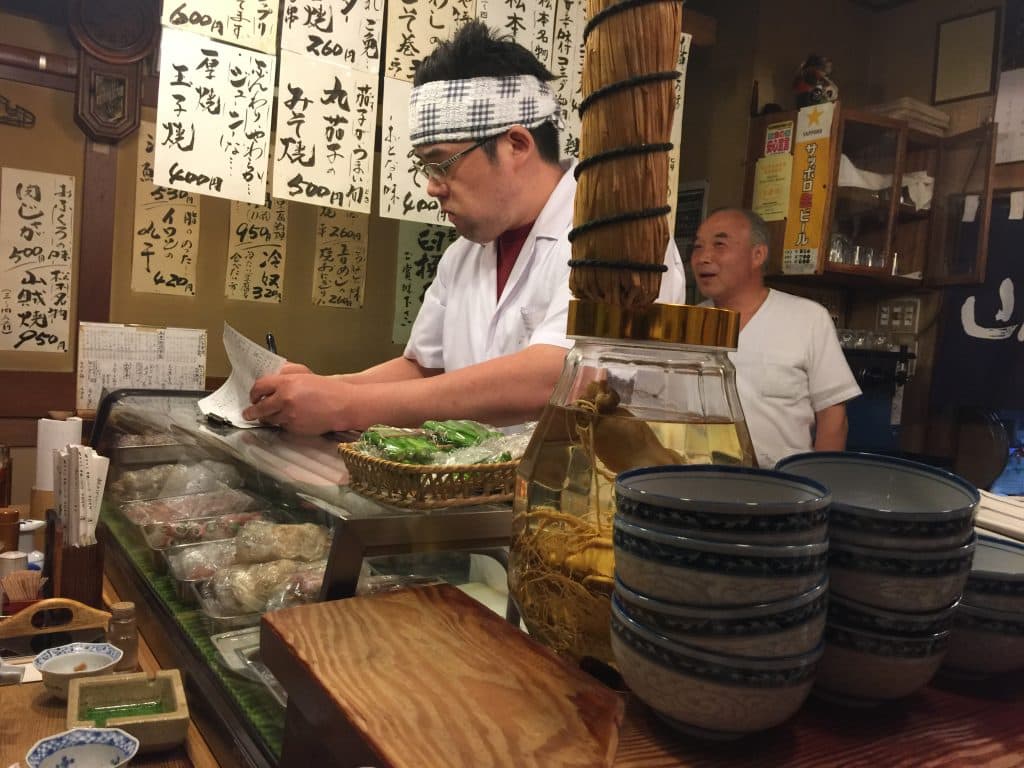
Dad looks on while son handles the orders – 97% of businesses in Japan are family-owned, we learnt at WIT Japan & North Asia
As if we hadn’t had enough, we headed to a local yakitori place – a second generation family business, the son works alongside dad grilling the most succulent chicken on skewers while mum does the washing up. I asked the son the secret to good yakitori and he says, “Experience.” He came into the family business 10 years ago.
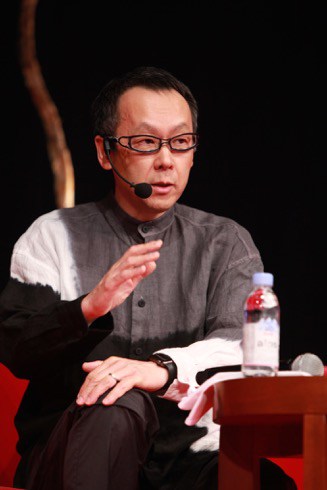
Yoshiharu Hoshino: Most family businesses are run with “primitive” management methods and need to reboot
At WIT Japan last Friday, I learnt from Yoshiharu Hoshino, CEO of Hoshino Resorts, the first Japanese luxury ryokan group to go international, opening properties in Bali and Tahiti, that 97% of the businesses in Japan are run by families and half the total economic value of the country is created by these businesses.
Most are run with “primiitive management methods”, he said. When he took over in 1991 the business, started by his great grandfather in 1904, he said he had to do very little to double the profit. Imagine if all the family businesses in Japan did that, he said, imagine the immediate economic boost.
Ryokans are the most traditional of family businesses. On stage with him were Ippei Ichijo, the 20th generation who inherited the 600-year-old Ippei ryokan, and Yuichi Hirata, who took over the 150-year-old Mukaitaki ryokan. Then there was Ichiro Kawanabe, the third generation who’s now running Nihon Katsu, one of Japan’s oldest taxi companies with about 3,200 taxis in metropolitan Tokyo.
Both accommodation and transportation are being disrupted by technology and companies whose mantra is scale, scale, scale. Kawanabe, educated in the US, is well aware of what companies like Uber has done to his sector but believes that as long as he focuses on delivering quality and trust, he should be able to protect his family business.
He does agree with Hoshino’s point that “primitive” management methods have to be replaced with modern techniques but like Hoshino, he believes family businesses tend to be run with an eye on the longterm game versus short term gains.

The family business panel – from left, Hoshino, Ippei Ichijo, 21st generation; Yuichi Hirata from the 150-year-old Mukaitaki ryokan; Ichiro Kawanabe, third generation family taxi business Nihon Katsu; and moderator Aya Aso, Agora Hospitalities.
Both Ichijo and Hirata worked in other companies before returning to the family business. Hirata, who wanted to be a rock star, had to fend off a 400 million yen debt that would have destroyed the family business and Ichijo had to change his first name to Ippei in order to succeed.
While Japan struggles with a lack of room supply in the five main prefectures most visited by foreign travellers, Aya reminded us there were 50,000 rooms in ryokans and hotels across Japan, and they run at an average 60% occupancy, which means there is spare inventory, just that they are difficult to access by travellers due to fragmentation and lack of digital connectivity.
Then there’s private accommodation and although there are still grey areas surrounding this sector – the government last week introduced a 180-day limit for home owners – there are already many players eyeing this new segment. Japan after all needs the additional room supply if it is to meet its 40 million visitors by 2020 and “minpaku” is seen as the possible “white knight”.
For Airbnb, Japan is its fastest growing inbound destination, according to its managing director Ronnie Gurion who also told the WIT audience that its fastest growing outbound market was China. Which explains too why Tujia, the Chinese “unicorn” in vacation rentals, is also entering Japan.

Melissa Yang: Tujia following its Chinese customers abroad to destinations like Japan
CTO and co-founder Melissa Yang told the WIT audience that Tujia, which has 400,000 listings, is following its Chinese customers – 70% of whom are families – abroad to regional destinations and Japan is number one on the list. It has a team of two now sourcing original supply in Tokyo – in addition to its API integration with players like HomeAway and Roomorama. It knows it needs original content to differentiate itself.
Ryokan owners meanwhile are wondering how they can take part in this golden era of inbound tourism and ideas like an “Uber for ryokans” were raised at the WIT conference.
Both of the ryokan owners, Ichijo and Harata, acknowledged the challenges they faced in accessing the foreign customer although Hoshino cautioned that Japan shouldn’t get too carried away with its inbound tourism dream. Domestic tourism still contributes 85% of total tourism earnings and he does not believe that foreign visitors would ever account for more than 20-25% of total income.
Hoshino reiterated that Japan should instead prioritise “rebooting” family businesses to ensure they stay profitable and sustainable.
In Matsumoto, almost every business I visited was family-run. We popped into a cake shop whose third generation owner took us into his own little museum, displaying his family history and heirlooms. Started by his grandfather, the shop still makes its own cakes. His son is set to take over and smiling broadly, he tells us he’s got seven grandsons and so the fifth generation is secured as well.
We also visited a little theatre to watch a Samisen (Japanese three-stringed guitar) performance and was told by the male and female players they were the last of the samisen players in their families. They played us a song usually performed by a geisha and told us the last geisha retired from this town two years ago. “So you are very privileged to be able to listen to this now because soon it will disappear,” said the man.
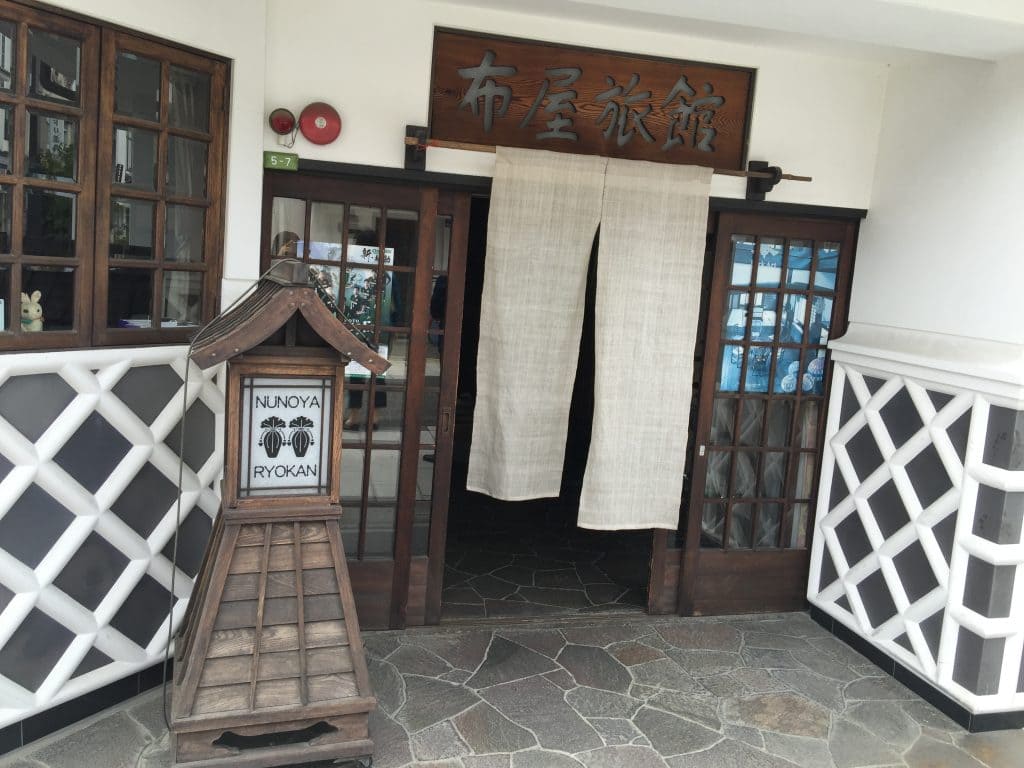
Nunoya ryokan in Matsumoto, fourth generation with no succession in sight
At a local ryokan, Nunoya, we met the fourth generation woman owner (it is quite rare that daughters inherit ryokans) who told us she was going to be the last because her children were not interested. She seems to have found a good niche though, her 8-room ryokan only takes foreign travellers and they discovered her through guidebooks like Lonely Planet. She does no OTA distribution, all direct brand.com.
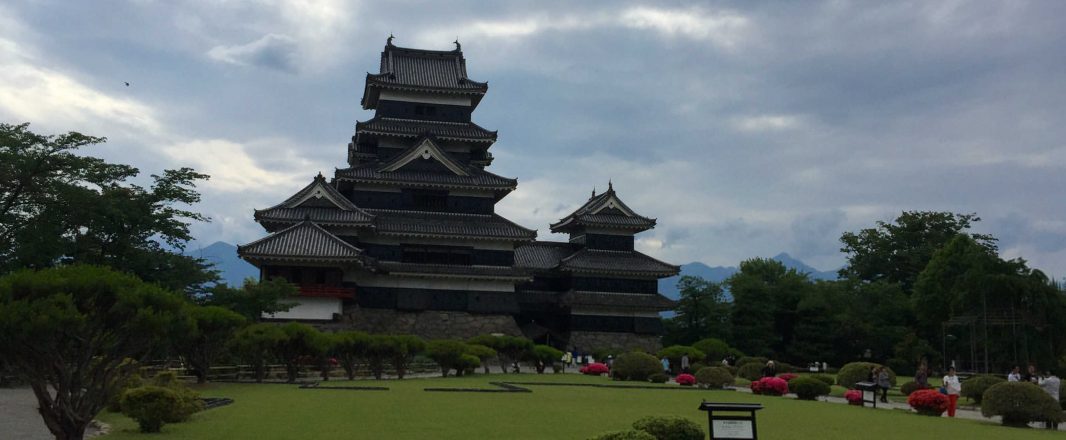
Matsumoto Castle, built in the 16th century, sits proudly in the centre of this town. It’s been lived in by six families. Built to withstand attacks by warring enemies, it’s never really been invaded – although its defences are impressive to say the least. Little windows make perfect vantage points from which to shoot the enemy with arrows and guns.
On the top level is the parlour where the “ruler” sits – this is the last bastion of safety in the event of enemy invasions – everyone has to die before he does.
As I stood in this parlour and looked out over the moats and gardens that surround the castle, I wondered if Japan’s family businesses, its ryokans and taxi companies, will have the necessary defences and tactics to adapt to the fast-changing market.
Foreign players with technology, scale and “modern” management methods are prospering in the changed market conditions – and they are also morphing in shape and nature. No longer is it just global brands like Expedia or Booking.com that are worrying Japanese businesses wanting to grab some of the inbound business, players from China are making their presence felt.

Cindy Wang, Ctrip and Melissa Yang, Tujia (right), representative of the new generational leadership taking China brands global
Opening WIT Japan & North Asia this year were two new generation leaders running China’s most valued and watched travel brands – Cindy Wang, CFO of Ctrip, and Tujia’s Melissa Yang. Both brands are following their customers abroad and with China such a huge contributor to Japan inbound, they have a natural edge. These are the new competitors and collaborators Japan businesses, whether family-run or not, have to learn to work with to secure a leading role in North Asia.