THE kids had been waiting from 7am. They were excited to meet the “foreigners” whom they heard were bringing snacks and winter jackets and their teachers, Kru Prueng and Kru Nim, had told them they’d soon have fresh supplies for the new school year.
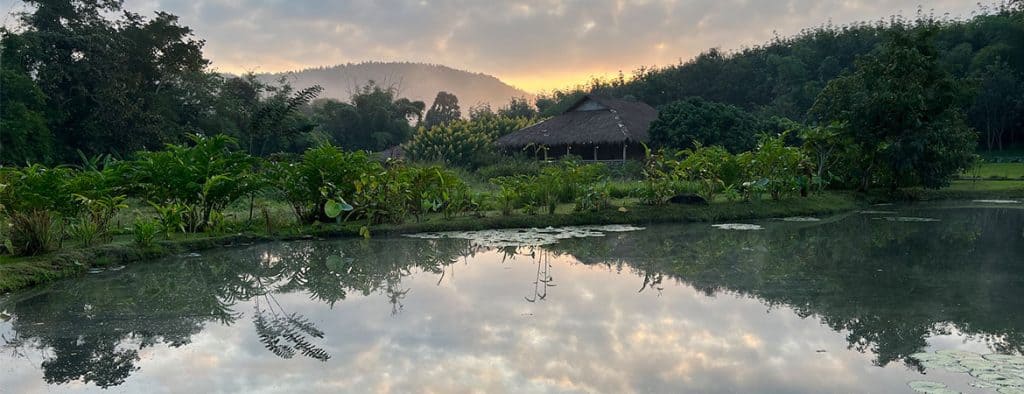
We had started out at 8am from Lisu Lodge (where we were staying) for the remote mountain village of Padeng. It’s only about 30km but the road is steep, narrow, winding and part red earth, so it does take longer to navigate.
The plan had been for the kids to be all neatly lined up in a row to welcome us but as with all plans made around children aged 2-7, it didn’t quite work as expected. On first sighting of us, some yelled “hello”, some ran for cover behind their parents while a few ran up to greet us.
Padeng village has a population of about 300 and most of the Lahu people here are originally from Myanmar. There are 17 kids attending school and the presence of teachers like Kru Pheung and Kru Nim here is part of Thailand’s remote education “Kru Su Doi” mountain-to-teacher programme, which the Himmapaan Foundation, run by the owners of Lisu Lodge, is supporting.
Part of the WiT for Good funds raised this year will go towards supporting the teachers’ stay in the village and the education of the 17 children, following the national curriculum. One boy stands out, he’s 12. He missed his early education and so is joining this cohort, and seems to be right at home with his younger brethren. The schools in these mountain villages prepare the children for a place in Thailand’s formal education system.
Teacher Kru Nim, clearly in charge, is from Chiang Mai. She tells me she’s always wanted to be a teacher in a remote school. She stays in the village on weekdays and returns by motorbike to Chiangmai for weekends. They give us a tour of the school – it’s really only one building – and it is clear much work needs to be done to get it in shape.
It’s been neglected during the pandemic and a huge termite mound threatens to eat away at the very foundation. The Lahu villagers have a superstition about termites – you can’t just exterminate them without a ceremony and it has to be a village elder who does it. This may explain why the mound has been there for about three months.
They tell us what they need to replenish the school – a new television so the kids can do online learning, school books, a coat of paint, new furniture …
The teachers then tell the kids to form a line and they are given their snacks as well as fleece jackets for the winter. It gets cold up in the mountains this time of year. There’s no fighting over who gets which jacket, just a general spirit of glee and sharing.
Before we leave, they gather and sing a song of thanks. A village elder is worried they will fluff up their lines and gets into the picture.
After the visit to Padeng, we head to the Elephant Nature Park which WiT For Good also supported – the funds you helped raise will go towards keeping the elephants fed and well looked after.
Khun Lek Saengduean Chailert, the founder, is away in Laos, rescuing more elephants. It would seem her work is never done, and it is good to see the recognition she is getting – at the entrance to the park is a poster of her receiving an award in November from French President President Emmanuel Macron.
It was good to see the park fully back in action. Volunteers are back in force – each paying about 25,000 baht per week to work with the elephants. Tourists are also back, spending time and learning about what the Park does.
The park now has 122 elephants, an increase from the 115 when we last visited. Two babies have been born and they get the attention of the crowds. Work has been done in the last months to create different zones for the elephants and there’s a clinic area to treat the wounded.
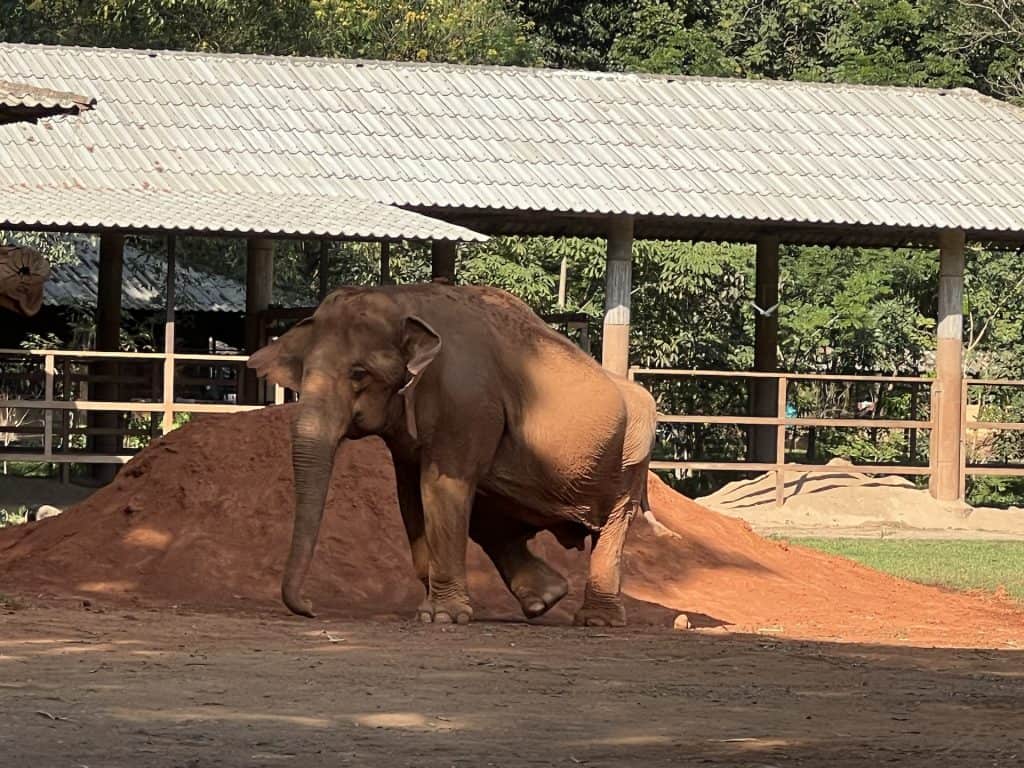
One elephant, Medoc (above), has a spinal injury from carrying over-heavy loads in his past, and Khun Lek is working to raise funds for an “operating bed” to treat seriously injured elephants like him. It’s hard to watch this magnificent beast drag his limbs behind him.
In Bangkok, there is no doubt travel is back in full force, compared to August when I last visited. Tourists from everywhere (except China) are back. At COMO Metropolitan Hotel, general manager Rohaan Chandra tells us South Korea, Hong Kong and Singapore are among his top markets now. Laurent Kuenzle, managing director of Asian Trails, speaks of incentive groups returning with huge group sizes of up to 2,000 from India.
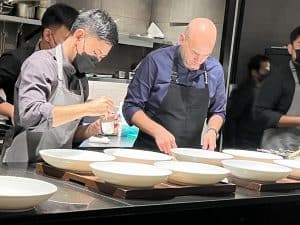
Suhring where you get to watch the kitchen in action and learn about the inspiration behind each dish, for example, the Barbary duck – I promise, I did not eat the whole thing.
The travel world is getting on with business and the year-end season is looking bright and joyous for those of us in Asia who’ve been through a couple of very bleak and tough years.
It feels like nothing much has changed in Bangkok. The queues of Asian visitors at Erawan Shrine are back, traffic is as bad, shopping malls as packed. What’s new though is the fine dining scene in the city – there seems to be more Michelin-starred restaurants now – and oh yes, more cannabis cafes, bars, joints than I could count.
The legalisation of cannabis has added a new dimension and dare I say, a new scent to Thailand, beyond lemongrass and mint.
Restaurants like Michelin-starred Suhring, helmed by twins Matthias and Thomas, are also adding new flavours to the country’s tourism scene. Their Berlin and North German-inspired menu comes with twists of curry wurst (everyone’s favourite sausage in Berlin) and with the main dish of Barbary duck (pictured below), I was given a choice of three types of knives with which to eat it. When I asked whether my choice of knife would affect the taste, I was told no. I settled for ebony. It’s as much theatre as it is dining.
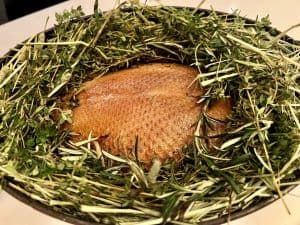
Berlin and North German-inspired menu comes with twists of curry wurst and with the main dish of Barbary duck
After a week revisiting Thailand, I am reminded anew of the country’s enduring appeal to travellers. It is, hands down, the most attractive, diverse and appealing destination for all kinds of travellers and budgets and it will be good to see it rebound – but in a kinder, gentler way.
This year, the word that has defined travel, other than recovery, is sustainability.
This is a big catch-all word that covers many things, among them, protecting nature and those which live within it, respecting local communities and those who live within them, and empowering local communities through tourism and education.
Let that be the sentiment that guides our thoughts, words and deed in the new year.
On behalf of the kids of Padeng, and the elephants at Elephant Nature Park, we at WiT wish you a joyous year-end holiday season and see you in the new year.