“What are the three things I must do while I am here?” I asked the woman sitting next to me on the Air France flight bound for Punta Cana from Paris.
 Despite my exhaustion, I couldn’t help but feel a sense of anticipation for what awaited me in the Dominican Republic, a place I had long wanted to visit.
It’s a long journey to get here – nearly 14 hours from Singapore to Paris because the Singapore Airlines captain told us we were having to take a longer route to avoid Ukraine airspace. This was the night after the ill-fated MH17 crash. Then four hours in transit and another eight hours from Paris to Punta Cana.
“You must get into the dancing and the music,” she said. “And the people. That’s what I miss. People are poor but they are happy.”
A local from Santo Domingo, she’s lived in Casablanca, Morocco, for the last eight years. “But I come home every year,” she told me. She also named two places she said I must visit for the beaches – Bayahibe and Isla Saona.
In the end, I didn’t get round to visiting the two places but I did get a sense of the island spirit which starts the minute you land at the airport.
 It’s open air and thatch-roofed. It reminds me of Koh Samui airport in look but that’s where the resemblance ends. It’s total chaos. You don’t know where the queues begin or end. And the place is packed with tourists from the US and Europe, most of them on charter flights.
First, you have to queue to pay the US$10 visa fee, then you have to queue for immigration.
When it’s finally my turn, the girl looks at my passport, thumbs through the pages and asks for my green card.
When I told her I didn’t have a green card, she said, “Wait,” and promptly left with my passport. I turn around and apologise to the people waiting behind me. You can tell they are regretting queuing behind the only two Asian-looking people in the crowd.
Finally, she returns and I am allowed through.
Music fills the air. There are three buskers singing and collecting tips from the passengers. They seem to be the happiest people at the terminal.
The ride from the airport to the resort I was staying in, Casa El Campo, is 45 minutes. It’s 5pm and I get my first sighting of Caribbean light. The landscape is flat and bare. I do not see a single building along the way, just grassland and horses and cows.
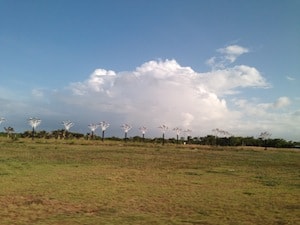 Such a contrast from the island I had just left the day before – Phuket – where it seems almost every bit of land has been built up with shopping malls, hotels, villas, condominiums, restaurants. A new highway is being built which has made travelling across the island rather a nightmare – it took me nearly 90 minutes to drive from Karon Beach to the airport.
Back at Punta Cana, I am trying to adjust not only to the time zone but also the silence of the landscape.
Casa El Campo is a 7,000 acre development built by an American Cuban, I was told. It’s a township unto itself. It’s got a hotel, golf course, marina, theatre, restaurants and lots of luxury homes. Every room comes with its own golf cart which you use to drive around the place.
It’s one of those all-inclusive resorts where the idea is you never have to leave. Which turned out to be the case anyway because I was pretty tied up at meetings over the three days.
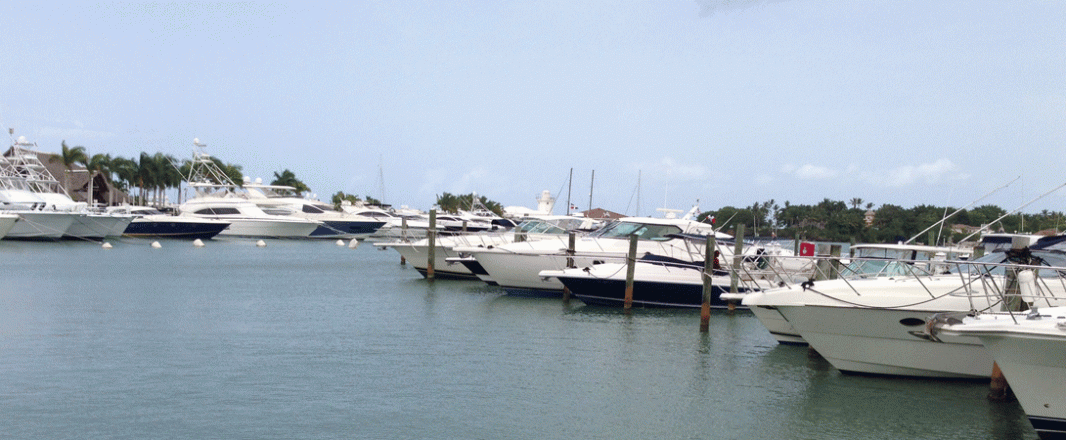
I did manage to visit the marina – lots of luxury yachts around – but not much else happening. I went into the local supermarket, which for some reason reminded me of the supermarket I visited in Western Samoa a long time ago.
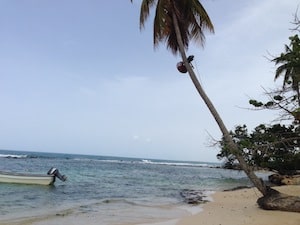
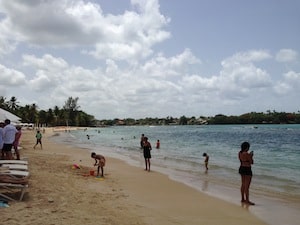 I also spent a few hours at the Beach Club where I walked on the white sand beach and felt the waves lap at my feet. Now I can say I’ve touched the Caribbean sea.
I am not sure I fully got into the island music though. All I kept hearing from the bands playing at the restaurants I ate at were “Besame Mucho” and “Guantanamera”.
I am pretty sure there’s lots more beyond the walls of Casa El Campo. I am told Santo Domingo is where the action is. Next time, that will be the place I head for in search of Caribbean music and spirit. Other than that, there’s very little reason to return.