 It was interesting listening to the stories of three start-ups in Asia whose companies were recently acquired and how their founders were now doing.
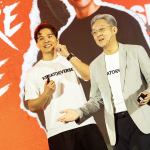
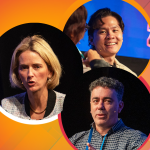
On stage at Echelon 2011, Singapore’s largest digital startup conference, were (from left) Kelly Choo, Brandtologoy, a social media intelligence company which sold to Media Monitor; Danny Wirianto, Kaskus, Indonesia’s largest online social community, which received funding from GDP (Global Digital Prima) Venture earlier this year; and Lim Der Shing ofJobs Central, acquired by CareerBuilder of the US.
Moderator Darius Cheung himself sold tenCube, an anti-theft software for mobile platforms called WaveSecure, to global security giant McAfee.
Firstly, all three panellists looked curiously alike. Male, early 30s, clean-cut, jeans, blazers. Okay, I am being superficial but that’s how journalists tend to report when writing about women on stage – who by the way were curiously absent from the speakers’ roster at this event.
Secondly, they seemed curiously under-whelmed by their new-found wealth or perhaps that was just for show, although they seemed sincere about it.
When asked what was the most extravagant thing they bought after their exit, Der Shing said bonds. “I still drive the same Toyoto, still have the same lifestyle, I haven’t bought anything materialistic – except bonds.” 
Danny said the iPhone 4, “that’s expensive”, and Kelly said prior to the exit, he bought a diamond ring to propose to his fiancée and so the first item he had to pay off was the credit card bill.
When asked what motivated them, Kelly and Danny both said “learning”.
“Brandtology is my fourth startup, and in my businesses, I learn how to handle people, sales, everything you don’t learn in school,” said Kelly.
For Danny, who went to art school, “I want to create something to make people remember me by. If you do great work, money will come. What’s important is to remain humble and confident.”
Der Shing was the one who said he did it for money. “I come from a poor family. I wanted to retire by 35, I turn 35 this year so I have done it. What was good about our space was we have very good competitors and it made us want to beat them.”
However one thing he’s learnt – “there are always higher mountains out there and if you keep trying to beat someone, there is no end.”
Why did they sell?
Said Der Shing, “We didn’t plan to sell, it was serendipity. We were planning to IPO then out of nowhere we got a cold call from the US. We were very skeptical at first. Then we found we fitted their longterm business plan in South-east Asia. It was also a fit for our team – we had worked 10-11 years to build it up, not everyone has the same level of fire and we wanted to make a good exit for our families. Having money is good. We also believed with deeper pockets and more products, we could grow the company.”
Admitting it’s early days as it’s only three months after the sale, he said, “Who knows what will happen?”
 Danny remembers having to drag his suitcase from door to door selling ads. “It’s easier if you grow the business first and we said, let’s triple revenues. After that we got eight offers – none matched us. The last one was GDP and their mentorship and network were important to us. Money you can find, knowledge and friendship harder.”
Kelly said Media Monitor and Brandtology were a complementary fit and they had the bigger war chest – easier to fight a war. “When someone acquires you, make sure it’s not 1 plus 1 equals 2, it has to be equals 3.”
In deciding the qualities of buyers, Der Shing said, sincerity was important. In his case, the top executive came, they didn’t just send out a junior staff, the team was flown business class to New York to enjoy shows. “Who you talk to is very important,” he said.
Danny said when startups are approached by investors, it can be very exciting – like boy being approached by girl. But you have to be careful, he said. Some are just checking you out, stalling you, getting you to sign NDAs, find out your numbers and create your competitors. It sucks but it happens. “When somebody is sincere, it shows in their face,” he said.
As for how life has changed, Kelly said it’s having to manage more inter-relationships, more rigour in processes, and generally more hectic.
Danny said, “I still bargain. I still have a bootstrap mentality. What changes is how people see you. People think, like, now you are some kind of success and they expect you to do something. We are still regular guys.”
Der Shing agrees it’s “more hectic”. “Now we have monthly cap accounting, not annual.”
Both Kelly and Danny are investing in other start-ups.
Kelly’s invested in four start-ups in Singapore. “People keep asking, is Singapore going to be the next Silicon Valley? The market is too small here so we have to go regional and global.”
Danny said, “We have started an incubator to help entrepreneurs in Indonesia. The market is very young and needs stability. One mistake and it could crumble so I’d like to help the digital industry in Indonesia, to strengthen it.”
Ya, pretty regular and nice guys indeed.
* I will be on stage tomorrow at Echelon 2011 moderating the travel session – the first time travel is being highlighted as an industry category at this event.