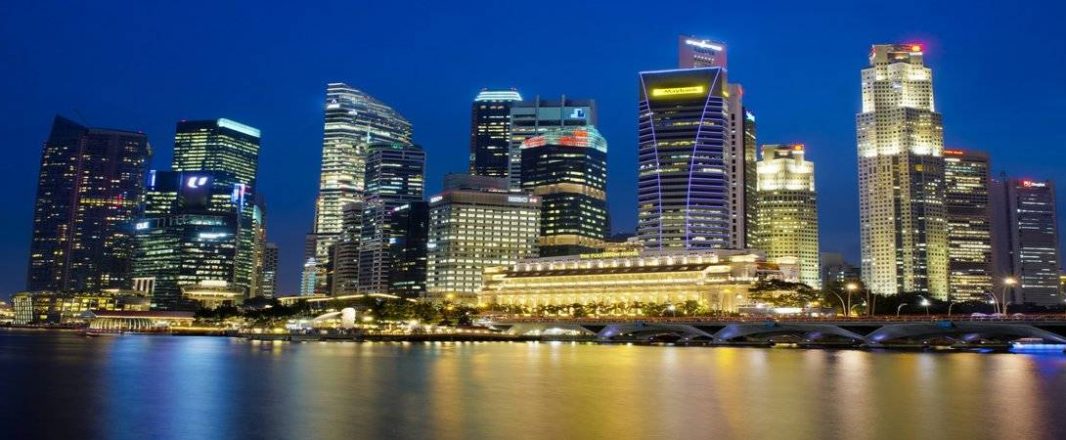

So, it was a far more glamorous start to the week than usual when I met with Yona He on Monday morning. Yona is the Regional Director for Forbes Travel Guide and she is charged with strategic development, operations and consulting business within Asia Pacific. Yona has been with Forbes for two and half years with nine years before that at Four Seasons Hotels and Resorts.
I started by asking Yona why Forbes had chosen Singapore as the next city to receive the Hotel and Spa ratings.
“Singapore has always been one of Forbes Travel Guide’s top priorities,” she said, “and there are many aspects to Singapore that make it a city that consumers are interested in. Its location, its infrastructure and its world –beating airport along with it hosting world-class events such as the F1 make it a city that attracts affluent visitors from all over the world.”
Yona added that their are pragmatic reasons considerations presented by a sustainable and well developed infrastructure and these are complemented by the more cultural and well-balanced character of the city provided by great museums and wonderful gardens making it a well-rounded destination – great for business whilst providing lots of leisure opportunities. “Dining, for example, is phenomenal,” she said. “It’s a cultural destination – it’s really the gateway to Asia.”
 I asked Yona what she thought about Singapore’s recent Integrated Resort developments – Marina bay Sands and Resorts World Sentosa. “Any new player – any new hotel is, for us great,” she said, “Competition is very important and brings a variety of new experiences for consumers. Above all, these developments bring people to Singapore.”
Despite a list of 550 or so criteria that Forbes’ inspectors use when rating a property, it was clear speaking with Yona that it’s the sum of these elements that is most important. It’s all about the guest experience – an expression she used often in our time together.
So I asked Yona what she thought makes for a great guest experience.
“The established Forbes system is over 50 years old,” she said, “but one thing we find universal is the genuine nature of the service. It’s about being gracious and thoughtful. It’s about anticipating needs. Consumers are very smart and savvy nowadays and they know a genuine experience when they feel it. We feel it’s all about satisfying guests and empathizing with their needs. It’s not about meeting their expectations it’s about exceeding them.”
“Do you feel welcome?” she added, “From the moment you step out of the car right through your stay – this is your experience. It’s about the kind of experience people will talk about. When we say this is a 5 star hotel we want it to be a memorable stay.”
“By introducing our ratings we hope to elevate Singapore’s already good and sometimes great service onto the global stage – not necessarily by comparing it directly to say that of New York or LA, but raising it within the uniqueness of its own personality.”
We talked about he world’s emerging markets and Yona alluded to their appetite to see the world. “They love to read about travel possibilities and places to visit.”
Despite the changing shape of tourism it’s clear that, whilst taking cultural nuances into account, one will be able to rely on the Forbes guide for a consistent and unified ratings system.
What is the Forbes online strategy?
“It’s inevitable that the future will be mobile.,” Yona says. “This is also the direction we are going in. We have, in development, a very interactive online system – a very interesting website to be unveiled later this year. Also, Singapore is the first guide not to be printed as a book – it’s only available online.”
Yona tells me that the new website will be based on expert content. There will be many voices. In addition to the Forbes voice there will be the consumer voice – importantly, a consumer who has been verified as actually having stayed there. There will also be contributions from travel writers, travel critics and other experts. Even the hotel itself.
“This,” said Yona, “is the next level of internet readership – an interactive portal where one can get all the expert voices.”
I asked her is she thought User Generated Content was a possible threat – Should I buy your guide or should I look to my peers for advice? I asked.
“There is a lot of information nowadays – almost too much for consumers to navigate.” Yona replied. “We are not competition to Trip Advisor – ours is a system and something not based on personal preferences. We help consumers navigate through the best of the best. You can count on it and it’s unified. This is where we differentiate ourselves. “
Yona concluded by telling me that Asia will continue to be a focus for Forbes Travel Guide’s and we wouldn’t go far wrong expecting to see Forbes Travel Guide ratings appearing for some Chinese cities in the near future.
My glamorous start to the day came to an end and my biggest takeaway from my time was that, as mentioned already, despite a long list of criteria being at the heart of the Forbes’ rating system, it’s clear that for Yona and for Forbes it’s all about the experience – it’s all about how the stay at the hotel makes us, as consumers, feel. And it’s about establishing and maintaining integrity and consistency in conveying that.
It’s an approach I applaud and, when I‘m next in the market for looking to be totally taken care of from the moment I step out of the car, I know where to turn to for guidance.