
It’s fair to say that when it comes to human qualities, obsession too often gets a bad rap. Some automatically link obsession to struggles with mental health. As Virginia Woolf ominously noted in Orlando: “All extremes of feeling are allied to madness.”
Sadly this like says more of how Woolf’s modern values clashed with her Victorian times. Thankfully, other writers recognise a quality that when harnessed, is vital to our internal worlds: Patricia Highsmith, creator of psychological thrillers, noted that “obsessions are the only things that matter”. Sound advice? Sure, if kept in check. As the mastermind behind the James Bond series, Ian Fleming warned, a hyper-focused mind can also mean profound vulnerability. In the book Moonraker, he observed how “people with obsessions… were blind to danger.”
At Web in Travel 2026 at Marina Bay Sands, five wonderfully obsessive travel practitioners gathered for a panel titled ‘A WiT Indie Spotlight – Changing the World, One Obsession at a Time’. Each in turn demonstrated that in their area of expertise, a richer destination experience can help us tap into wells of deep knowledge – about forest animals, buzzing insects, local heritage, or even farm dirt.
And in time, the insights and rich interpretation on offer, can help form a valuable toolkit on how to live a better life, with a little help from sweet obsession.
Experiences that change our world
The panel’s moderator, Seek Sophie co-founder Jacinta Lim, sets out the brief. The conference hall has spent its days discussing travel technology, covering “how we can make the travellers’ booking experience a lot smoother”. A lawyer by training, Lim makes her case early – this session will be different by design: “I’m going to speak to the people who make the travel experience magical.”
Her personal test for a journey is disarmingly simple. “When I travel, I look for the experiences that change how I see the world,” she outlines. Encounters with these inspiring locals can in turn change how we see ourselves, she notes. From a bucket list item ticked off, we create moments that might just sow meaningful change in future.
Her guests today – a primatologist, a heritage hotelier, a bee rescuer and a farmer in love with soil microbes – offer up four very different obsessions, and in many cases, have taken their own unexpected path. Yet the session’s introduction frames a single question for all of them. In a world “shaped by algorithms and mass-produced itineraries”, could one person’s learned fixations change how a stranger sees the world – sending them home with a job to do?
The monkey in the basket
Dr Andie Ang was 10 years old when she was given a monkey: a young vervet, imported from Africa. “I called him Ah Boy, because I wasn’t creative at all,” she tells the room. Lim describes a photograph of a young Andie cycling to school, the monkey riding along in her bicycle basket.
For about five years, Andie and Ah Boy were inseparable. Yet sadly, watching him in her small home in Singapore, she came to realise he did not belong here. She sought help to send him back to a rehabilitation sanctuary in Zambia. “He had a happy ending,” she describes. “He actually went back to the wild – and he raised his own family.”
The episode set her course. “I really wanted to learn more about the threats that they face – and how to prevent this from happening again,” she recalls.
Today, Dr Ang is president of the Jane Goodall Institute (Singapore) and heads primate conservation at Mandai Nature. Her early research explored whether non-human primates, as with more than 90% of us, were right-handed. After that, she went looking for Singapore’s own monkeys in the wild – including the critically endangered Raffles’ banded langur.

For two months in the forest, she saw nothing. Her professor even suggested she change her study subject. “Thankfully, after a few more weeks, I saw them for the very first time,” she said. The langurs were shy and fled whenever she appeared. So, day after day, she wore the same clothes and kept the same hairstyle – so that they’d recognise her and learn she was no threat.
A writer like Patricia Highsmith might have recognised the obsessive pattern: the ritual of returning again and again to the same question. Eventually, Dr Ang’s persistence got an answer – and one that mattered. By 2010, she found, only 40 of the langurs were left in Singapore. What followed, she explained, was a decade of “collective collaboration” between citizen scientists, government agencies, institutes of higher learning and NGOs. Volunteers observed the langurs from a distance. Their data fed into practical conservation measures, like rope bridges that help the animals cross safely between fragments of forest. Today, the primatologist estimates that Singapore’s langur population is more like 80.
Her obsession is now an experience. Seek Sophie offers a 90-minute walk through Thomson Nature Park, led by Ang and herpetologist Sankar Ananthanarayanan. Guests can learn how the langurs are tracked and monitored, search for them in their habitat, and learn how to submit their own wildlife sightings. Part of each fee in turn goes to the Jane Goodall Institute (Singapore) and the Herpetological Society of Singapore. Guests come hoping for a glimpse of one of the world’s rarest primates: and leave, invested in their future survival.
A city rediscovers its soul
Chris Ong’s personal obsession began at home, listening to his grandmother’s stories. Then came time in Australia, a career in investment banking and as he puts it, “financial freedom”. Many would then choose to pursue a life of quiet luxury. Instead, Ong followed a different thread. He first opened the heritage-rich Galle Fort Hotel in Sri Lanka: then later, returned home to Penang, to Georgetown, around the time it was inscribed as a UNESCO World Heritage Site in 2008. He has described this move as a “divine calling”.
When he started, many locals didn’t want to live in heritage buildings. There was no off-street parking: it wasn’t convenient. With much of the area having fallen into disrepair, some might have found the prospect ‘spooky’.

Yet Ong, the founder of Georgetown Heritage Hotels, saw the seeds of something different. His family heritage is Peranakan Chinese, a culture that in the generations after the Second World War, had in some corners, come to be seen as old-fashioned. “Peranakan culture was a blend of Chinese, Malay, Indian culture – all this diversity together,” he describes. “It’s a shame if the narrative is lost.”
The buildings, he argues, are only half the story. The deeper potential loss is intangible: “the rituals and the cultural heritage that have largely disappeared”. Without this heritage being presented as a living thing, and its stories told in genuine ways, this historic city would be left without its soul.
Lim widens the lens. Travel almost anywhere today, she observes, and you’ll find the same Zen-derived, Scandinavian-style cafés: “You don’t actually feel connected to anything because everyone’s just copying each other.” In Georgetown, by contrast, visitors feel connected to the 200 or 300 years of culture, sourced right here. And for Ong, this reconnection is the point – helping people understand and revalue the community they are visiting. And, in the process, to “understand yourself better”.
A buzzy blessing in the shed
Clarence Chua’s obsession arrived completely uninvited. Soon after he moved into a new home in Singapore, he opened the shed on his rooftop, to find a beehive. Many would have called pest control immediately. Chua, who as a boy kept spiders as pets in small matchboxes, felt something closer to fate.
He contacted the one bee rescuer in Singapore at the time. “He didn’t come in time,” Chua recalls. “So I said, I’m going to try myself.” His first attempt, armed with a plastic bag, did not go to plan. “Of course, I didn’t know how to do it.” He got stung – but the curiosity stuck.
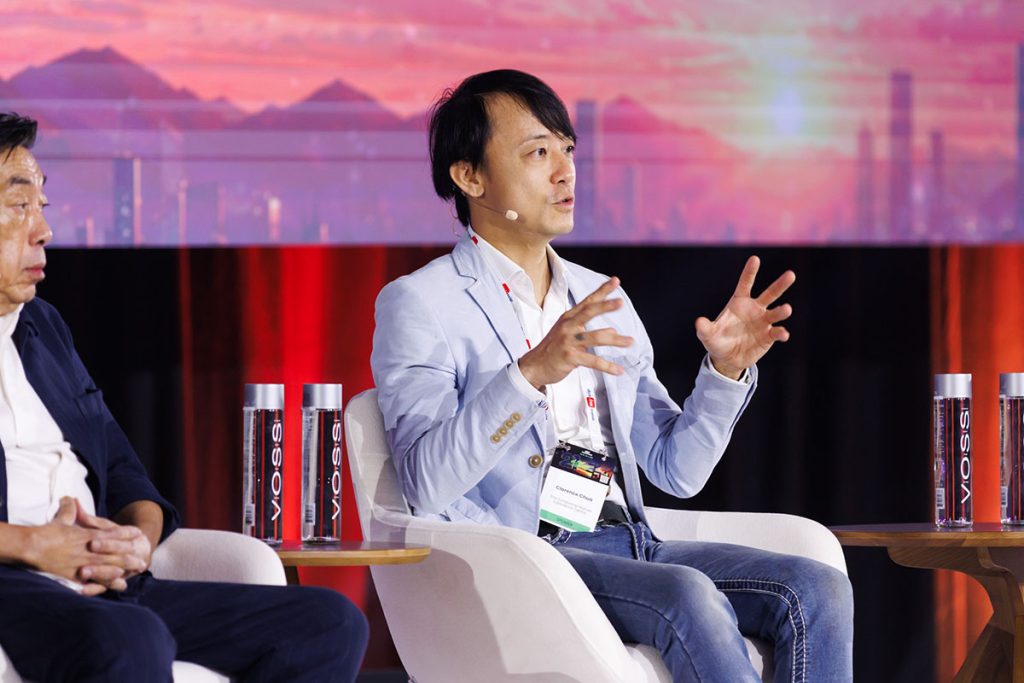
Today, Chua is the founder of The Sundowner Nature Experience Centre and manages three apiaries across Singapore. By his own estimate, he and his team have rescued some five million bees. Singapore’s bees, he explains to WiT, don’t live in the huge hives most of us picture from colder, Western countries. They “live in a small box the size of a wine crate”.
His bee encounters are designed to swap fear for fascination – to show people that bees are not out to sting them, but are actually “rather lovable creatures”. More importantly, their value goes far beyond honey: “One third of the crop that we eat is bee pollinated,” he says. “We give Singaporeans a chance to lose their inhibitions and their phobias through our encounters.”
Then came the image that best explained it. Bees, he warns, are a keystone species: “If you pull this animal from the arch, everything is going to crumble.”
Ian Fleming observed that people with obsessions were blind to danger. Chua sees this perfectly well. “I get cut, I get sliced, I get stung,” he describes. “It’s sweaty, it’s not fun: sometimes I even lose money doing it,” he admits. Yet he goes in anyway. “I just can’t help but do the rescue work.” If we’re looking for a working definition of a sweet obsession, it’s right here.
The farmer who stopped
Amanda Currie first came to farming from a career spent in financial services. In 2012, she and her husband Adrian bought Tinwald Farm, near Cromwell in New Zealand’s Otago region: “It’s a conventional farm,” she explains, “so that means lots of fertilisers and other nutrients.”
When she took over running it, she asked what she called the serious question: did they really need to apply all that fertiliser? “I couldn’t understand the answer because I was quite ignorant,” she recalls. “So I just decided that we’d stop applying fertilisers.” If you’re ever in that position, and somebody suggests you stop cold, “that’s not a very good idea,” she notes. “Because the entire operation of our farm actually relied on those synthetics.”
Extreme, perhaps. But madness, not exactly. Gradually, the farm pivoted “towards the microbial communities in the soil”. And once you start to think about how those microbes interact with “our plants and animals and ultimately ourselves”, she says, “you start to realise that it’s something that needs to be protected and admired.” Today, by her own admission, she is “completely obsessive” – and doesn’t know when to stop talking about microbes.
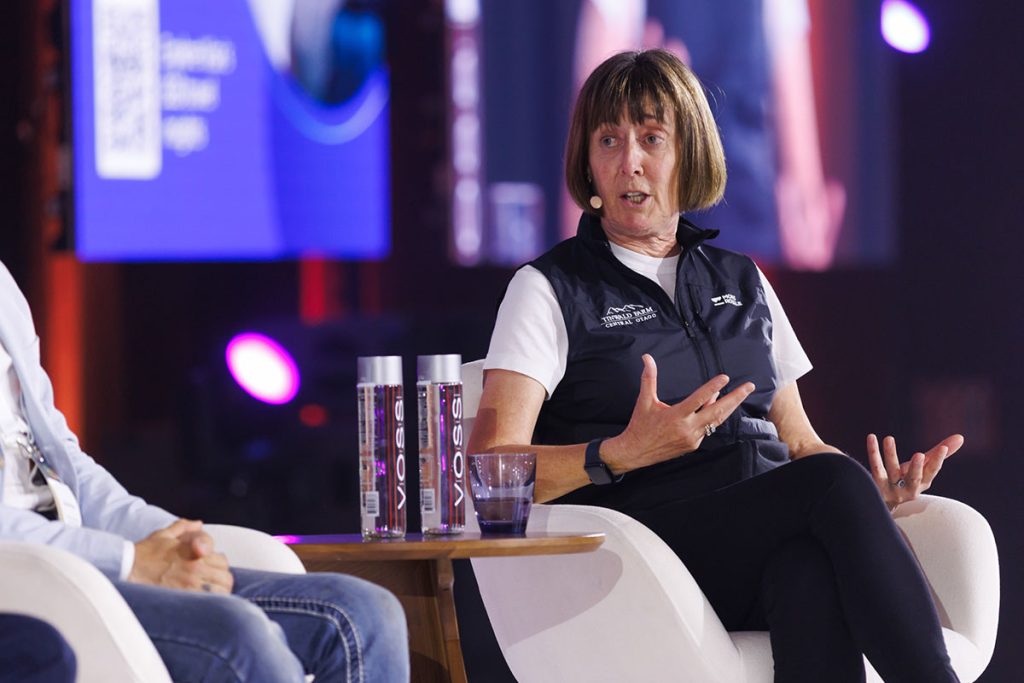
Spend long enough with Currie, and most of us would be too. The farm’s website shows pictures of its Clydesdale horses. Visitors arrive expecting horses: instead, they get microbes: “We take them into a room with a big screen and start showing the microbes and talking about their benefits,” Currie quips in her dry Kiwi manner. “They just don’t get to escape from it, unfortunately.”
Her point is of course a serious one. Much of the fibre we eat, she explains, feeds the microbes that live inside us. She wants visitors to leave paying “a little bit more attention” to what we put in our mouths: “There’s so much health hacking out there, longevity hacking, where people want all the fancy stuff,” adds Lim. “But actually if they just pay more attention to the soil of the food that they’re eating, that could go a very long way.”
Chua draws this thread back to bees. An apple farmer once told him that bee-pollinated apples are larger, more nutritious, last longer on the shelf and carry more seeds: “These are the invisible things that you don’t realise,” he asserts, “because we’re just buying stuff off the supermarket shelf.”
From appreciation to protection
In 1957, American writer Freeman Tilden set down the principles of what park rangers and travel guides now call interpretation. In Interpreting Our Heritage, he borrowed a much-quoted line from a US National Park Service field manual: “Through interpretation, understanding; through understanding, appreciation; through appreciation, protection.”
This is where obsession becomes something bigger. Lim shares an observation from Seek Sophie’s work: in many parts of the world, without tourism, forests would be cleared for palm oil, and other places mined: “So tourism is one of the few things that’s actually protecting all of these things,” she said.
Closer to home, she points to a citizen pushback against development plans affecting Maju Forest and the Gillman Barracks area in Singapore. By late July, online petitions against those plans gathered more than 30,000 signatures. “I think what people also don’t realise is that this is the tip of the iceberg,” she warns.
Ang names another forest: Tagore. The Singapore Terrestrial Conservation Plan, a civil society document she co-edited and which was launched in 2024, identifies Tagore as the most important unprotected forest in Singapore, and an important habitat for the Raffles’ banded langur.
The difference now, she argues, can often be about who is watching. Residents living beside those other forests “see the forest every day. They can advocate for it.” Tagore, surrounded by industrial areas and a military training site, doesn’t have the same local custodians. “So how do we actually get citizens… to be engaged,” she asks, “to voice out their opinions”?
For now, Lim’s answer is the panel’s thesis: “When people have experiences, they actually get to know about the forest, the wildlife. They want to protect them,” she said. “But people are so disconnected from it, they don’t understand what we have to lose.”
Chua’s parting request to his guests makes the final link an explicit one. Let’s not just be entertained, he tells us. Let’s be active. “Tell your friends, family, and your neighbours if they ever see bees that other people call infestation,” he advises. “Say ‘Come on, it’s a blessing that you’ve got bees in your house.’” Local action at its most direct: one rescued hive, one converted neighbour at a time.

The sweet obsessive’s toolkit
As the session closes, Lim offers her own takeaway. Four very different experiences, she says, yet each one asking the same thing of us: to be “a little bit more… connected to the world around us”.
“When we’re so much on our screens and enamoured with what’s going on online, we forget that we’re so in touch with our culture from hundreds and thousands of years ago,” she says. “We’re so in touch with our nature, with the wildlife and the soil. And every single thing is connected.”
So what’s in the Sweet Obsessive’s Toolkit? Tools to look again, as Ang did, until the forest revealed what was there. To ask the serious question, as Currie did, even before you understand the answer. And to rescue before you exterminate, as Chua does – then advise your neighbours likewise. And to keep the stories, as Ong does, because buildings alone don’t hold a city’s soul. And lastly, as Lim urges, look up from ours screen long enough each day, to notice that every single thing is connected.
Whether on a forest walk at Thomson, or walking past a row of heritage shophouses in Penang, or beside a rescued hive, or in a room in Central Otago facing a screen full of microbes, the rest of us can borrow these tools, whenever we like.
So is obsession madness? Fuel for art, or a blindness to danger? On this evidence, it can be something more, useful even. Through interpretation, one person’s obsession becomes another’s appreciation – then sometimes, their mission.
Before this session, I asked Lim this question: between entrepreneur and activist, which are you? Her face did not miss a beat for thought. “Activist.” Such clarity clearly provides a sound platform for Seek Sophie. As a travel practitioner, Lim goes looking for experiences that change how she sees the world. The best of them go one step further.
In sharing someone else’s obsession, we get to carry our new tools home. In an industry racing to streamline and at time de-humanise the value chain, the obsessives may well be the friction worth keeping. A bucket list ticked off, asks nothing more of us. An obsession shared, leaves us with a job to do.