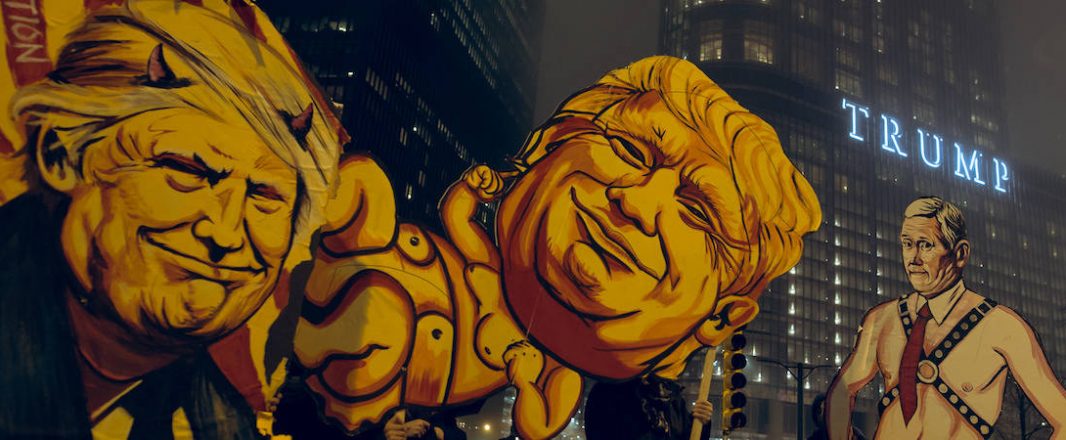
Donald Trump made another vile move over the last few days. Shocker!
Trump’s political moves are so extreme; it’s beginning to almost feel predictable… comical, in the same way some try to laugh through gritted teeth when in agony.
Gag rule on abortion? Sounds about right. Weaken Obamacare? Seems like something he would do. Appointing the alt-right horror show that is Steve Bannon to the National Security Council? Sure.
Drawing focus on Friday’s executive order – Trump has used his tiny iron fist to ban nationals of Muslim-majority countries, specifically Syria, Iran, Somalia, Iraq, Yemen, Libya, and Sudan, from entering the USA… the order even extends to those with valid visas or green cards. It also shuts the door on all refugees.
If there was any morsel of hope left, it was in the federal court’s issuance of an emergency stay halting Trump’s ordered deportations. Acting Attorney General, Sally Q. Yates also ordered the Justice Department not to defend the travel ban. Yates was fired almost immediately… Any lasting faith in political checks and balances clearly didn’t very last long.
The world has been forcibly woken up to the supposed ‘leader of the free world’ barricading U.S. borders from the imagined evil of Muslim individuals globally.
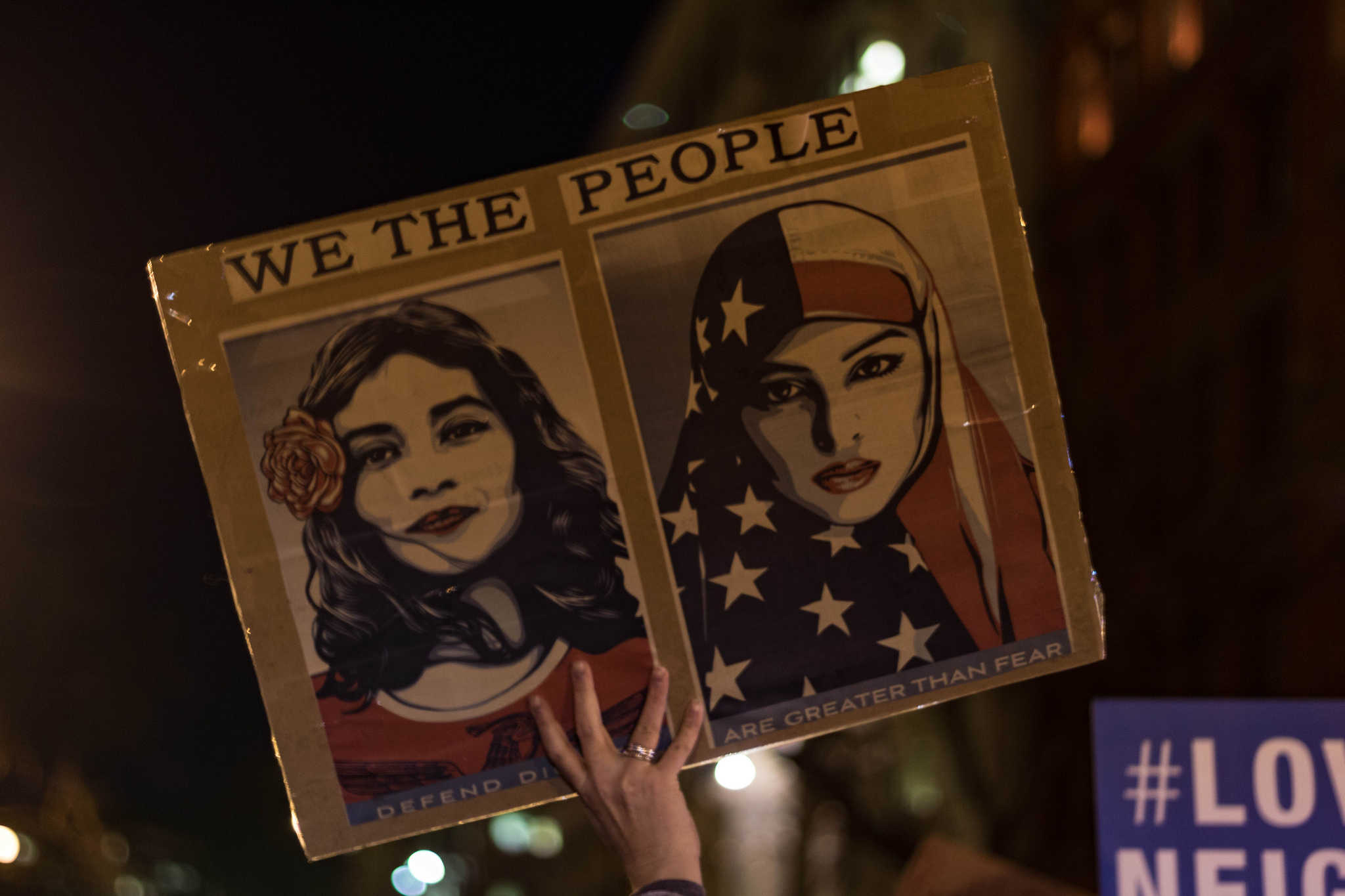
Civil society have not stood down nor taken any of Trump’s actions lightly (Photo courtesy of MJ Wein via Flickr)
Another round of large-scale protests took not to the streets but the airports, to stand with those targeted by Trump’s latest wave of idiocy. Even democratic lawmakers and elected officials like Senator Elizabeth Warren were in attendance, challenging its constitutionality. Airports have suddenly become a social battleground between civil societies across the world and US authorities.
Major technology leaders have all made independent statements, expressing their “deep concern”… though many are doing much more to protect their employees and stand in solidarity with those affected.
CEO of Expedia, Dara Khosrowshahi strongly denounced Trump in an internal memo, arguing that Trump’s worldview ran in direct opposition with the company’s ambitions to “Go Global”. It undermines travel’s unique ability to broaden perspectives and ultimately unify people.
In accommodation, Airbnb CEO, Brian Chesky has pledged to provide free housing to refugees and those barred from entering the US via Twitter. Many Airbnb hosts have already offered up their homes as safe zones.
Apple’s Tim Cook has promised to protect directly affected employees and has reached out the White House directly. Sundar Pichai (CEO, Google) immediately ordered all affected staff to return to the USA, according to Bloomberg.
If there is anything that is abundantly clear, it is that technology companies have struck a new level of political involvement and accountability that didn’t exist 5 years ago.
Tepid public statements by major CEO’s have been scrutinised as heavily as those by compliant or servile politicians. Direct initiatives have been praised and hasty responses favoured. There is no such thing as political neutrality… those who have not displayed staunch opposition are seen as siding with the enemy.
It shines a light on the changing dynamics of how individuals interact and engage with brands. Products we use everyday are seen as a reflection of our own principles, making each of us far more conscientious about the brands we choose to support.
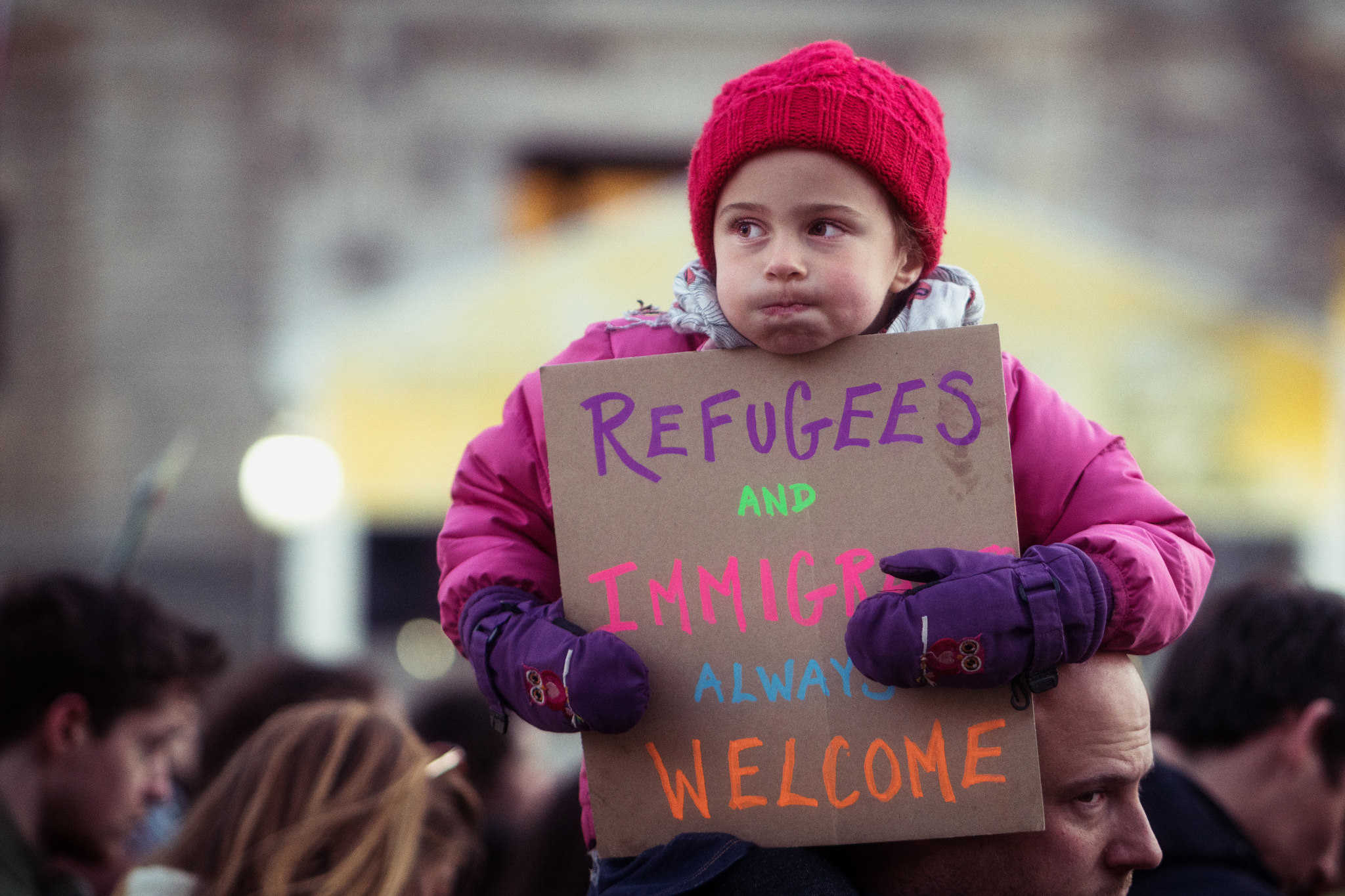
(Photo courtesy of Lorie Shaull via Flickr)
Uber’s social approval rating has been particularly turbulent. Despite also making public statements, many consumers have advocated boycotting the ride-hailing app, for undercutting the New York Taxi Workers Alliance own strike against Trump’s travel ban.
They regained some social favour after promising to give Uber drivers compensation and legal advice… but the saga continued as people were reminded that CEO Travis Kalanick currently sits on the board of Trump’s economic advisory group (alongside Elon Musk).
You couldn’t paint a better picture of a brand that attempted to do all the ‘right’ things in the public eye, but failed miserably. Those previously loyal to Uber have now shifted their allegiance to US domestic rival, Lyft, following their pledge of one million dollars to the American Civil Liberties Union (ACLU). Lyft have been praised for taking action when many have stood idly by.
When it comes to earning trust, loyalty and approval, consumers think far beyond the basic utility or service a company can provide. To a degree, people naturally assume that their favourite brands share similar attitudes and values to their own. It is why we choose to identify proudly with them.
When that assumption is challenged or proven false, or when companies do not conduct themselves the way they are expected to, consumers will question whether they want to continue to identify themselves with that brand or move on and find one that does.
Highly polarising world events (like Trump’s travel ban) light fires that force companies to take a stand and prove that position with some form of action. Even simply being too slow or too weak in response risks destroying the confidence and faith of customers.
Not only will they lose loyal customers, they will face an inevitable backlash from the public that demands far greater social awareness and accountability.
Featured image courtesy of Alek S. via Flickr