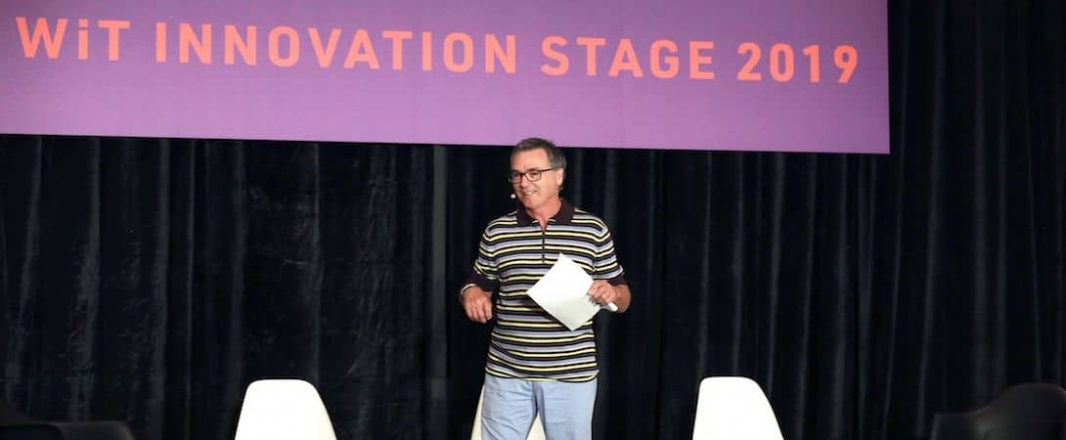
“My goal is to highlight some of the most common place calamities to befall travel startups,” was how Rod Cuthbert, board member of Veltra Corp and former chairman & CEO of Viator & Rome2rio, started his presentation at WiT Innovation Stage held last week in conjunction with WiT Singapore 2019.
He was giving a “safety” briefing and sharing some cautionary tales of how things could go wrong for startups, and how to avoid or navigate these pitfalls. “Lots and lots of things can go wrong, and if you do startups some of these things will befall you – sure as death and taxes, I guess.”
Here are some of the “calamities” startups may face.
Bad timing
“In life, stuff happens. Most of it you can’t control,” and one is timing said Cuthbert.
Imagine being a startup in Hong Kong right now where there is ongoing protests since June sparked by the now-scrapped controversial bill to allow extraditions of criminal suspects to mainland China. Or being a Korean startup in the Japanese market (relations between Japan and South Korea are currently fraying).
Cuthbert is no stranger to “bad timing”. He related that at Viator they had to deal with 911 (al-Qaeda attacks against the US on September 11, 2001), SARS outbreak (November 2002 till July 2003), the Bali bombings (October 11, 2002 and October 1, 2005) and financial crisis.
“Everything that can go wrong did go wrong. They come at you from all different directions. Some of these things, nobody can control. You have to deal with them on a daily basis, you got to make decisions and take other actions.”
Believe your own story
This is common among many entrepreneurs. They believe in their own narrative and drink the Kool-Aid. They tell the story about their startup to their family or boyfriend/girlfriend who love it as they are part of his/her “posse”.
Cuthbert suggested instead to widen the circle to tell the story to. “You need to come to events like this (Innovation Stage) to talk about your startup in order to find out if it is a good idea.”
Play cards too close to chest
On the other end, some startups play their cards too close to their chest, maybe out of fear that their ideas or plans are known or copied.
“It’s ok to talk about what you doing. It’s best to air an idea. It’s best to get it out there,” is Cuthbert’s advice.

Too trusting
Your development team says funding will take three months and to believe them. Whatever it is, you have to be sceptical and cynical. You know that whatever you’re doing it will take twice as long or maybe three times and that is alright, Cuthbert opined.
Too many Cs
Startup owners tend to bring their friends and (ex)colleagues to the fold and give them grandiose titles like CPOs, CLOs, CFOs.
“So many Cs and not many Bs (working bees) to do things and come up with strategies. This is a common problem. Hire people who actually do things and not figure out things for other people to do,” said Cuthbert.
Pivot at will
If the forecast is wrong and you find your startup losing momentum don’t carry out wholesale change in the business model. Instead make small changes. Don’t pivot at will and throw out the baby with the bath water.
“You have a good idea, stick with it. Make minor changes – change the colour or fix the logo. These changes will more likely get you back on track rather than alter the whole new business. Avoid shiny new things,” said Cuthbert.
Give and take to avoid breakup
Cuthbert likens a startup to a marriage. You spend all of your time with this other human and if you disagree on things your children (staff) see that and may end up they taking sides. Some may leave the company as it is not nice to be in a house where mum and dad are arguing all the time. So like in any marriage there should be a lot of give and take so as not to have problems spilling over to the staff.
Your investors don’t love you anymore
You found the investors, you did the PR and you made the first bid. However, it turns out that once you go beyond all these the investors may decide you’re not the right person to helm the startup and you’re not the growth CEO they want. Divorce seems like a good idea to them.
“It’s ok, go out and do something else. Life goes on,” is Cuthbert’s view on such a situation
In concluding his “safety” guide he said: “None of these problems need necessarily stop you. The fact that you talk about it here today means that at least they’re in your mind and you won’t be too surprised if you encounter them.”