Ernst & Young sets rules on business trips, tests blockchain direct bookings with airlines and hotels
SUSTAINABILITY and technology, rather than health and safety, dominated the discussions during the panel on corporate travel at the CAPA Airlines in Transition Summit in Manchester last week, with a major corporate buyer outlining the steps she’s taking to reduce her company’s travel carbon footprint and secure direct access to airline and hotel bookings using blockchain.
During the panel titled “Mega-Trend 3: The decline of business travel changes yield profiles”, Karen Hutchings, global head of travel, meetings and events, Ernst & Young, kicked off the discussion by saying sustainability was top of her agenda and the global consultancy has set stringent targets on carbon reductions.

Karen Hutchings: “We have to challenge our industry, how do we move it forward? It’s a test to do something different and get what we want.”
“Up to 85% of reductions are to come from business travel and 70% of that 85% will come from air travel,” she said. By 2025, it aims to cut its carbon emissions in air travel by 40%.
She said that Ernst & Young, being in a business “where we sell people”, has “high volumes of emissions as it relates to travel so the issue of sustainability is more significant for us. This is something that’s here and it’s here to stay.”
These targets also help the company be competitive in the war for talent. “Candidates are asking, what are your sustainability goals? It makes it desirable for people to come and work for us, and it puts control in the hands of travellers. People can select based on emissions what type of travel they do.”
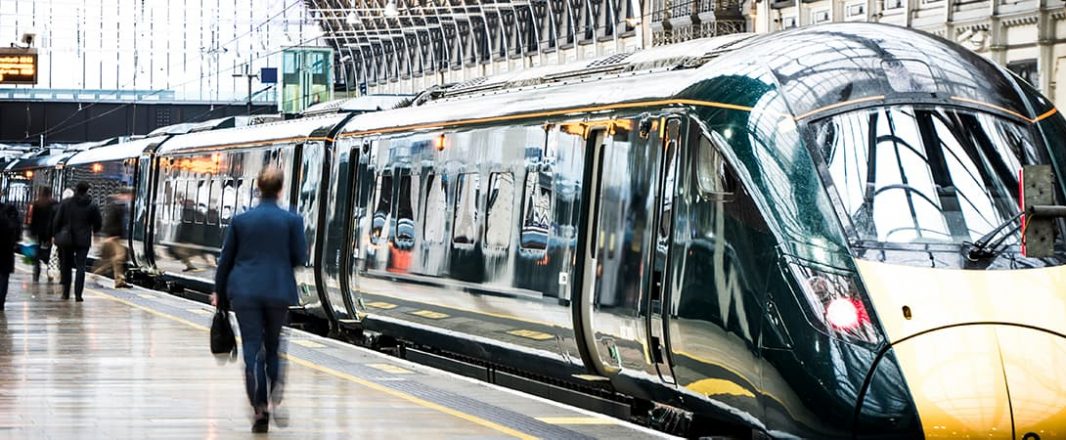
She cited three rules – no air travel if there is a viable rail alternative, no day trips (18% of its travel is day trips) and limits on the volume of people going to one event. “We use robotics to alert managers if there is duplication in the number of people going to the same meeting, to try and change behaviour.”
In markets such as Italy, Poland and Japan, even with a strong domestic airline network, its employees were moving to rail. “Travel is here to stay, I love the industry personally. However we have a commitment to the planet,” said Hutchings, who drove to Manchester to speak at the conference. “Carriers that are investing in technology are the most attractive option.”
Hutchings said that while it was working with airlines on NDC implementation, that was “going nowhere” and she revealed that it is working with a major airline to offer leisure travel options to its employees. Using blockchain technology, the airline will be able to offer priority boarding and other privileges direct to its employees, she said. “The airline is providing a booking channel for us,” she said, adding, “We have to challenge our industry, how do we move it forward? It’s a test to do something different and get what we want. Now we want to add other airlines from a leisure perspective.”
It is working on another use case to add hotels from a business travel perspective for project rates “that we can’t get through the GDS”.
She said that Ernst & Young had taken the step to build its own sustainability tech tool “for proof of concept”. “It puts the decision in the hands of employees – based on emissions, they can choose their particular type of travel. We know it’s not 100% perfect, we are okay with that. Why is NDC not implemented yet? Because everyone wants perfection versus something better – but it’s 75% more than what our employees have at the moment to make slightly informed choices.”

David Harper: “Demand is coming back strongly.”
Meanwhile, airlines have to juggle between the current realities of maximising business recovery and investing in the future to meet the new demands of corporate clients.
For an airline like Virgin Atlantic, which flies only longhaul routes and clearly there is no viable rail alternative for that, chief commercial officer Juha Jarvinen said the airline is investing in the most environmentally-friendly aircraft as well as moving towards SAF (Sustainable Aviation Fuel). “It’s a necessity and a constant request in RFPs now,” he said, adding that its London-Los Angeles route had seen 82% recovery (compared to 2019), mostly from corporate travel.
At Southwest Airlines, which has set a goal to reduce its carbon emissions per available seat mile by at least 20% by 2030, and to have 10% of fuel consumption on SAF by end of the decade, vice president Southwest Business, David Harper said the market has been “very choppy” and it’s been busy restoring the network for short to medium haul routes. “We have people returning to the office,” he said. “Small to medium sized meetings are taking off like a rocket. Demand is coming back strongly. By June, we will restore the depth of our shorthaul routes.”
Hutchings said demand remains volatile. “China was leading the way for us, now Shanghai is shut down and it’s fallen off the cliff in China. There’s pent-up demand of people not having seen each other, meetings and events are coming back but we see these dropping off once it’s done. We can’t take a trend from these six months. The question is, how will the pent-up demand stabilise in 2023?”
• Featured image credit: William Barton/Getty Images