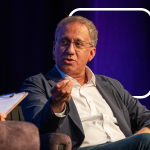

Brett Henry: First to scale gets the premium valuation
A week before the WIT Conference (Oct 27-29) opens in Singapore, Brett Henry, Abacus’ vice president-commercial who’s spent the last 12 years in Asia watching the online travel space, shares his observations with Yeoh Siew Hoon. ‘OTAs: The Coming Wave’ is one of the 10 trends that will be discussed at the conference.
Q: What do you think has been the biggest shift in the last 10 years?
It’s got to be India and China. If someone had told you that India would go from zero to 48% online in the last 10 years, no one would have believed you. This is a market with low Internet penetration. It tells you it’s not about affluence, it’s about accessibility and customer experience. It’s easier to buy travel online than offline there.
Hong Kong, in contrast, has got all the technology, superior infrastructure, yet online travel penetration is lower. Who would have believed that? It’s easy to go downstairs to a travel agent who delivers personal service and takes responsibility. Again, it comes down to customer experience – it’s easier to buy offline than online in Hong Kong.
Q: So would you say that Hong Kong is good case study of travel agents doing a good job of defending their turf?
Yes. Any market where the customer experience of buying online isn’t that good, then brand and level of service becomes more important. At the same time, levels of investment in OTAs in Hong Kong haven’t been that high – unlike in India where you have big investments in OTAs like MakeMyTrip, Cleartrip and Yatra. In Hong Kong, you really only have Priceline, Expedia and Zuji and they haven’t invested that heavily, although this could change. In Taiwan and Korea, the biggest online players are the offline boys – again customer experience and brands are important. In those markets, local companies are winning.
Q: If you look at local markets too, there seems to be a fairly big gap between the number one and number two.
Yes, it appears the first person to capture market share of the online business gets huge valuation premium over the second guy – so whoever gets big first tends to be relatively successful. In India, there’s MakeMyTrip, the clear leader and in China, Ctrip. So in Indonesia, it will be the first to scale that wins and you can see the competition between the new OTAs like Nusatrip, Tiket and Traveloka. It appears that Rocket Internet is aggressively trying to scale Traveloka with that view.
Q: Australia’s an interesting market in that it used to belong to the locals, but now that seems to have changed.
Yes, it was dominated by names like Wotif and Webjet but the global players have come in and methodically invested. They’ve been building up customer experience and brand, quarter by quarter, for the last seven to eight years and now, suddenly Expedia’s the largest player in the market, even before its acquisition of Wotif.
Q: So do you think the pendulum could shift too in India?
I think it’s different in India. The market scale is larger and so far, the local boys have beaten down Expedia’s attempts. But you never know. I remember Dara (Khosrowshahi, CEO of Expedia Inc) said on an earnings call two to three years, ‘we’re going to lose a lot of money in Asia, it’s not about making money, it’s about building brand, customer confidence and user experience’.

“This is a longterm game. It’s about scale, the ability to invest and building a brand.” Photo: iStock
This is not how the average local player is thinking. This is a long term game and it’s about scale, the ability to invest and building a brand. Expedia’s got one of the best user experiences in Australia. I’d guess it’s now the top online agency in Singapore, Malaysia and Hong Kong. They’re investing heavily in Thailand and you see them everywhere in Bangkok. They got time on their side due to their longterm commitment.
Q: I guess you could say the same of the Priceline Group’s two brands, Booking and Agoda.
Priceline is also a gifted executor. Their strength is one, foresight to buy those two brands and two, the humility to let their teams be their own teams. It’s the same with their investment in Ctrip, it’s not about ego, it’s about good business.
Q: What do you think is the coming wave for OTAs?
I think you’ll continue to see ramped-up activity from the two global brands as they dig into Asia. What’s also interesting is new entry low cost OTA start-ups like Skiddo or Jetabroad (Australia) or Tiket.com (Indonesia) run on a shoe string and by super smart people who think they can conquer the world. These are the third generation OTAs – they have no boundaries.
Q: If you look at Singapore, how can a brand like airfares.com.sg defend its turf?
I think Kenny (Chew, founder of MISA Travel) has done a phenomenal job building a solid online business. They have a distinct strategy and they will do fine. They know they’re not going to conquer Expedia – they do packages well and have good content around a few airline relationships. It’s a uniquely local business and customers identify it as such.
Q: Another wave is local brands such as MakeMyTrip and Ctrip expanding beyond their home markets. You think they will succeed?
Not if they use the same model in their home markets. But could they expand to be global and regional, why not? They could take the Expedia-like approach and take a longterm view. Or they could adopt the Priceline approach – which is buy great businesses run by great teams and leave them alone. Ctrip seems to be blending best of both worlds. They are buying best of market businesses – such as eztravel, an online/offline tour operator in Taiwan – and they have Ctrip in Hong Kong.
Q: What do you think of them buying a cruise ship? Did that make your jaw drop?
Yes, it’s a great sign of the scale of China.
Q: What about Qunar, which is also wanting to expand outside China?
That’s an unknown yet. It’s got a super sharp leadership team and history has proven that great teams always win. But I wonder – the China market opportunity is so big that it makes sense for both brands to stay focused on their own markets and they don’t need to try and win other markets.
Q: What’s your take on Alibaba? It’s got Alibaba Travel and it’s bought a hospitality technology company, Sinotech Hospitality.
Q: I think they’re an unknown still. Depends how much focus they give travel.
Q: What’s the wild card?
Short-term, I freak out about people getting sick from Ebola. If one person in Asia falls sick, travel will tank.
Note: WIT Conference 2014, Singapore, kicks off on Oct 27 with the WIT Bootcamp, followed by the main conference. Book your tickets here.