
Owner Robert Pennicott (left), who grew up in the waters surrounding Bruny Island and worked as a professional fisherman, was inspired to start up his business when he realised that, after taking friends and visitors out on his fishing boat, this was an experience he wanted everyone to share.
So in 1999, he started Bruny Island Cruises. His wife Michaye, who is an artist, and their two children work with him in the business, which was awarded Family Business Australia’s National Small Business of the Year 2008.
In 2007, he added another southern Tasmanian coastal location, Port Arthur, with Tasman Island Cruises which operates cruises between Port Arthur and Eaglehawk Neck. A year later, the new cruise won the 2008 Tasmanian Tourism Award for the Best New Product Development.
The company has not only won awards for its cruises but also recognition for its conservation work, setting aside up to 25% of nett profits towards conservation.
When WIT spoke to Pennicott at the Australian Tourism Exchange in Adelaide, he had just completed a project clearing Tasman Island of the 80-100 feral cats which, according to him, kill about 50,000 to 70,000 seabirds a year.
“In the last two-and-a-half weeks, we haven’t seen a cat,” said Pennicott, who said the cats were killed with bait which puts them to sleep.
Recently, the company donated another A$35,000 to the Tasmanian Coast Conservation Fund, which is managed by Wildcare for important Tasmanian Parks & Wildlife conservation projects. This latest donation brings the company’s sponsorship of the Fund to A$100,000, since Pennicott established it in 2008.
On its website, the company says, “We strive to educate and excite all who visit and to create a legacy of conservation to preserve the island we love for future generations. Through or success our ultimate aim is to use our financial success to reinvest into the local community and the environment that we live and work in.”
Pennicott said he is seeing an increasing number of Asian visitors on his cruises. Singapore, Hong Kong, Korea and Japan are four of his top six international markets. International visitors account for 15% of his business.
With the seas sometimes producing up to 20-foot high waves, Pennicott said seasickness can be a problem – he estimates one in 300 people get seasick and Asians seem to be “slightly worse affected”.
“I’ve done my research,” he said. “What we do is give them ginger tablets and put them at the back of the boat. People get sick on the wobble and they need a lot of air. What we find is that more Asians tend to wear bifocal glasses and when the hair flicks across the eye, that’s a trigger point for seasickness.”
It doesn’t seem to put a lot of people off though. Each day, his boats carry about 42 passenger per boat and he estimates that each year, he takes about 35,000 visitors on the Bruny Island Cruises and about 25,000 on the Tasman Island Cruises.
To market his product, he takes part in trade shows and holds local promotions such as sponsoring a seal carousel at Hobart Airport, but bncouraged by the increase in direct bookings on his website, now accounting for 12% of business, he is hiring a fulltime web specialist to increase its Internet sales.
“We need to do more with the web as it allows us to reach to a wider, bigger international audience on our own,” he said.
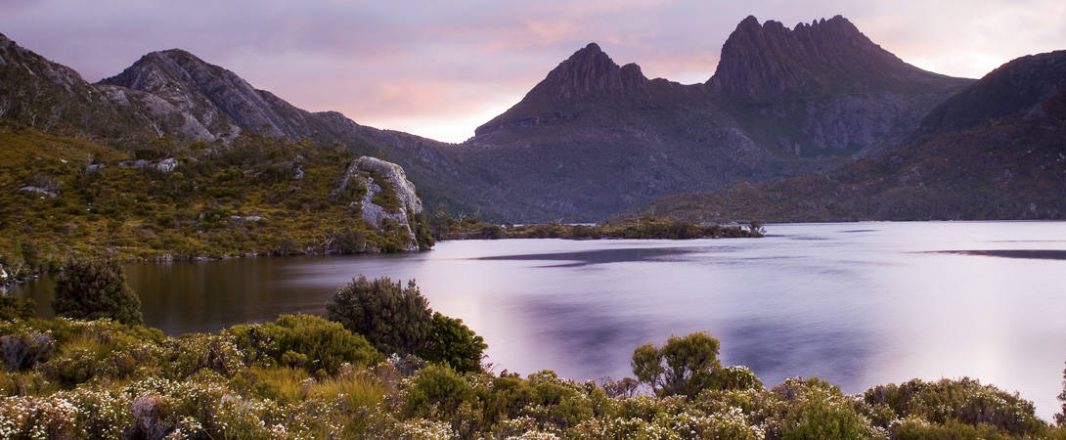
Featured image credit (Cradle Mountain): Ockra/iStock