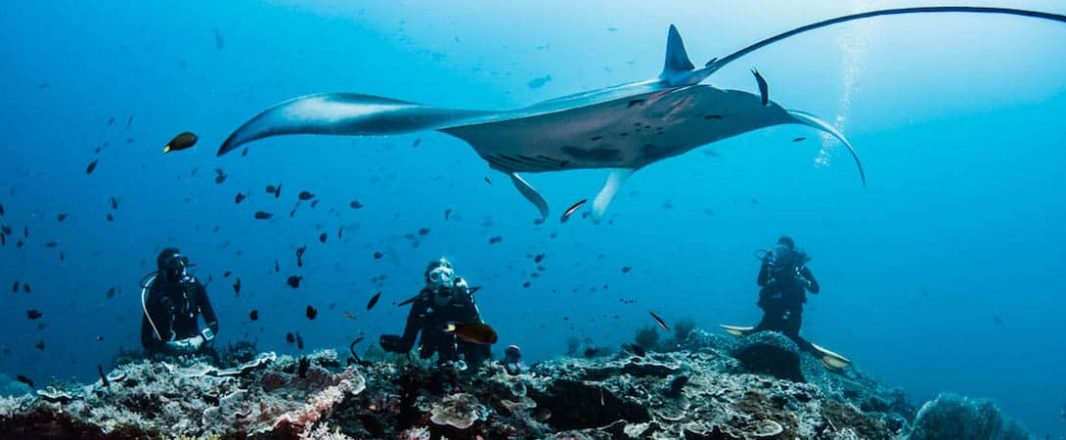
Pairing luxury with the growing demand for sustainable travel, Rascal Voyages has partnered with Conservation International Indonesia (CI Indonesia) to create the “Exploration Series” – a collection of eight research-driven, luxury sailing expeditions across Asia.
The series is an active effort by Rascal Voyages to bolster its commitment to marine preservation, without it coming at the expense of the luxury experience, plus of course, it believes the Exploration Series can satisfy the consumer appetite for ‘experiential travel’.
Current itineraries are set to embark on journeys through the Indonesian archipelago, but with five more boats due to be added to the fleet, Rascal Voyages will soon venture farther out into South-east Asia and the Indian Ocean.
It’s all about “the opportunity to get on board [with] the world’s leading marine biologists, learning from them and witnessing scientific breakthroughs… on a luxury vessel. It epitomises experiential travel. It’s a bucket list item,” said Steve Ebsworth, Co-founder, Rascal Republic.
The collaboration began earlier this year with a voyage to Raja Ampat wherein two new species of fish and two ‘manta cleaning stations’ were discovered. The voyage was also the successful test-run for ‘drone surveying technology’ that helped researches identify 25 new manta individuals.
“Initially, Rascal lent us the ship for a week for a much needed expedition… it went over so well, we chatted about it and thought, why not take guests on it as well?” added Dr. Mark Erdmann (Vice President, Asia Pacific, Marine Programs, Conservation International).
It gave birth to the idea of developing a series of “100% research-driven” voyages into a full-blown travel itinerary, fit for luxury travellers keen on bearing witness to scientific breakthroughs and feeling part of a greater environmental effort.
From a scientific standpoint, being able to conduct a considerable amount of research while enjoying the plush hospitality of a luxury private charter Phinisi (a traditional Indonesian two-masted sailing ship) is a difficult offer to resist.
“These eight itineraries are not designed for guests, they’re designed for what we need to do for our conservation work, but what we figured would have great appeal to Rascal’s clients,” said Erdmann.
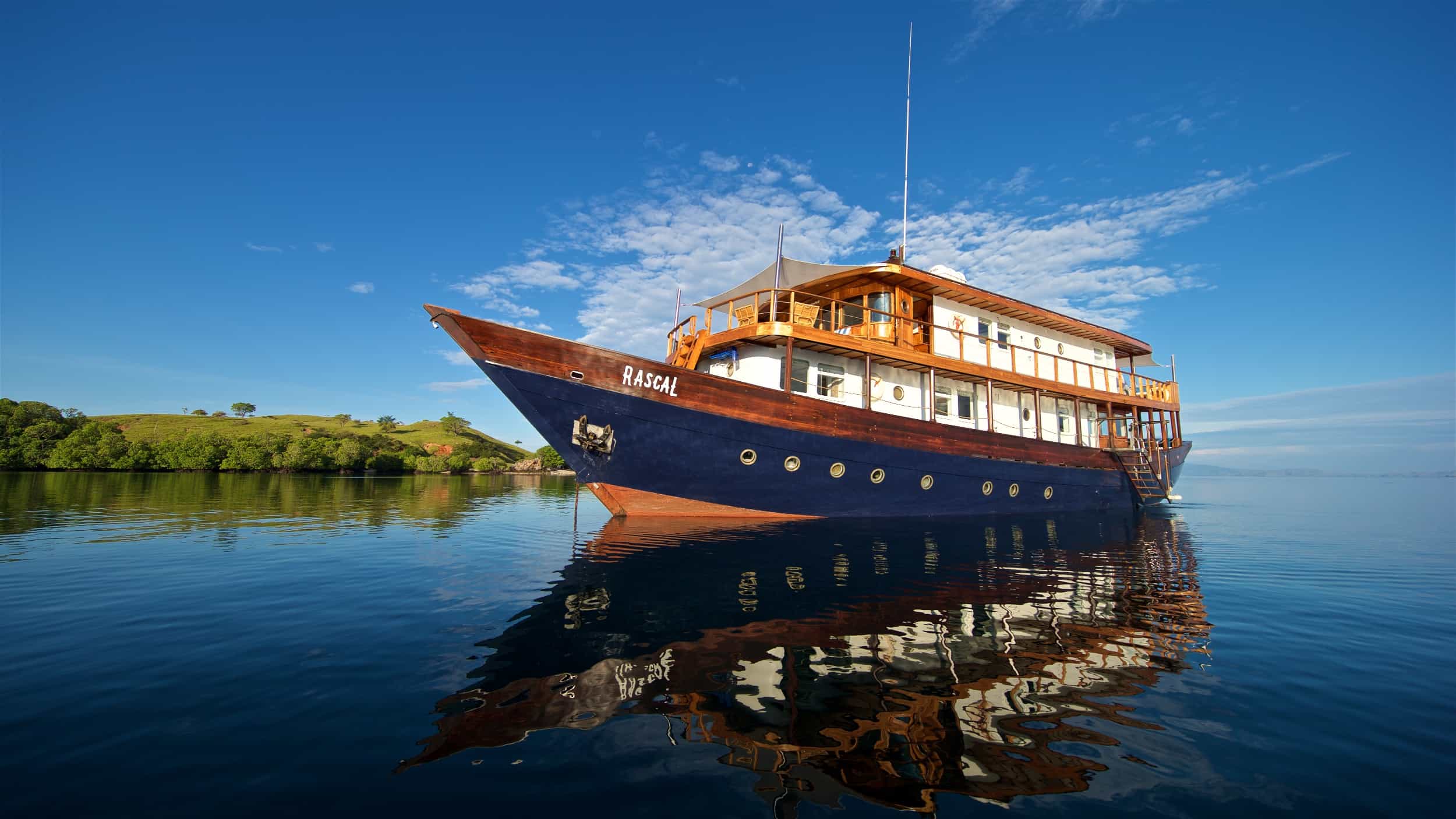
Rascal Voyage’s luxury private charter Phinisi
Beginning next year, expeditions will focus on surveying whale sharks, walking sharks as well as tagging hammerheads and thresher sharks to give CI Indonesia insights into the animals’ migration patterns and behaviours in these habitats.
Yet, conservation and luxury are two terms that are rarely seen in the same sentence. There is a certain level of irony of conducting marine research while guests enjoy lavish meals and five-star accommodation at the same time.
“As a company, we try to be as eco-conscious as possible, as conservation is part of our DNA. As a new company, we’re very much trying to [limit our] negative, and if at all possible, have a positive impact,” said Ebsworth. Collaborating with Conservation International is part of that goal.
Of course, in luxury travel, there must be a bit of give and take. The test will be figuring out which particular extravagances clientele would be willing to forgo, in the name of the environment.
Once these journeys begin to build popularity and traction, Rascal Voyages must see how it can offer their customers the all-inclusive luxury experience it is known for, whilst reducing the effect of its presence in a region famed for its biodiversity.
There is also opportunity for Rascal Voyages to take on greater initiatives on a community level, such as education of rural communities about the importance of protecting the local ecosystem or sharing simple, sustainable practices.
One could argue though that it is travellers that need more educating and that such expeditions into remoter regions should be a two-way learning affair.
Explained Erdmann, “To a certain extent, [engaging local communities] is where Rascal really wants to partner with Conservation International. By partnering with us… they’re enabling us to do research that we wouldn’t otherwise be able to do.”
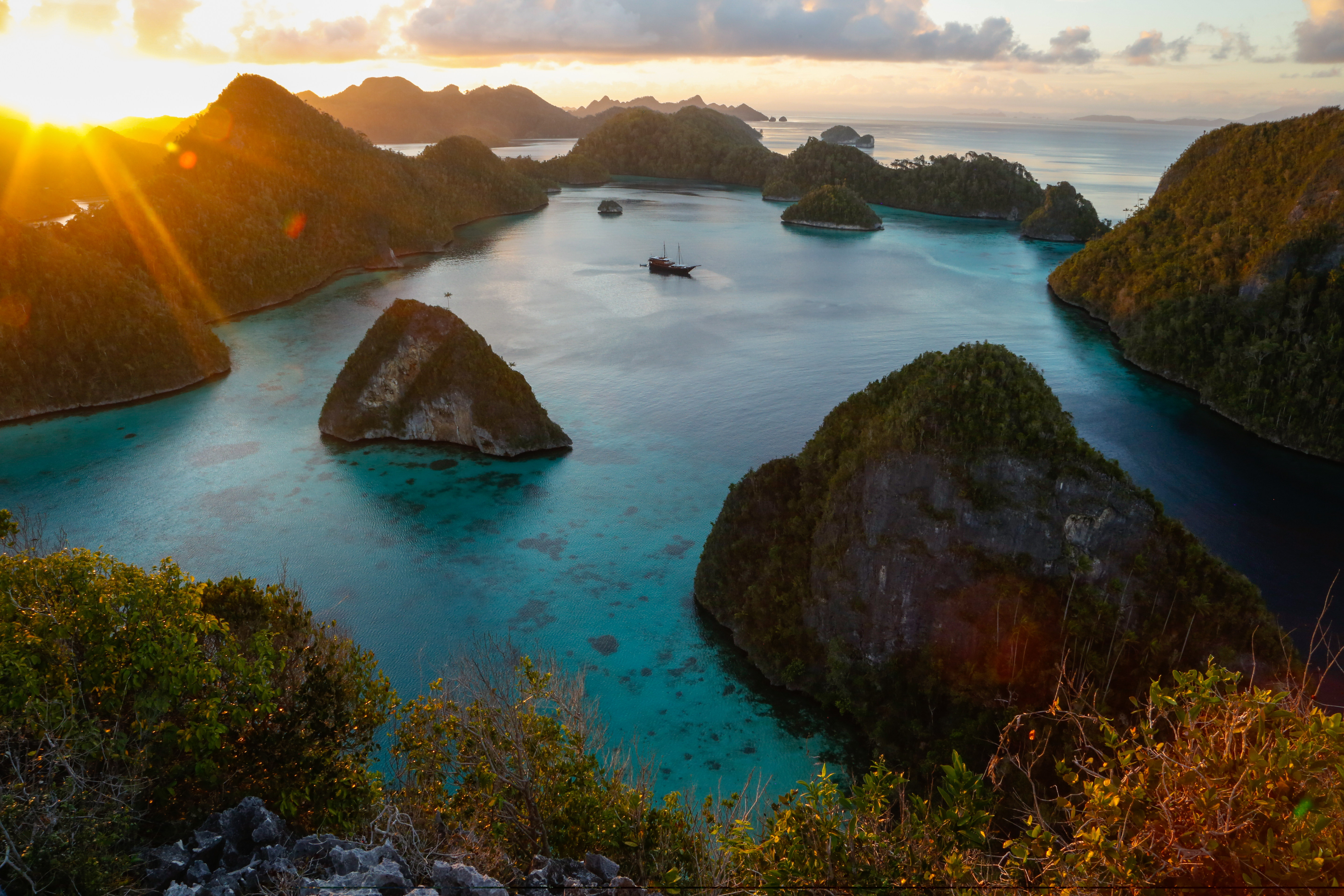
View of Wayag Lagoon from the peak of one of the many islands in Bird’s Head, Raja Ampat
Still, Rascal Voyages must tread carefully, balancing its ambitions of becoming a trailblazer in luxury cruising while making a legitimate positive impact on the environment.
This will be particularly important as the itineraries are organised around sailing regions within Indonesia rarely travelled by, and exploring ecosystems that have not yet been vulnerable to the negative impacts of tourism.
Over time, unless these areas are protected, the risk is that more tour companies will likely begin to offer similar itineraries without the same approach to conservation. Inevitably, an influx of tourism will jeopardise the very oceans we desperately need to protect.
This is a tricky thing to juggle as Indonesia continues to leverage its tourism potential as a key economic driver. However, it is critical that its tourism policy embeds principles of sustainability deep in its infrastructure.
Erdmann explained that this is specifically what CI Indonesia is working “We’ve been working for the past 20-30 years, developing tourism as a sustainable economic driver.”
“Komodo Island and Bali are unfortunately either into or on the edge of mass tourism… Komodo, in my opinion, needs significantly more regulation. In the areas that we are going [in the Exploration Series], we have worked very hard to place regulations to prevent mass tourism.”
Fortunately, in an era where sustainable tourism is at the fore, consumers are vocally beginning to favour brands that hold themselves to a high standard of green practices. With any luck, the partnership will foster greater discourse about the immediate and broader impact of travel on our oceans.