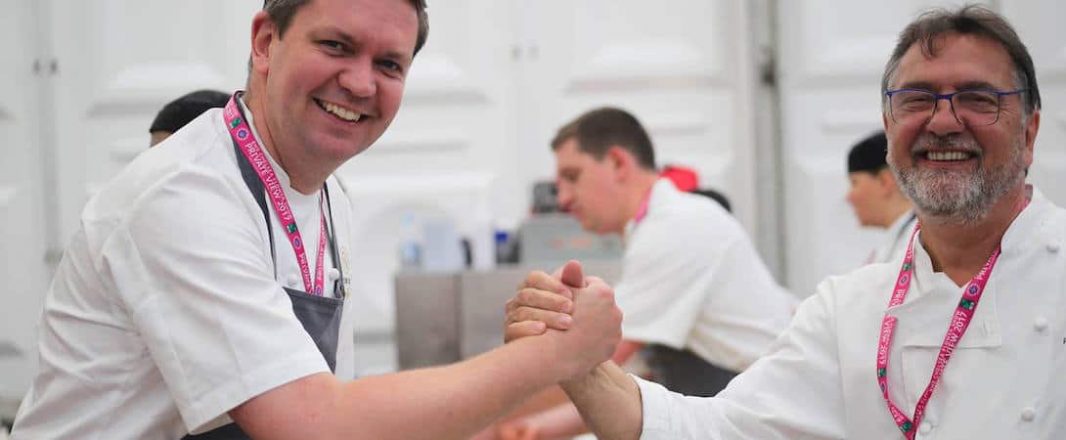
Raymond Blanc OBE may be French in his roots but it is his open-mindedness and curiosity that has made him the phenomenon he is today in the world of celebrity chefs.
Today one of Britain’s most respected chefs and chef-owner of Belmond Le Manoir aux Quat’Saisons, Blanc, who was in Singapore for the World Gourmet Summit, said, “When I first came to South-east Asia, I was not the most well-travelled chef and I discovered so much amazing culture, people, extraordinary tastes, textures, spices, it was a world of discovery… I am 50% Frenchman and 50% is travelling.”
Indeed, Blanc believes that talent and passion are not enough to make anyone great. “Many chefs who are passionate, study a lot, learn everything, still do not make it that far… and that’s fine because there is so much more to it.”
The missing ingredient, he says, is travel.
In this interview, Blanc talks about the importance of travel in making well-rounded artists, the growing pressure on the culinary industry to modernise its methods and attitudes towards the next generation of aspiring chefs.
Blanc drew many parallels with the broader travel industry, on the importance of creating an empowering work environment, embracing individual learning styles, and most importantly, granting young talent the opportunity to travel and discover the world on their own terms.
The old ways must change to allow young talent to emerge
As in hospitality, there seems to be a pattern of wavering enthusiasm for the industry as the next generation of young workers struggle to reconcile their career interests with their pursuit of a reasonable ‘work-life balance.’
Kitchen staff experience working long, often gruelling hours over six-day workweeks – an age-old practice that Blanc believes is out-dated and unreasonable.
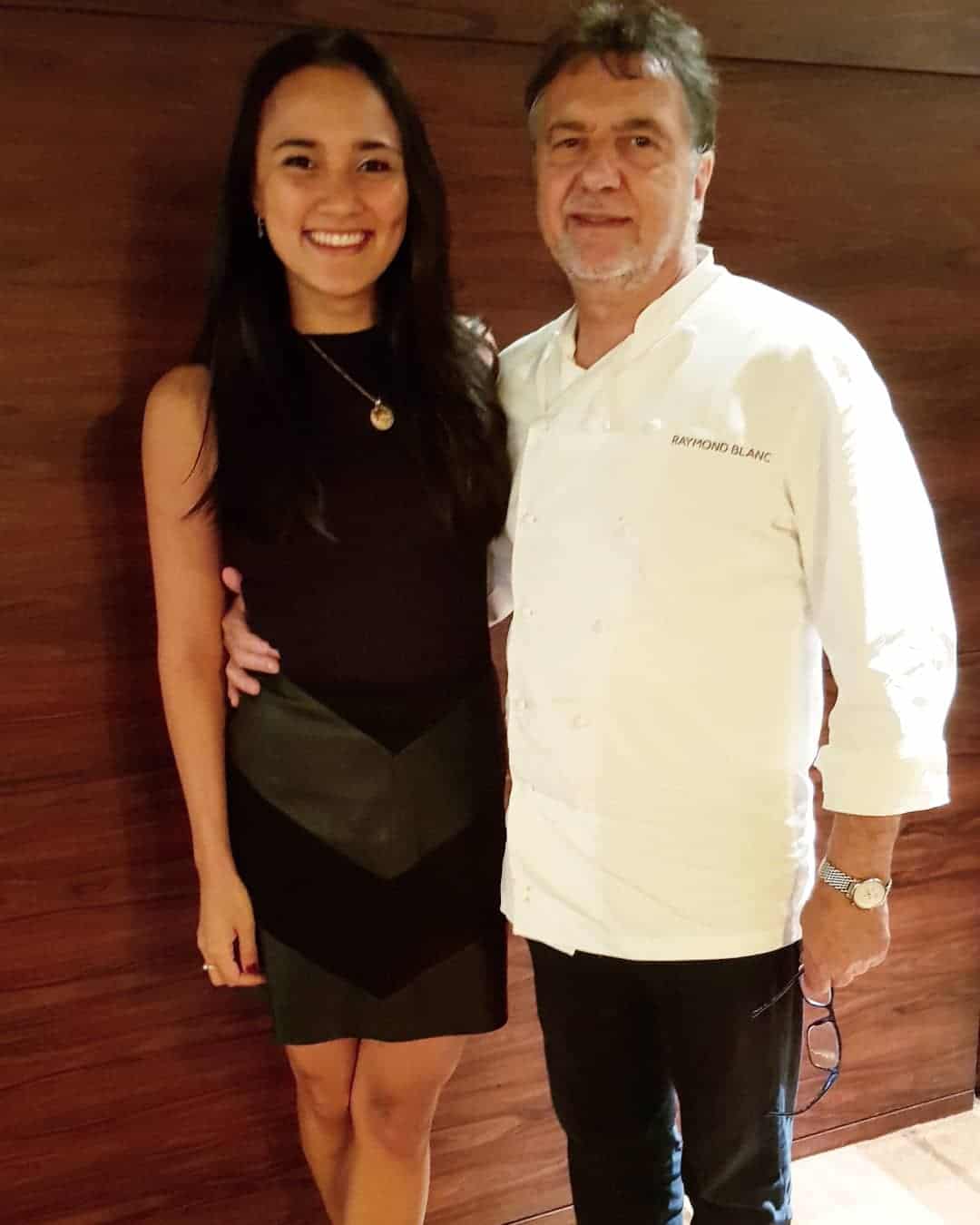
Chef Raymond Blanc was in Singapore to host a grand dinner during the World Gourmet Summit
Blanc blitzed through issues prevalent in the industry – from male-dominated kitchens to working atmospheres of intimidation and aggression. His ambition upon returning to the UK is to implement a four-day workweek, giving his chefs three full days away from the intensity of the kitchen.
“The [culinary] industry has self-harmed itself enough,” he declared. “Us chefs, we are old, the world we grew up in does not work the same way anymore… we must evolve.”
Blanc believes it is the duty of kitchen veterans to inspire and nurture the next generation of talent. It is far more than seeing if young chefs have the grit to endure the intensity of the industry, or the competitive spirit necessary to let them climb the culinary ranks.
That, he says, will never encourage culinary creativity. It will only exhaust, dispirit and burn out any young staff’s unique potential.
Instead, established chefs must help preserve and cultivate each individual’s passion so that they develop a love for working in the kitchen. That passion, Blanc believes, will translate into a far more longstanding career in the industry. Staff retention will not just occur because of how much time and effort staff have invested to climb in the ranks, but because they are genuinely in love with what they do.
“Too often you go to big hotels [and restaurants] and there’s no heart, just numbers… [but] it is such a joy to see every single department, top professionals who are completely in love with what they do.”
“That [passion] will help inspire their children too… so there will be another generation of young chefs coming into the kitchen.”
Of course, the proof is in the pudding. At Belmond Le Manoir aux Quat’Saisons, Blanc runs his own chefs academy and now a gardening school, training budding chefs and sharing his culinary philosophies of seasonality and provenance.
Across Blanc’s restaurant brands, he claims “I have 25% retention for staff that have been with me for over 10 years.”
On mentorship, learning styles and, yes, the importance of travel
There is also the crucial element of building an environment that caters to the different personalities and variety of learning styles that enter through the kitchen doors.
It must offer young talent the resources and the mentorship they need – something that has been lacking in the industry thus far. There are too many bad mentors out there, he says, that will ruin your confidence or cut you down. That industry is just not sustainable.
In his own life, Blanc was inspired by two predictable figures – his mother and father. The self-trained chef who only truly began his career at 28 ascribes his outlook, philosophy and identity to the household in which he grew up.
“My father for his gardening, and the importance of respect, resilience… to be tough, and my mother, who prepared the food with love. I don’t mean this to sound corny but it is so true, cooking is an act of love… When we serve people, people we do not know, we are giving them true love with what we create.”
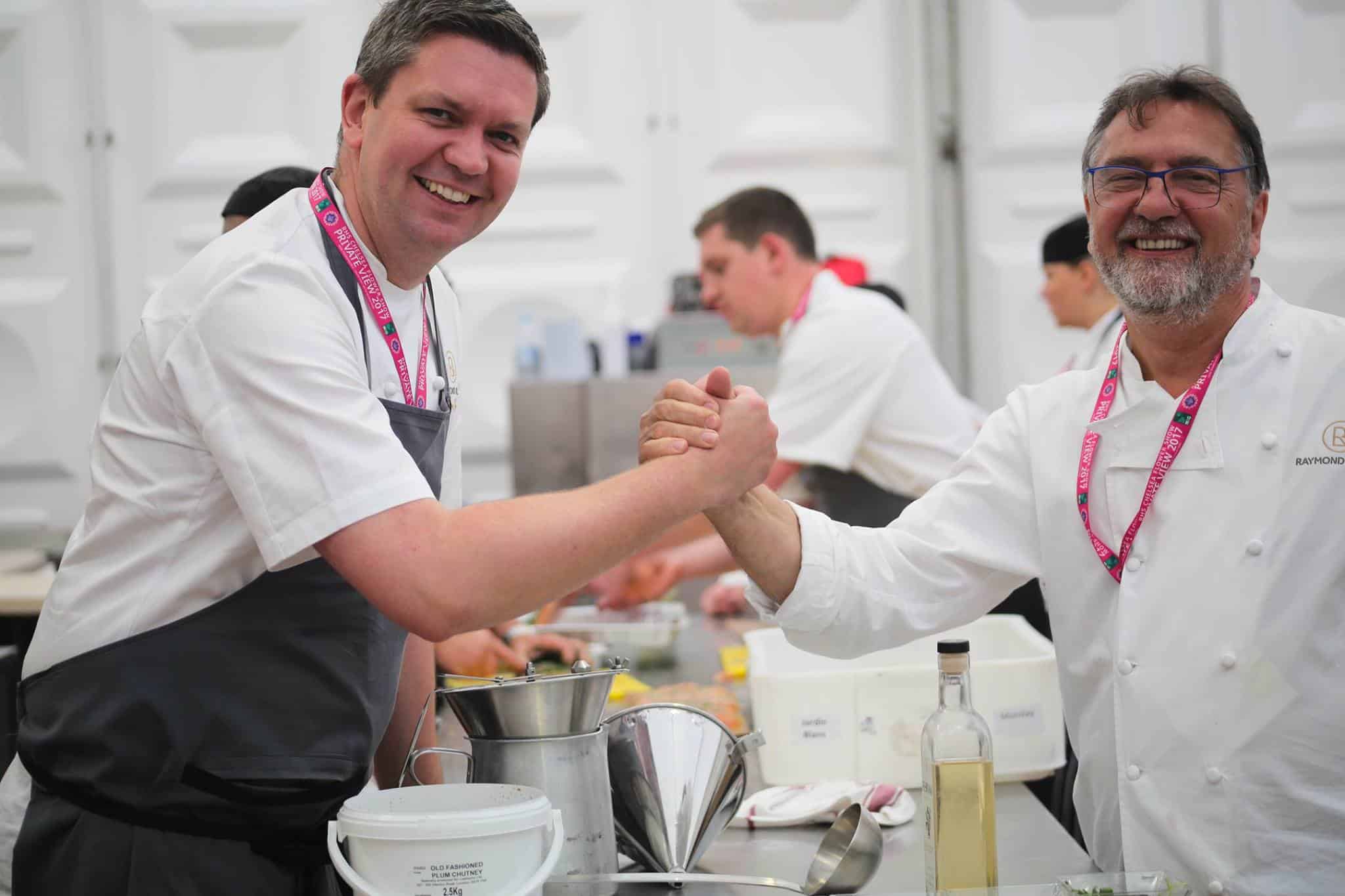
Chef Raymond Blanc with his ‘General’ Adam Johnson.
Talent can manifest itself in so many different ways, so keeping an open mind as a teacher is also vital. “Everyone has different personalities, how they learn, how they do things… the fast learners who experiment a lot, the slow learners who read everything but need more nurturing.”
But even the typical traits of a promising student with high potential (passionate, eager to learn, focused, a team player) aren’t necessarily always those that will rise to the top.
“Passion is not everything… many chefs who are passionate, study a lot, learn everything, still do not make it that far… and that’s fine because there is so much more to it.”
Talking about travel as the vital ingredient, he says, “In the kitchen, I keep my generals, commanders, lieutenants but I change my foot soldiers regularly. Why? For their own growth… they need to go out, travel, see the world, understand how things work. One or two, I will keep and they will go up [in the ranks].”
Blanc said mentors must understand their limits in what they can teach and experiences they can provide, and eventually free their pupils into the greater world to flourish of their own accord. Young workers (whether they are chefs or in any other industry) must feel empowered to shape their identities, professionally and personally and to cultivate their creativity slowly.
The dangers of rushing into new ideas and the importance of sticking to core identities
While travel inspires creativity, he warns that globalisation and technology can sometimes endanger it. The rapid pace at which the world moves and the constant share of information serves as inspiration to many, but Blanc believes it has caused many to rush into their ideas without fully investing their time in understanding what they are trying to achieve.
Innovation should centre itself on reimagining and reinventing classics that have stood the test of time, introducing new influences without replacing its essence. It is far more complex than freely adding ingredients that may be compatible but only really end up playing the role of a glorified garnish.
The same logic follows for travel brands that work to establish their place in the industry ecosystem. Those that have built a strong core brand have fared best as they stick to their strengths, then adapt accordingly.
It applies crucially to technological innovation where there is a tendency to hop onto the bandwagon and incorporate it into businesses without first understanding where it adds value.
“[Chefs] get too excited and they don’t allow themselves enough time to digest” what they experience nor understand how to assimilate it with their learned knowledge and identity, before rushing into new creations.
First, they must develop a strong sense of self in their ‘home kitchen’ or where they train, so they can better understand themselves in relation to what they discover.
Given these opportunities, “many extraordinary young chefs are developing, reinventing with the values of ‘le terroir’… creating gastronomy that is creative, exciting and is a responsible luxury.”