
The airline industry is undergoing a significant shift as major airlines ramp up their efforts to sell directly to travellers, in an attempt to bypass intermediaries like online travel agencies (OTAs) and Global Distribution Systems (GDS).
At the same time, low cost carriers (LCCs) are expanding aggressively, capturing a growing share of the global travel market. Together, these two forces are pressuring intermediaries to rethink their role in the value chain and adapt with technology-driven innovations that provide value to both airlines and consumers.
As airlines invest in building direct relationships with customers and LCCs prioritize low-cost, high-volume sales, OTAs, GDS providers, and other intermediaries are embracing new technologies, from AI-powered customer service to integrated offer management systems, to deliver a smoother, more personalised experience that can compete with airlines’ own platforms.
This was the theme covered in the panel “Air Retailing: 10 Years From Now” at WiT Singapore.

From left, Hugh Aitken, Skyscanner; Ross Veitch, Wego; Madhavan Kasturi, Sabre Travel Solutions; Nadia Omer, AirAsia MOVE and Trevor Spinks, flyadeal
“We love the OTAs but we hate you as well”
In recent years, airlines have intensified their focus on driving direct bookings through their own websites and apps. In 2023, according to T2RL, a striking 61% of global passengers booked directly with carriers, a testament to the industry’s growing emphasis on direct sales channels.
Trevor Spinks, CEO advisor at Saudi low cost carrier, flyadeal, describes the trend as a major shift in strategy: “Our direct [sales] is 60% to 70% inside the kingdom, slightly lower depending on the point of sale.”
This push for direct sales is not only about reducing costs but also about creating a closer connection with the customer, allowing airlines to control the end-to-end journey, personalise offers, and build brand loyalty.
Yet while direct sales are on the rise, airlines still rely on intermediaries to reach certain international markets, where customers may be less familiar with the airline’s own platforms.
“If I’m going to India or Bangladesh, the average person is not going to come to the flyadeal website or app. Then we’re going to be relying on the big overseas OTAs,” Spinks explains. This underscores the ongoing need for a balanced approach, where airlines use intermediaries to reach broader audiences but seek to capture as many bookings directly as possible.
Said Spinks, “We love the OTAs, but we hate you as well because we don’t have that direct relationship with the consumer. They bring in a lot of other bookings, so we kind of like them, but we want that direct relationship with the customer if we can.”
“By 2040-2050, low cost to account for 80% of global capacity”
The rapid growth of low-cost carriers is another force reshaping the air travel industry. LCCs are projected to capture a staggering 80% of global air capacity by 2040-2050, according to Spinks. This expansion is driving down ticket prices and increasing pressure on traditional carriers and intermediaries alike.
LCCs often prefer to handle sales through direct channels to minimize costs and maintain control over their pricing strategies. As they expand their market share, they’re setting a new standard for the industry: customers now expect lower prices and fewer frills, with the ability to book directly from the airline, often bypassing OTAs entirely.
For intermediaries, this creates an urgent need to add unique value to the booking experience – either through exclusive deals, enhanced customer support or innovative technology that makes the booking process smoother and more integrated.

Nadia Omer: “75% of the total transactions that happen on MOVE are AirAsia only flights.”
Different players making different moves, from easy returns to AI
Then there’s low cost airlines that want to become OTAs, such as AirAsia MOVE, which is the OTA arm of the AirAsia Group, South-east Asia’s largest low cost airline group.
CEO Nadia Omer said the evolution was necessary because it is clear travellers like choices and OTAs offer choice beyond one airline. According to Omer, 75% of the total transactions that happen on MOVE are AirAsia only flights, and clearly there’s a desire to increase other airline sales on the site.
For Omer, who comes from an FCMG background, offering easy returns and changes in bookings is crucial for building customer trust and encouraging advance bookings. “For a lot of our mass travellers, if the returns were managed better, if they didn’t have to make a choice, they would even book flights even more in advance.”
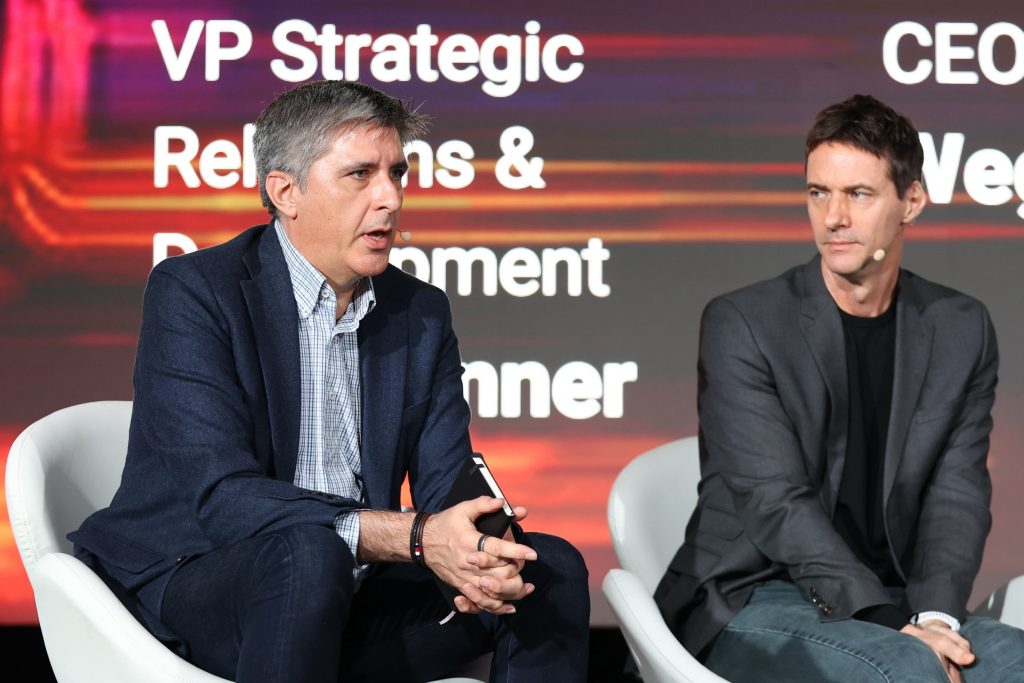
Skyscanner’s Hugh Aitken sees promise in personalisation of offers in a metasearch model, while Wego’s Ross Veitch wants to “allow them to just finish the job on the platform.”
Wego has been making the transition from a metasearch model to an OTA. Said CEO Ross Veitch, “We see it as more of evolving the model. Our metasearch business is still thriving, it’s still growing, but we saw every time we would survey our users, they would ask, ‘Why can’t I just book with you instead of always handing off and dealing with the added friction?’
“By allowing them to just finish the job on the platform, in the app, we’re delivering a more seamless user experience,” he said.
One of the most promising aspects of the new technology is personalisation. Hugh Aitken, vice president, vice president, strategic relations and development of flight search engine, Skyscanner, explains the importance of timing when it comes to offers: “We need to make sure the traveller gets the right offer in the right place at the right time. 53% of people come to Skyscanner and explore. Let’s make the relevant offer to them then, which is different than when they’re absolutely ready to book.”
By leveraging data to understand traveller intent, he said intermediaries can provide more meaningful suggestions, differentiating themselves from direct sales channels that may offer a more limited set of options.
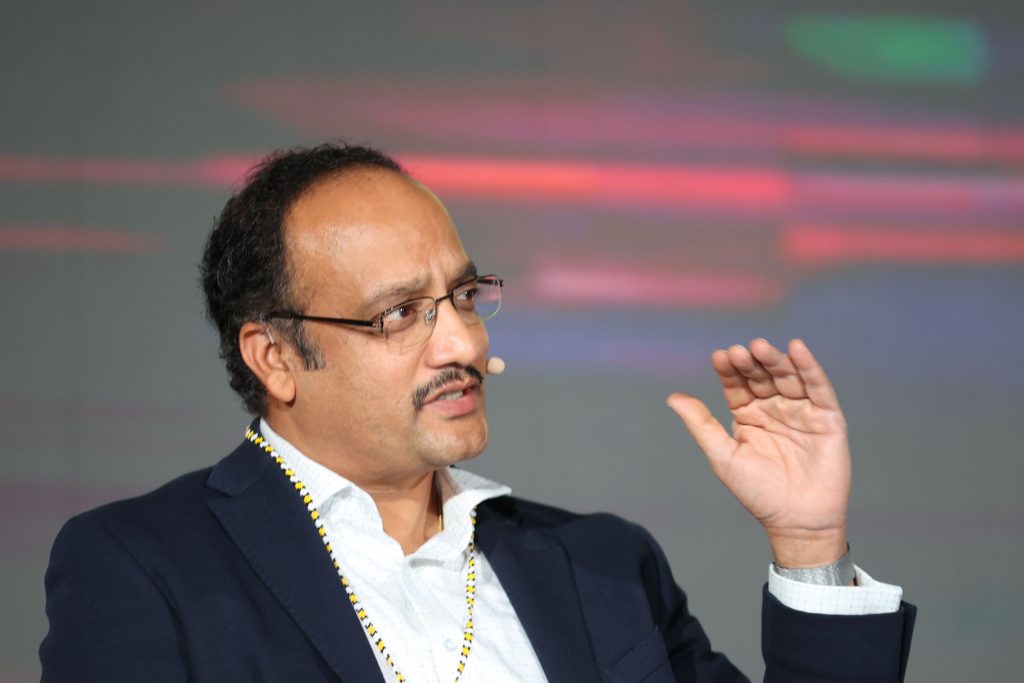
Madhavan Kasturi: “It’s an exciting time to be reinventing travel, to be reinventing retail, the offer and order management systems.”
The GDS sector, traditionally known for its rigid, legacy systems, is also adapting to support modern airline retailing needs. Madhavan Kasturi, Head of Global Solution Engineering, Sabre Travel Solutions, highlights the transformation happening within his industry. “We think it’s an exciting time to be reinventing travel, to be reinventing retail, the offer and order management systems.”
He added, “We have created a new suite of retailing solutions for airlines and we call it Mosaic. Riyadh is one of our very exciting customers. They operate in a very competitive landscape in the Middle East and they have very aggressive targets to meet.”
Artificial intelligence is another area where intermediaries are making big strides. With AI-powered tools, OTAs and GDS providers can deliver faster, more efficient customer service while also enhancing their revenue generation capabilities.
Kasturi explains that AI is now handling about two-thirds of customer inquiries at Sabre. “Two-thirds of the emails are processed by an AI microservice, and 98% of the time the microservices are actually able to create a response.”
Watch full session here:
The future: Virtual assistants, and balance between sustainability and affordability
Veitch sees an exciting future ahead for air retailing. “Flight shopping, travel shopping in general, is still too complicated. There’s too much friction. I think virtual assistants powered by Gen AI are going to be a huge catalyst for making it easier and simpler.”
Omer would like to see a balance between sustainability and affordability – how to implement sustainable practices while maintaining affordable travel options for the masses. “Why not have an approach similar to how progressive taxes happen, how progressive our electricity bills are? So a person who’s traveling more often should be paying more taxes versus stopping the regular masses from traveling, even their one trip in a year.”
And she’s also conscious of her role as a female executive in airline leadership. “I think each one of us counts. If I am able to make an impact, I think it makes it easier for the others to follow. But if I mess it up, it doesn’t strengthen the case.”