
How Mandai, AlUlA and Queenstown are transforming to face the future
From a manmade attraction in urban Singapore to an ancient kingdom in the Saudi Arabian desert to how the tourism town of Queenstown is being transformed into a technology hub, destinations are rethinking how they face the future. And through it all, a cautionary note that we’d better be prepared for the next pandemic. Luke Clark weaves a thread through the conversations at WiT Singapore.
When the planes stopped, we all stopped too. As the pandemic restrictions hit us, we sat at home baking bread, and dreaming of the places we would travel to, when the airports reopened at last. In the meantime, we read books, sampled online museum tours – and listened to podcast accounts from famous people – who we discovered were just as bored as we were.
Watch the full session here:
Luckily, not everyone sat still. While we were perfecting our sourdough recipes and hosting online drinks from our spare rooms, many destination practitioners around the world flew into advance planning mode. And recently, at the Marina Bay Sands in Singapore, we learned about some of the wonderful destination ideas they were cooking up, while the planes sat grounded.

Mandai: Welcome to the jungle, we’ve got fun and games
Spread over 126 acres of lush forest and housing a rich variety of wildlife, Singapore’s Mandai Wildlife Reserve currently consists of four destination products – namely Singapore Zoo, Night Safari, River Wonders and Bird Paradise.
According to Deputy Chief Executive of Mandai Wildlife Group, Belina Lee, work is currently underway on a fifth attraction, named Rainforest Wild. Eager to represent a world where people and wildlife thrive together, Lee said that despite being on the edge of a densely populated city – or maybe because of it – Mandai is working hard to educate visitors about the risks of species extinction in our world.
“Our role and the role that our wildlife parks play, is really to create meaningful memories and connections that inspire people to fall in love with wildlife and to be able to protect nature,” she shared.
Mandai’s challenge, she said, comes when its core visitor segment, families with kids, find themselves too old for the zoo experience: “Suddenly they grow up, and the zoo starts becoming less cool,” she notes, saying this happened with her own children at around the age of 12. “One of our biggest challenges has been, how do we attract teenagers, and young working adults, to continue coming to our parks.”
Slated to upon in March 2025, Rainforest Wild Asia is designed specifically for an older, more active segment. And as a key point of difference? Things are set to be livelier. “It’s going to be more adventure-driven,” she notes.
“We’re going to inject fun – with more interactivity, action and ‘peek-a-boo’ moments.” The attraction will take guests around 10 different zones, including The Karsts, where jagged limestone formations peek through the canopy, a perfect setting for a unique view of Francois langurs – a new species on exhibit for the first time. Elsewhere, The Cavern chambers, are inspired by the world-famous Mulu Caves in Sarawak. Through a collaboration with Sarawak Forestry Department, the million-year old rock formations of Mulu are recreated for Rainforest Wild guests.
While Mandai has made award-winning use of landscaping design and introduced technologies such as non-intrusive nightlights to the archetypal zoo experience, Lee says that particularly as awareness of animal welfare grows, the attractions must keep the interests and preservation of animals as their top priority.
“We have a theoretical cap,” she noted, “and have prioritised animal welfare as something that’s central – we hold that as a very high moral sense of authority and as a sense of responsibility: to ensure that our animals are able to exhibit their natural behaviours – whether it’s in the design of our animal areas, or in the way our visitors interact with the animals – we always ensure that there’s that sense of balance.”

AlUla: An ancient land rediscovered
From a manmade natural attraction under constant reinvention, WiT Singapore turned to an ancient destination that’s just recently finding its voice as a destination – AlUla in Saudi Arabia. Billed as a destination that has “nurtured humanity for over 7000 years, an ancient oasis where culture, literature and art spring to life”, delegates enjoyed a magical video sample of a global brand campaign, launched in February 2024.
As WiT’s founder Yeoh Siew Hoon pointed out, AlUla’s story, as well as Saudi Arabia’s ‘This Land is Calling’ campaign, play strongly on the theme of the region’s ancient female energy expressing itself, and speaking to women travellers. Is this a deliberate strategy, or a translation of the destination’s feminine identity?
“I think it’s a bit of both,” noted Melanie de Souza, Executive Director, Destination Marketing, Royal Commission of AIUla. “As a female, going into Saudi from Australia, where I’d spent 30 odd years, I had the typical stereotypes about this country,” she reflected. “And over the last five years, to be part of such amazing economic and social change – and to see women taking their rightful place in society – I think it was only appropriate that we had a woman as our key advocate, and the voice through which we spoke.”
According to de Souza, the plan for de AlUla is to develop the destination with clear guardrails against over-tourism. A county the size of Belgium in Saudi Arabia’s northwest, AlUla spotlights 200,000 years of human history and 7,000 years of civilisation. “Our purpose and our vision, is to take very responsibly this legacy that we’ve inherited,” she explained. “That is about ensuring that we don’t just protect, but that we preserve and embellish what we leave for generations to come.
“We want to regenerate what is 50% of our land, which is nature reserves – and ultimately bring back the apex predator, the highly threatened Arabian leopard,” she described. “Then we want our community to be at front and centre of what we’re doing in the tourism space. So sustainability is very much about what we are and who what we’re trying to deliver.”
With that, has come a target and visitor cap, of two million tourists by 2035. “It’s about managing inventory, and airline connectivity, in line with that aspiration,” she added. “And monitoring how many people are at a site for example, so you’re not having to nudge your way to get that Instagram moment.”
While the story is ancient, AlUla as a destination is still very new: “We’re a destination in the early stages of our life cycle. We’ve only been open for five years when the Kingdom flung its doors open for international tourism, as part of the Vision 2030, and the fact that we wanted to transform the economy away from oil,” said de Souza. “We’ve got work to do still.”
So what kind of travellers best fit the AlUla experience? “I think luxury travellers. At the moment, we are very much a boutique destination. Travellers that are interested in cultural immersion and that are predisposed to heritage that’s of global significance.”
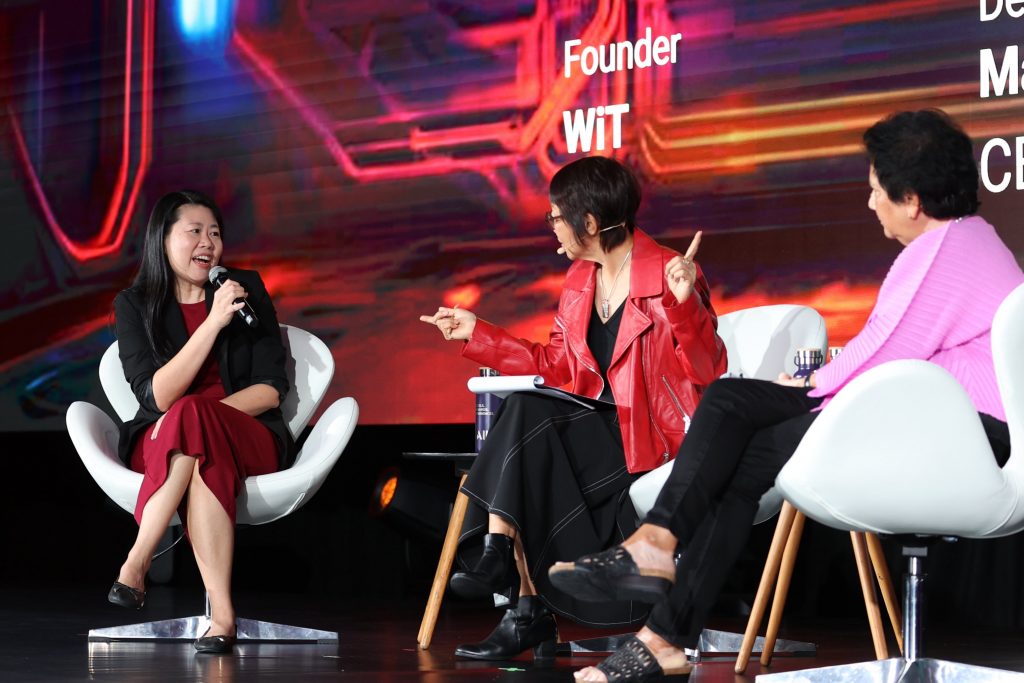
Melanie de Souza spoke of how technology enabled the story of Hegra and its women to be told, while Belina Lee spoke of Mandai’s mantra that technology is there to enhance, not hijack.
Technology as enabler, not spoiler
Answering an accusation by writer Paul Thoreau that “technology has destroyed the travel experience by providing too much information, making it too easy, preventing true discovery and real solitude”, de Souza counters that the answer to solving such a challenge remains in the destination’s hands.
“I think you can still deliver authentic experiences, but use technology as the enabler,” she counters. “AlUla is best known for Hegra, a hundred beautifully preserved tombs that the Nabataeans left us.
“We use digital and facial reconstruction capabilities to recreate the bust of a Nabataean woman – complete with her date-seed necklace and linen that she wore,” she described. “Her remains existed for 2,000 years in a tomb: and for us, that is the focal point that allows us to tell at the Hegra Visitor Centre, a deeper, richer story about a civilisation that was ahead of its time – where women had such an important role in society, they could own property, they were wealthy,” she noted. “It’s really interesting.”
Lee agrees that when used well, technology can be an enabler. But there are many times it can go too far. “I think that we need to look at the visitor journey very carefully, and look at the touch points where technology is an enabler and enhancer – and when technology actually hijacks the experience,” she noted.
“When I first joined, Mandai experimented extensively,” she recalled of the group’s digital journey. “But the last thing you want is people coming to the wildlife parks to fall in love in nature – and they’re all looking down at their phones.
“So that’s a bad touch point. That is where technology should not play a role. But, returning to animals having the ability to exhibit natural behaviour: one of the downsides would be, not seeing animals in the exhibit,” she notes, stating that even tigers need time to nap. “Can technology play a role there? Yes.
“We have a mantra in Mandai that digital is there to enhance and enable, but not to hijack. And we look through all the touch points of the journey to see where that line exists.”
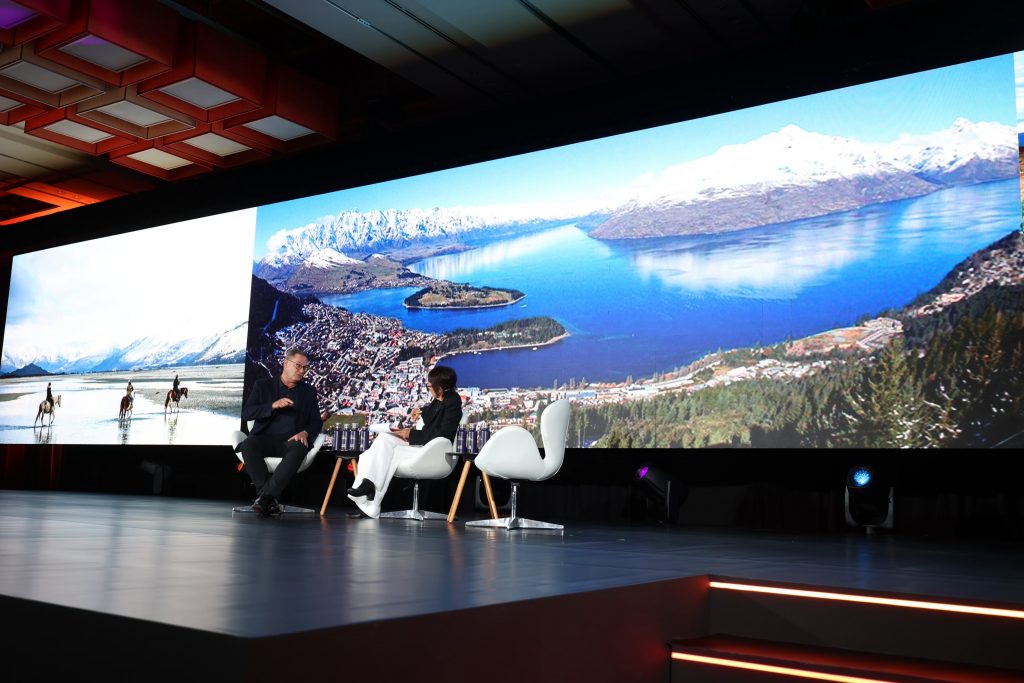
Roger Sharp on what makes Queenstown attraction to tech workers: “You can mountain bike, you can hike, you can ski. It has a vibrant nightlife: you’ll be surprised. Young people love it. It’s an absolute magnet.”
Queenstown: Southern tech-centric playground
Amidst all the talk of destination growth and the potentially enabling force of technology, a voice of caution also emerged during WiT Singapore – reminding us that what we have spent two years recovering from, could well visit again.

Aviation legend Peter Harbison spoke of the possibility of aviation hitting a brick wall in light of current challenges and the certainty of another pandemic. Are we ready?
Aviation veteran and consultant Peter Harbison reminded delegates gathered, that the recent two-year halting of travel from 2020, may not be completely a thing of the past. “If anybody believes there isn’t going to be another pandemic, or if anybody believes we’re actually prepared for it, then they’ve got a nasty shock coming,” said Harbison. “And I think it’s vital for anybody involved in the tourism business and travel business to have some sort of contingency plan – because we know what can happen.”
One tourism practitioner who not only has first-hand experience of what can happen, but is also working on a destination contingency plan for his hometown, is New Zealand entrepreneur Roger Sharp. While Sharp is lucky enough to call the alpine resort of Queenstown home, he also saw first-hand during the pandemic what happens to a UNESCO-listed natural heritage site, if the planes stop arriving.
During his interview with Siew Hoon, Sharp discussed his extensive experience in the travel industry, including co-leading travel and travel tech deals such as the IPO of Air New Zealand, and British Airways’ 25% acquisition of Qantas. He also highlighted the current challenges in the travel market – and shared his efforts to transform Queenstown – a site that Gandalf the Wizard and friends made famous through the Lord of the Rings movies – into a global technology hub.
“Thinking I was just going to rest for a while, I suddenly realized that my hometown was absolutely on its knees,” he recalled. “New Zealand shut its borders with a hard-close. So all those foreign visitors stopped coming. First there was financial stress, and then there was marital stress. We had thousands of foreign workers stuck there, some without homes, some living on the street,” he recalls. “And then people started to take their own lives. It was really serious.
“And it just occurred to me that when we did the maths, we’ve got a $4 billion Kiwi economy. Tourism is 60% of GDP. That is not a sustainable economy because, as Peter Harbison said earlier, it will happen again at some point,” warned Sharp.
With the backing of colleagues at North Ridge Partners and a cohort of “pretty powerful corporates”, Sharp and his associates formed a not-for-profit called Technology Queenstown, “It aims to build 20% of GDP, around about a billion dollars a year by 2043, all out of technology.”
For a traveller by nature, the Covid experience wasn’t all bad. Sharp recalled, “Right in the middle of COVID, I rented a car.” He drove from Portland, Oregon though Bend, Oregon, up to Spokane, Washington, over to Bozeman, down to Denver, to Boulder and right across the Rocky Mountains to Aspen.
“We saw the town clerk, the mayor, the venture funds, the accelerator, the investor, and asked: ‘Why have you been successful? Or ‘Why have you failed?’ And so we got this playbook from Colorado, for what works and what doesn’t work.”
Having “roped in” the economics unit of Accenture to help, Sharp was convinced he could build a case. Next he and the team set about raising money from the corporate sector. “We need about a million New Zealand dollars a year to run this tech development agency,” he noted. “We’ve got our first five years, pretty much in the bag.”
How then, does one overcome the tyranny of distance in the deep south? “It’s okay,” he deadpanned. “You can mountain bike, you can hike, you can ski. It has a vibrant nightlife: you’ll be surprised. Young people love it. It’s an absolute magnet.
“It is first to wake up. So you can work for an American company, right through the American day, if you start at 7am or 8am in the morning,” he said. “It’s right next to Australia, which is a much bigger market with no visas required,” he notes. “And it’s safe – and absolutely beautiful.”
In time, he hopes the technology sector’s contribution to New Zealand’s GDP can rise from 20% to 40% by 2043. He believes the destination can in time attract industries like cybersecurity, clean tech, and travel tech, ultimately addressing the challenges of attracting talent to a remote location – and provide an alternative income, if and when the planes do ever stop visiting again.
“Frankly, it’s taken over my life,” Sharp admitted. “But I just feel, when you’ve get to a certain point in life, you have to do these things. You have to stand up and do something about it. And that’s what we did.”