
Travel tech leaves female solo travellers to fend for themselves
Are female solo travellers being ignored by travel technology? Sure, says travel meta search company, WayAway.
So much so, WayAway has developed its own maps that highlight neighbourhoods that might be ‘no go areas’ for female travellers due to higher than average crime rates or other user feedback.
WayAway is now calling for extra help from the travel tech industry to solve the challenges faced by female solo travellers.
The call comes ahead of International Women’s Day on 8 March, with WayAway concerned that despite technology solutions being found for almost every aspect of travel, the plight of the female traveller has gone unnoticed.
WayAway wants the travel technology industry to use its “considerable innovation skills and resources to solve this worrying problem”, identified by a recent survey on the WayAway website showing that four times as many women as men felt that “travelling alone is unsafe”.
This year’s International Women’s Day has taken up the theme from UN Women of “DigitALL: innovation and technology for gender equality”.
Janis Dzenis, head of PR & communications at WayAway, said it was “shocking” that more than 100 years since the first International Women’s Day “so many females still don’t feel as comfortable as men when it comes to travelling alone”.
“When it comes to travel almost every possible tool has been invented for every possible niche, but somehow for female solo travellers the technology on offer is, with few exceptions, pretty substandard, and most importantly far from universally available.
“For example, how many websites have filters that might cater for such needs? Or how many allow you to see female only commentaries and ratings?”
Dzenis said for those travel technology companies that could make an impact in this area “there is a huge financial reward on offer”.
“Female travellers will naturally gravitate towards, perhaps even swamp, travel platforms that can offer them the reassurances they understandably crave.”
Take a tip: This technology will help tour guides
In an increasingly cashless world, tipping is no longer a matter of searching your wallet or purse for a small note.
Too often, there is not a note is sight, and your tour guide might not have a card reader to accept a tip.
Enter booking software technology company TripAdmit, whose new product, Tap to Tip, is a cashless and contactless tipping solution for activity providers, guides and guests.
The TripAdmit distribution network has over 400,000 experiences in more than 100 countries globally.
TripAdmit says the Tap to Tip technology enables guests to make contactless payments through their iPhone or Android devices, by just tapping a card, eliminating the need for tour guides to carry bulky card readers.
Through entry points including NFC encoded cards, QR codes or payment links, guests can immediately charge a tip to their credit or debit cards from their digital wallets.
Tips are calculated and paid seamlessly, “providing a swift, effortless, and practical way for guests to tip guides digitally”, with the added advantage that the solution does not require an app or any additional hardware.
John Maguire, TripAdmit’s co-founder and CEO, said, “Our digital tipping product has been designed to fit the needs of both travellers and tour guides. Fewer travellers carry cash with them now so guides miss out on these tips which are a significant part of their earnings.”
Getting it all together in the activities space
Travel service provider Trip.com has picked tours and experiences B2B connectivity platform Globick as a global connect activity partner for its direct connections with activities operators worldwide.
The partnership is designed to provide premium products for the Chinese and other important global source markets as international and long-haul travel rebound.
As part of the agreement Globick will provide new API integrations between various Trip.com group platforms – including Trip.com and Ctrip – and tours, events, experiences, theme park and activities operators around the world that work with the group.
Xavier Boixeda, co-founder & CEO of Globick said connectivity is often “the missing link” in the tours & experiences space. The partnership with Trip.com, he added, would bring travel sellers and both operators and aggregators together “via efficient direct contracts”.
Trip.com will now integrate new chosen operators and aggregators with a direct contract via Globick’s frictionless B2B connectivity platform.
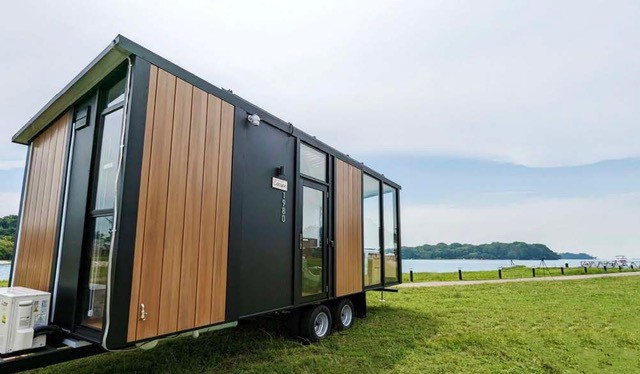
The tiny homes awaiting guests on Lazarus Island.
Tiny tourism comes to an island off Singapore
Technology aimed at helping to reduce carbon emissions will be one of the key planks for a new “tiny” tourism venture on Singapore’s Southern Islands.
A 15-minute boat. ride from Sentosa Island jetty, The Tiny Away Escape @ Lazarus Island will be operated by Big Tiny, the first Singaporean company to integrate the concept of “tiny houses” with ecotourism.
Due to open in phases from April 2023, Big Tiny says it is reinventing tourism accommodation and challenges short-term stay guests to re-think their consumption patterns through units “which are compact yet retain their functionality”.
Thien Kwee Eng, CEO, Sentosa Development Corporation (SDC), said, the new experience in the Southern Islands aligned with SDC’s sustainability goals.
“These unique accommodation units have utilised innovative, sustainable solutions and technologies to allow guests to lower their carbon footprint.”