
THE easing of travel restrictions is likely to drive a strong recovery in South-east Asia’s travel and hospitality sector, according to an assessment report by research and advisory firm Redseer.
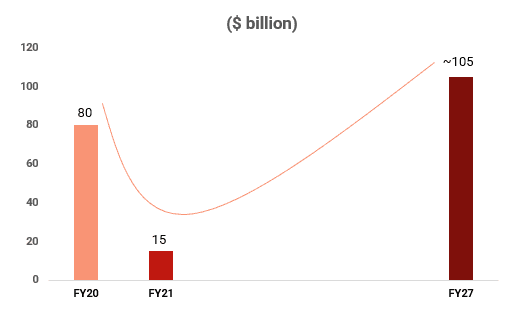
“While the pace of recovery could differ across countries the directional uptrend should lead to the sector achieving more than US$100bn in market size by 2027.The positive outlook is likely lead to increase the capital raising activity in the sector,” it noted..
South-east Asia travel market US$80bn in size in FY20, expected to grow 1.3 times by FY27
The travel industry has been hard hit in South-east Asia due to Covid. The region observes high number of tourists normally, but Covid and post-pandemic travel restrictions have crippled the travel segment. Singapore, Indonesia and Thailand were particularly hard hit due to a higher GDP contribution coming from the travel and hospitality segment.
The rebound will benefit both travel and hospitality segments, with tourist arrivals and hotel occupancy rates expected to go up sharply in 2022.
The region is suitably positioned for ecotourism due to its abundant nature-centric destinations. Further, governments have used the pandemic period to reconstruct several locations into sustainable travel destination.
Sector seeing signs of strong recovery in 2022 due to high tourist interest acting as tailwinds
A strong rebound is expected in the region on account of pent-up demand for the past two years. With easing restrictions, streamlining of travel rules and increased support from the governments the tourism sector is set for a strong recovery in 2022.
Indonesia and Thailand are poised for robust turnaround with the two countries being most popular among tourists, with Bali coming in at number one in various travel agency searches across international and domestic travellers.
Singapore, Vietnam and the Philippines have eased most of the travel restrictions and this makes travel almost as seamless as the pre-pandemic days. With further easing in all the countries in the region we expect a boost in travel numbers in the coming months.


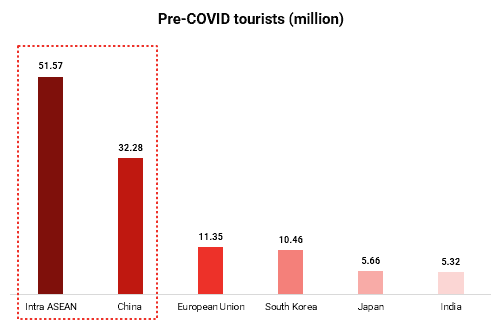
Travellers from within South-east Asia and China hold key for sector to rebound
For tourism to rebound in South-east Asia, intra-regional travel and travel from China remains critical as these two form the largest chunk of inbound international travellers in the region. International arrivals from China continue to remain muted due to strict quarantine and covid zero policies being followed at home making international travel less appealing for tourists. However, a portion of the demand lost will be compensated for by the incremental travellers from European Union who are looking for eco-tourism especially in destinations like Indonesia.
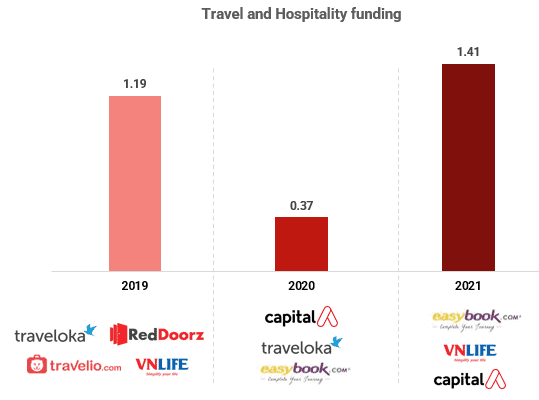
Bounce back in sector funding, deals indicate rising interest levels of investors
Fund raising is also rising, reaching a higher level than the pre-pandemic levels. The strong bounce back in funding activity will have positive impact on the sector in the coming years by improving the experience for tourists as well as making it easier to travel.
Majority of the funding is going towards the hospitality segment with hospitality startups garnering majority of the funding in 2021. Further, several global chains such as Marriott, Banyan Tree and Kimpton expanding their presence in the region, further inviting more tourists.
• Featured image credit: Airubon/Getty Images