Campaign shares actionable ideas for small businesses to adapt to Covid world
THERE are some who might question the need for Singapore Tourism Board’s latest campaign “SingapoReimagine Global Conversations” at a time when travel businesses in the country have been hammered by Covid, with its borders still closed to inbound. Who needs more talk when we need more dollars, some might say. Lynette Pang, STB’s assistant chief executive, marketing group addresses this question as well as shares ideas on how businesses, big and small, can leverage insights unearthed into reimagining their business.

Q: Why the need for Global Conversations at this time? How will it add value to an industry that’s been hammered by Covid?
With tourism and travel at a critical crossroads due to the pandemic, it is crucial that global players address the evolved needs of new travellers, reimagine the status quo through new business models, and recapture mindshare amongst global audiences.
SingapoReimagine Global Conversations was thus envisioned as a key platform and voice for industry – to come together to exchange ideas and spur new collaborations across the industry and beyond, to reshape global travel collectively.
Q: Why the four tracks that were explored in the series? What was the thinking behind the development of these themes?
The traveller is at the heart of all the themes developed for SingapoReimagine Global Conversations – which we believe would remain important for businesses as they shape their offerings and experiences based on shifting or new needs and interests. Topics such as the new travellers’ personas, phygital experiences as well as unconventional partnerships that give rise to reimagined experiences highlight the key shifts to address their needs. The series further spotlights new business models, partnerships and approaches that can change the future of travel.
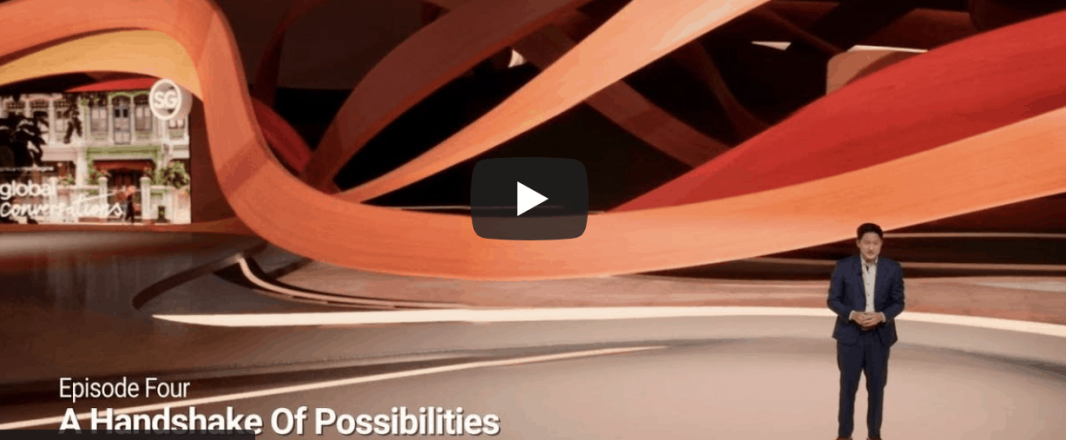
For example, “A Whole New (Phygital) World” discusses how brands have integrated digital and virtual elements into their physical businesses to engage and reach out to more audiences, while “A Handshake of Possibilities” illustrates how companies from both travel and non-travel industries have banded together to test-bed innovative concepts and new revenue streams, to cater to consumers in a new Covid-19 environment.
Q: How will these insights benefit smaller companies who have struggled to make ends meet and continue to do so with the current ongoing restrictions? Can you share one example of how a smaller business can tap into Episode 1 where you profiled the three types of travellers?
The forums are meant for all travel-related and lifestyle businesses, both big and small. While this is a difficult time for many of them, they must prepare for the future as the business of travel and customers’ needs have fundamentally changed.
For smaller businesses, the insights and frameworks within the WGSN report will provide actionable insights that can help them review if their current segmentation, product range and marketing can help them attract the new traveller profiles.
- To target the Mindful Explorer, businesses can promote their locally owned status and deepen their engagements with the local community to deliver more hyper-localised experiences.
Example: Local experience curator Tribe introduced a series of interactive ‘Behind-The- Scenes’ livestream tours to share authentic stories of Singaporean neighbourhoods, and their traditional craftsmen. These included an intimate look into how Killiney – one of Singapore’s oldest coffeeshops – makes their traditional coffee and toasts.
- To target the Slow Pacer, businesses can offer products and services that respond to the physiological and emotional life stages of customers. These mindful experiences can be more well-rounded and sensitive to their well-being.
Example: Travel and lifestyle company Blue Sky Escapes shifted its focus on helping others to travel inwards and empower them to better navigate these times. It curated a series of 3D2N wellness retreats called An Emergence of Self, set in Labrador Nature Reserve, with sessions such as active meditation, the practice of silence, sound healing, as well as nourishing plant-based meals.

Q: Prior to Covid, what percentage of the 19 million tourists who came to Singapore would have fallen into these three buckets? Because Singapore was already pushing towards these kind of experience tourists with its Passion Made Possible campaign, wasn’t it?
The three new traveller profiles offer a great starting point for our industry to think about how their offerings can be reimagined based on evolved traveller needs and interests.
These profiles are also closely aligned with how we address our audiences through their interests and passions. For example, the Culture Shapers who prefer heritage stories and neighbourhood hidden gems as well as Explorers who enjoy nature, share similar traits with the Mindful Explorer. Safety, one of Singapore’s strongest attributes which we highlight through efforts such as SG Clean, also resonate with the Slow Pacer.
It is increasingly important, however, to deepen our narratives and broaden our range of experiences to appeal to these travellers and their needs.
For example, our push towards becoming a sustainable urban destination is in line with the Mindful Explorer’s values. We aim to be a City in Nature, where large experiences come with small footprints. This is reflected in the work done by partners such as Sentosa, Wildlife Reserves Singapore and our two integrated resorts, as well as the roadmaps for sustainability we are developing together with the various tourism partners.
Wellness, another new growth area, is also in line with the needs of the Slow Pacer. Singapore is well-positioned to establish itself as a destination that prioritises holistic well-being and offers accessible and “must-do” experiences to help visitors leave feeling better than when they arrived. We are already seeing some good work being done in this area: ClassPass and STB launched a one-year partnership and more hotels are also creating or partnering with lifestyle and wellness brands. For example, Oasia Resort Sentosa offers an all-rounded wellness experience including fitness routines, mindfulness activities and healthy eating.
Q: Clearly volume’s not going to return anytime soon – some quarters are expecting full recovery by 2023/2024 – how will Global Conversations and STB shift the needle to high yield tourism? Share one example of how you will be marketing Singapore differently post- Covid versus pre-Covid?
In a COVID world, our marketing will have to be even more hyper-localised and agile. Market- specific SingapoReimagine campaigns will be timed based on border policies and the readiness of the local market to travel. We will execute fast and cater to market nuances, while highlighting areas like safety, technology, experiences and sustainability for every key market. These campaigns will also include relevant in-market media and trade partners, as well as influencers, to drive anticipation and bookings for Singapore.
Another shift is the greater emphasis on safety. To boost confidence in travel to Singapore, we will continue to educate and reassure travellers on Singapore’s comprehensive COVID-19 measures such as our SG Clean Quality Mark, safe management measures, and digital tools.

Q: For you personally as a marketer, which episode do you find most interesting in terms of unearthing new nuggets?
I think each episode is different and has distinct takeaways, but for me, it will be episode 2 “A Whole New (Phygital) World”, which is on the convergence of digitalisation and experiences to address business needs of today and tomorrow. I also enjoyed episode 1 “Understanding the New Traveller” as I thought the research was well executed with clear synthesis of the major driving forces fused with big global trends and behavioural changes emerging from the impact of COVID-19, to arrive at the profiles.
Two of the SingapoReimagine Global Conversations forum shared insights from industry players themselves – from museums to sporting and business event organisers – on how they have adopted technology, using Virtual Reality (VR) and Augmented Reality (AR), to relook their business models and meet the demand for hybridisation.
I strongly believe technology will play an increasingly important role, in a world where some physical experiences will be challenging. From adopting virtual/hybrid formats for events (e.g. The Front Row Fashion Festival) to employing contact-free technology for ticketing (e.g. at Snow City), the smart use of technology will help to reduce friction and pain points along the traveller journey – without compromising on the experience or the personal touch that good hospitality requires.
Q: Will Global Conversations be an ongoing campaign? Or will it end after the four episodes?
The forum series started in September 2021 and will run till 2022. It comprises three key forums anchored on the themes of experiences, travel journeys as well as sustainability and wellness.
The first forum – titled “Reimagine Experiences” – has just been released and is available on Singapore Tourism Board’s YouTube channel and website as a four-part video series.
There are two more upcoming forums, titled “Reimagine Travel Journeys” and “Reimagine Sustainability and Wellness”, which will focus on insights and solutions to reduce friction in travel journeys and the growing need to travel responsibly.
There are also plans for localised forums in our key markets, so do look out for them.
Q: It seems in this pandemic, many organisations are becoming media companies themselves and Global Conversations, in the form of TV episodes, is a move in that direction. Would you recommend more travel brands become media/content-led companies and move towards subscription models such as what Jazz at Lincoln Center is doing?
In a Covid world, there needs to be more pull marketing than push marketing in the branding and awareness-building stage. Hence, storytelling and content will be key, though it will have to be a mix of owned and paid – it’s about finding the right balance.
For SingapoReimagine Global Conversations, we focus on insights and content that provide value, while leveraging virtual formats to extend our reach. Each business will have to figure out what their strengths are, what resonates with their audiences and whether digitalisation can unlock new revenue streams or channels of engagement.

Some examples include:
Combining the best of theatre, technology and hospitality, Raffles Singapore partnered Double Confirm Productions and Sight Lines entertainment to produce a first-of-its- kind virtual interactive play titled “The Curious Case of the Missing Peranakan Treasure”. Participants experience mystery through a pure virtual game play option, or participate in exclusive offerings on-site through a staycation package.
Wildlife Reserves Singapore’s “Hello from the Wild Side” is an expansion of its behind-the-scenes content. Fans can choose from a series of programmes to interact virtually with animals and zookeepers, and tour back-of-house animal enclosures, where proceeds will go towards the care of animals and support wildlife conservation efforts.
Q: What type of traveller are you? And which destination does the best job of appealing to your persona?
I am a cross between the Mindful Explorer and Slow Pacer. Given the hectic pace of work, I would imagine that when I can travel for leisure in the future, I would like to either totally relax and have time to heal the body, or discover authentic local sights and sounds that are not the usual spots and places tourists go to.