To travellers, a trip is a connected journey – we grab a ride to the airport, fly, arrive, grab ride to hotel, hopefully have a lovely stay and if we have time, book a couple of activities (or should we say experiences these days), depart hotel for airport, and the loop continues.
The travel industry however works, thinks and acts in silos – airlines, hotels, travel agents, tour/ground operators, tours & activities providers, with each obsessed with their own set of issues and challenges.
Trying to put them in one room to find common ground can be a bit like herding cats.
However, as technology has flattened the world and, with it, the travel industry, and when “aliens, magicians and barbarians” have entered the arena, it is time for leadership of traditional travel companies to take a helicopter view, to look beyond their own verticals and the industry to collaborate to not only grow the $7.6 trillion travel industry (in direct and indirect spend) but to look after the end consumer.
This message was sounded loud and clear at the Sabre Travel Exchange held in Singapore this week, the first time the Dallas-based GDS has brought together airlines, hoteliers and travel agents in one event.
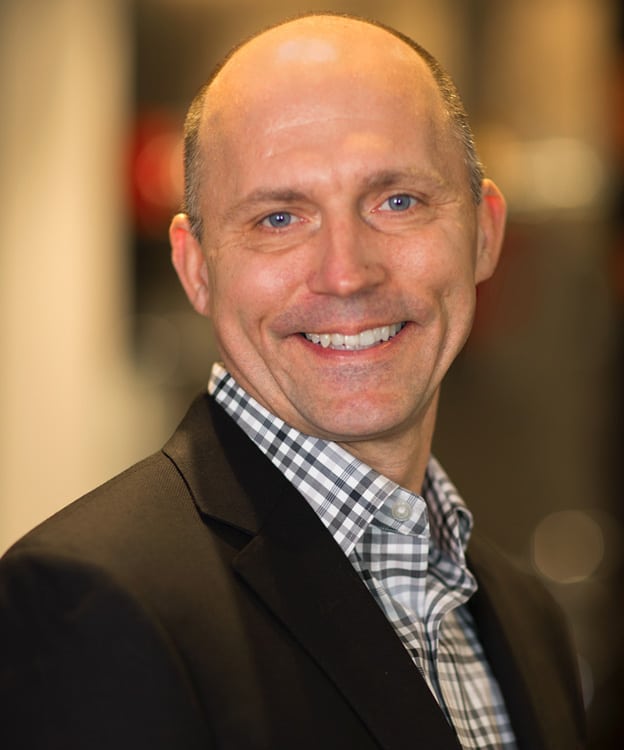
Sean Menke: “The industry is out to drive revenues and the tech providers are the ones who have to make this happen.”
Said Sean Menke, president and CEO: “We don’t take the time to understand the different segments, yet they are very intertwined.We need to become more streamlined, more connected. The stakes are high.”
Menke, who stepped into the leadership role in January 2017, is breaking down the silos within Sabre. “When you think of how you connect the journey, you cannot think in verticals
For instance, Travel Network and Airline Solutions have become Travel Solutions. “This is more than just a name change, this is a big deal,” said Menke.
“Sabre wants to be the platform at the centre of the business of travel and we need a platform that allows that to happen.”
He’s brought in new tech-heavy leadership to do what is necessary to build a scalable, flexible, open platform that will serve three key pillars – retailing, distribution and fulfilment.
On an industry level, it’s reversed its position on IATA NDC (New Distribution Capability). “This time last year, we were opposed, now we are all in.
“The industry is out to drive revenues and the tech providers are the ones who have to make this happen and we have to be in the middle of this conversation.”
In a later session, Herve Couturier, who used to head Amadeus R&D, and is now a member on Sabre’s board, said that “GDSes have to be the hub of travel, not an enemy of the hub” and said that Menke was “walking the talk” to make that happen.
Couturier also noted that travel needed to look beyond its own walls – to banking as an example – to take lessons so as not to be disrupted by external tech companies.
To bring different travel verticals together, Sabre has established an NDC Beyond group that currently comprises American Airlines, Carlson Wagonlit, American Express and Flight Centre.
Menke said industry collaboration was critical at a time when technology and travel are colliding and “we cannot lose sight of the fact that customers want to shop and we need technology that allows them to compare and shop” across the supply chain.
“If we don’t do it, competitors and new disruptors will come in,” he told the audience of nearly 600 industry professionals gathered to learn about the company’s airline, hospitality and retailing solutions.
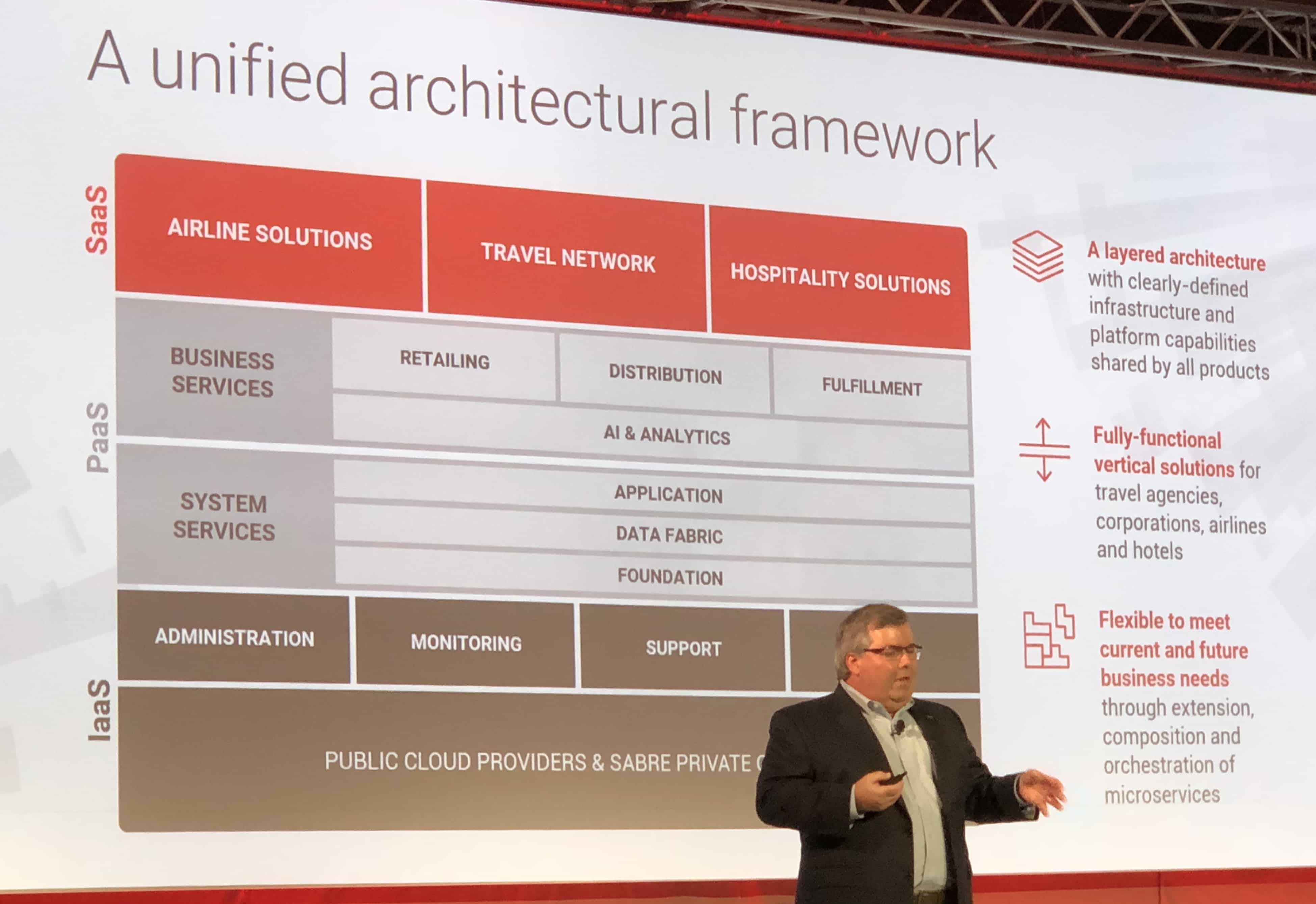
Joe DiFonzo explaining the unified architectural framework that will enable Sabre to be the platform at the centre of the business of travel.
Joe DiFonzo, CIO, spoke about how Sabre was rehosting its apps from Sabre-managed data centres to the public cloud – using a combination of Amazon Web Services and Microsoft Azure – “to distribute services and data globally”.
“Our job is to manage travel services, not data centres,” he said. “This will give us flexibility and scalability.”
It is building out sites in Europe (Ireland) and South-east Asia (Singapore) with future plans to add China and Japan, to facilitate the growth it is seeing in Asia Pacific.
“The platform will use the same best-in-class technology that’s being used across multiple industries and we will make the platform more open. We cannot be the one platform unless we are open to your integration,” said DiForno.
Next week: Interview with Sean Menke