
“Incentivising the traveller is one thing, and then there’s really immersing the traveller in sustainability – without making them feel like it’s homework. Because no one wants to do homework on holidays.”
The push for more sustainable travel has become an accepted option-of-choice for discerning travellers, ranging from compliance-conscious corporate travellers to the eco-minded indies. And leading the vanguard for this new purpose-driven movement are a group of professionals whose day-to-day business KPIs revolve around helping socialise travel’s green revolution to this array of conscious and discerning customers.
With WiT Singapore 2023 themed around the victories of people-driven endeavours, even against the looming shadow of AI, these purpose-fueled individuals were dubbed ‘The Humans With Heart’ for the way they help populate the sustainable travel discussion with new data, new products and new ways to platform those working harder to make a difference.
Sustained interest in responsibility
2023 brought with it the icy blast of a possible recession throughout the world’s markets. As war raged in Europe and cost-of-living worries impacted more than 91% of people globally, many may have wondered whether concerns over sustainable travel might prove a ‘nice-to-have’ rather than something essential.
Thankfully, Booking.com research released in April 2023 suggests otherwise.
Of the 33,228 respondents across 35 countries and territories, 74% believe people need to act now and make more sustainable, planet-positive choices. As a result, 74% want travel companies to offer more sustainable travel choices (up from 66% in 2022).
Great for business
While Choe Peng Sum, CEO, Pan Pacific Hotels Group is the first to admit that investments in sustainability start at the engineering and planning level and are seldom inexpensive, he acknowledged that staying at the cutting edge of Asia’s growing green interest – as the group’s Parkroyal Collection has done – is also good for business.
“It is performing very well. I don’t think it’s 100% because of sustainability, but a big portion of it is. Just take for instance our Parkroyal Collection Pickering, in Singapore’s Pickering Street. You see the trees before you see the hotel. The average rates have gone past S$400 dollars, about a 30% increase since we started. Same with the Parkroyal Collection Marina Bay. It’s already past the S$400 mark, again a 30% increase.
“We get huge support, especially from American, European and Australian companies,” he notes. “So, it is bearing witness that companies do care for sustainability: especially in the corporate travel and the MICE market areas.”
Networking neutrality
For Anthony Tan, Director Sustainability at Sentosa Development Corporation, one of the most tangible outcomes of the island destination’s well-publicised sustainability drive has been its Sentosa Carbon Neutral Network, whereby partners in the public and private sector have bought into an effort to chase carbon neutrality by 2030. “We have about 27 businesses right now have joined the network,” says Tan. “It covers about 95% of our carbon footprint and our carbon emissions on Sentosa.”
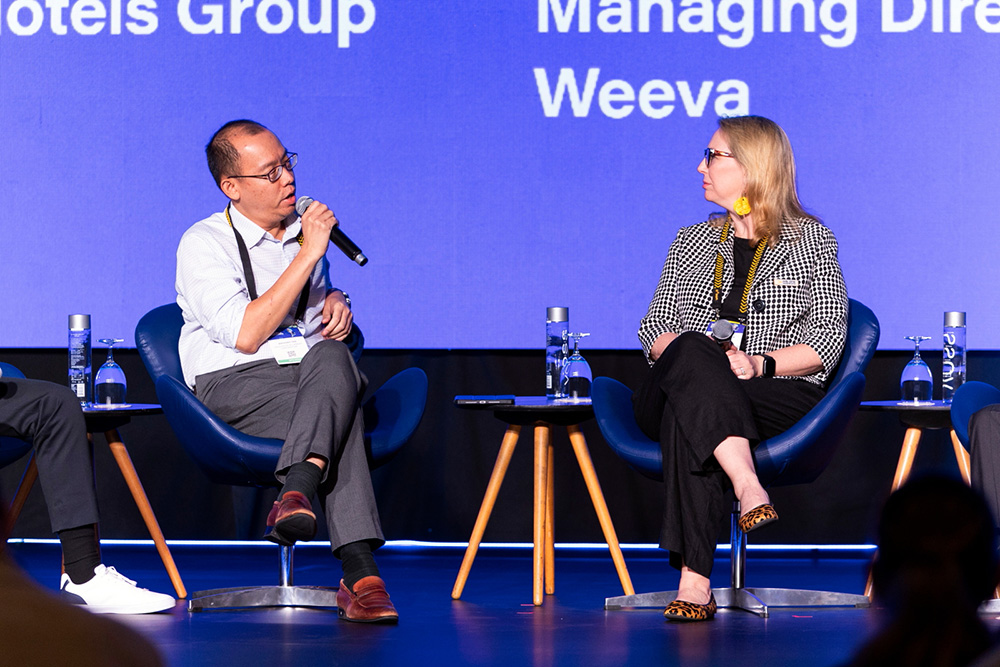
“We expect to be able to reduce by about 2 million bottles a year across Sentosa”, says Anthony Tan (Director Sustainability, Sentosa Development Corporation)
Having announced in 2023 a Sentosa Disposable Policy, SDC is looking reduce disposable items across the board, including removal of plastic water bottles from all hotel rooms, and addressing harmful items like plastic bags. “We expect to be able to reduce by about 2 million bottles a year across Sentosa. We continue to work with our businesses to engage them, sharing some of the best practices – as they come together towards that 2030 carbon neutrality goal.”
From measurement to action
Describing herself as a “reformed banker”, Julie Cheetham, Founding Member & Managing Director of Weeva, founded the company with a goal to become ‘The Fitbit of Sustainable Travel’, allowing businesses to track and improve their sustainability scores. After Covid hit, she helped apply her skills in sustainability business management, to addressing how hotels could be more resilient and future-proof themselves.
“We came up with a fundamental idea of ‘running a business around a balanced scorecard’. You look at your commercial imperatives, but also the community, conservation and cultural imperative. And that was the birth of Weeva.” Fast forward to 2023, and the digital platform has 100 hotels onboard now.
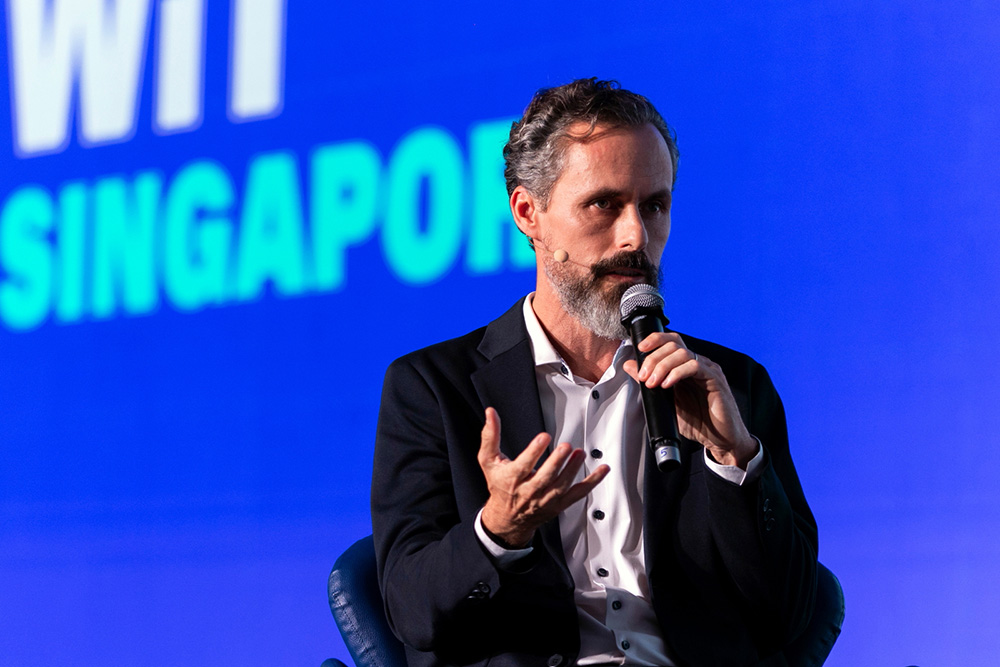
Loic Dujardin (Head of ESG, Traveloka) favours discounts and vouchers for ESG-positive behaviour.
So, we asked: how is the balance scorecard so far? “I think a lot of hotels and lodges are doing great at starting to actually account for and measure things like their greenhouse gas emissions – so, their carbon footprint. And it’s great that they are getting that data, because they can actually understand the impact now.
“What they’re less good at so far, is reducing that significantly,” she adds. “And I think it’s quite confronting sometimes to understand the extent of your emissions, and then realise how much work has to go into reducing it.”
Incentivizing good deeds
Ask Loic Dujardin, Head of ESG at booking platform Traveloka, about ways of getting travellers to have sustainable consumption patterns, and he favours the notion of providing discounts and vouchers for ESG-positive behaviour.
“For example, if you ask not to have your room clean, which when you think about it for the hotel, is a lot of savings in terms of energy, water, chemicals, cleaning products, manpower. So I think that there should be a sort of incentive for clients to decide to not to have room cleaning,” he says.
“At the online travel agency level, I think it’s our role is really to educate our users. When you get on the app, and you see there is a small green label: if you click on it, there are tips about how you can travel in a more sustainable fashion,” he says.

Choe Peng Sum (CEO, Pan Pacific Hotels Group) admits that investments in sustainability start at the engineering level and are expensive.
Cheetham sees incentivisation as a creative exercise for the traveller: though such choices should be fun rather than hard work. “Incentivising the traveller is one thing: and then there’s really immersing the traveller in sustainability – without making them feel like it’s homework. Because no one wants to do homework on holidays.
“In Africa in the Maasai Mara in Kenya, Cottar’s Safari Camp has 23 different activities that guests can do, that are sustainability-related: like going walking with a medicine man or making bow and arrows with the kids. A more city-based example is Inhabit Hotels in London, they have a program to employ female refugees. And the ladies are encouraged to identify themselves to the guests – and to have conversations with the guests about their life experiences. So, there’s many ways to bring a sustainability experience, without irritating your guests.”
Don’t underestimate the customer
Allowing space for the customer to evolve is also an important part of making responsible travel choices, as Pan Pacific Hotels’ Choe explored. “I’ll give you an example: Pan Pacific Orchard is the first five star hotel that doesn’t have an air conditioned lobby. And you would think, ‘My goodness, you pay so much, the guests would complain’,” he notes.
“But no, the guest is so appreciative that we’re not wasting energy. Of course, we have a sixth floor atrium style lobby that has an airflow, so that you don’t feel warm at all. But guests appreciate it: and we bring plants in the in the hotel – so that it’s biophilic, and they feel they are a part of nature: they’re appreciative, even though it’s not so much a reward,” says Choe.
“I think it’s a cause: they feel strongly they can relate to us.”
Watch the full session: