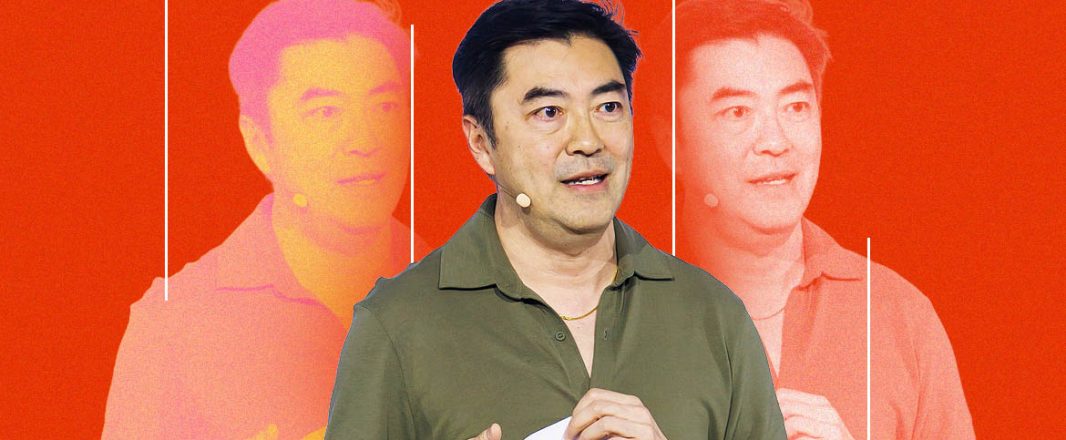
At WiT Singapore 2026, Montara Hospitality’s Morris Sim left his AI twin at home, threw out the AI deck, and argued that abundant intelligence makes being human the real competitive advantage.
Morris Sim began with an apology.
“I want to start by apologising for being here today,” the Montara Hospitality executive director and before that, the co-founder of Brand Karma, told the WiT Singapore audience. “Because the AI version of me, I didn’t want him to come.”
AI Morris, he explained, is the better act. He’s more entertaining and more informative. He remembers every point. He speaks more languages. “He even sings better than me. And yes, the AI Morris looks way better than me today. So please accept my apologies. Today you’re not going to get the AI version of me. You’re going to get the real one.”
The joke set up the argument. For the next 10 minutes, the real Morris made a case that sounds simple but cuts deep: the more intelligence machines supply, the more a business’s value depends on what only people can do.
The machine that learned to say “I don’t know”
AI is now in so many corners of life that Morris admitted he barely knew where to start. So he started with a line he had heard at WiT Japan earlier this year: AI is often “30% inaccurate, 100% confident.”
He had been testing that claim on AI Morris. Some of its answers made no sense. Then, recently, something changed. The machine started giving him an answer he knew well.
“It’s the same thing my 18-year-old son says to me sometimes when I ask him questions,” he said. “Which is: I don’t know.”
The AI began separating what it knew from what it didn’t. To Morris, that pointed 2,400 years back, to Socrates: What I do not know, I do not think I know.
“This is kind of creepy and cool,” he said. “Socrates is one of the smartest men who ever lived.” Maybe, he suggested, AI’s real milestone isn’t how much it knows. It is intellectual humility: understanding where its limits are, and telling you.
When knowledge stops being scarce
That humility raises an uncomfortable question for the travel industry. What happens to a business when intelligence is everywhere?
“For years and years, institutions were built to hold on to knowledge as a source of power,” Morris said. Scarce knowledge, and scarce access to it, built many of the companies in the room. That included his own previous company, which sold information, access to it, and the use of it.
Now everyone has tools that reach more and more of that information. The walls are coming down.
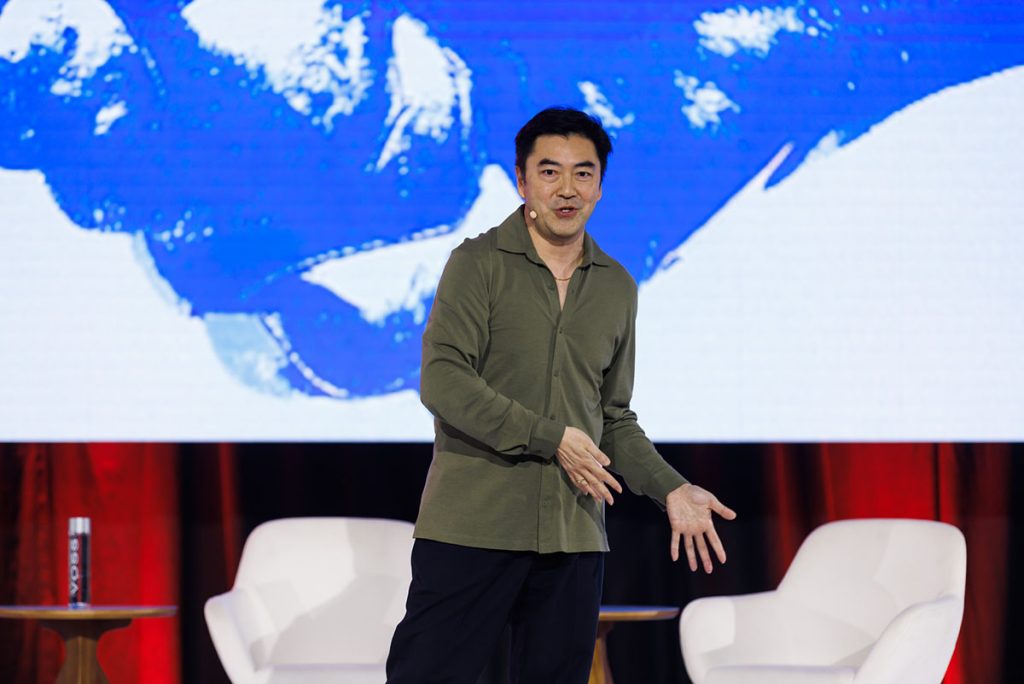
His answer is to redesign businesses around what is uniquely human. “Things like trust. Things like relationships. Things like taste.”
A machine, he argued, can’t build trust because it doesn’t understand trust. “What it understands is that it’s five letters: T, R, U, S, T. And it needs to statistically work out what comes next.”
So the agentic movement, and everything said about AI on the WiT stage that day, ends up somewhere unexpected. “In some ways, it’s really interesting that it brings the focus back to what makes us uniquely human.”
Twenty engineers, three years. One engineer, three months.
Twenty years ago, Morris started a company that built sentiment analysis for hotels. The first version took 20 engineers three years.
Recently a friend called to show him a new app. It audits how a brand shows up across AI engines, including the Chinese ones. It produced visual reports and listed the queries where a brand appears, and not only for hotel brands but for luxury and automotive names, across every industry.
“How many people do you have on your team?” Morris asked.
“Just me.”
It had taken him three months.
The easy reaction, Morris said, is to mourn the programming jobs that won’t exist. He sees it differently. “What happens when you have an employee who could do the job of 20 people? Is your business optimised for those types of employees? Think of the things they could create.”
It’s fine, in his view, that AI does many things he can’t do or doesn’t want to do. The more useful question is what he, as a human being, can bring that lets him build something different.
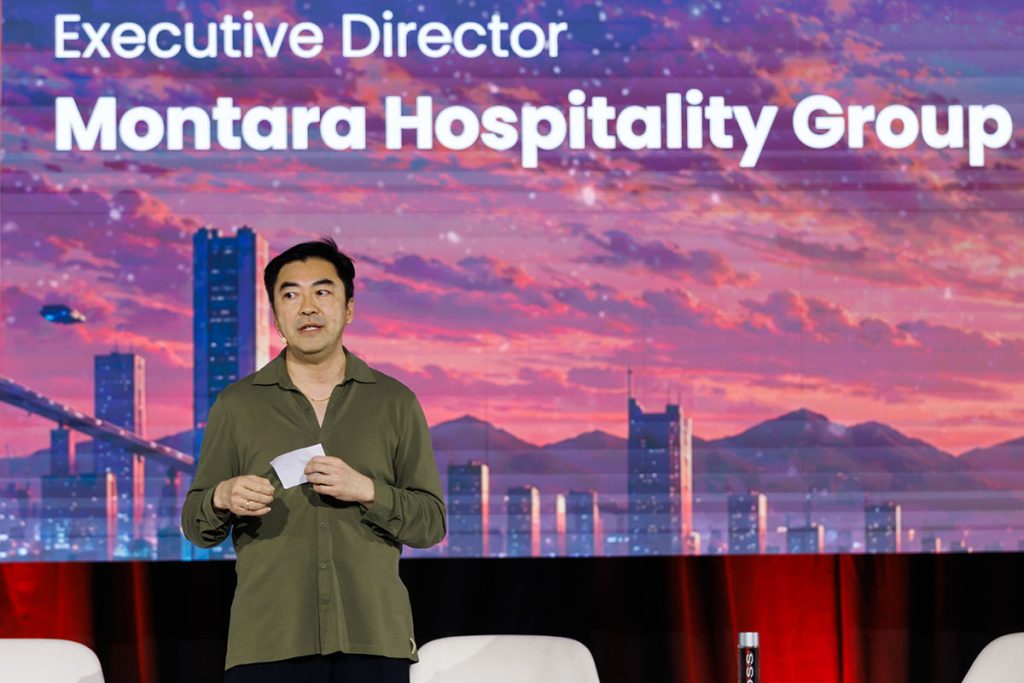
The future hasn’t happened yet
His answer to that question was heart and soul, “because the machine doesn’t have heart and soul.” From them come compassion, community, creativity, and purpose in designing a human experience.
AI knows a great deal about our collective past and our personal past. Morris pointed out that the relationship people have with their AI tools is the kind of loyalty every CRM vendor and brand would kill for. “You have an intimate relationship with your AI tool. It knows a lot about you. But it doesn’t know anything about the future, because the future hasn’t happened yet.”
It can predict the future, he said. It can describe its vision of the future. It can even recommend what the future should be. “But it’s up to you to decide what that future looks like. The decision is in your hands.”
Then he showed what that meant. AI had built him a polished deck for this talk, with a script telling him what to say on each slide. It had a whole vision of AI Morris presenting.
“But I was like, you know what? Screw it. Who did they invite? Not AI Morris.”
So he dropped the slides and spoke from notes, with his son in the audience. “It’s enough for me. I’m okay being the real Morris up here.”
And he ended with, “I changed the future that the AI envisioned for me. And I hope that you will also.”
Watch the full session: