Jay Chua runs the Real Madrid Foundation Football and Basketball School in Singapore. In June he picked up a travel agency licence. He says it isn’t about the money. It’s about the moments.
Real Madrid has an estimated 600 million fans around the world. Put them in one place and they’d be the third-largest country on earth, after India and China. In Asia, China and Indonesia are the two biggest markets and the region is seen as the growth opportunity for the club.
This top line information was shared by Jay Chua, who looks after a small corner of that nation: the Real Madrid Foundation Football and Basketball School in Singapore. And in June, he did something few people in sport do. He became a travel agent, launching LuxLed after getting his travel agency licence.
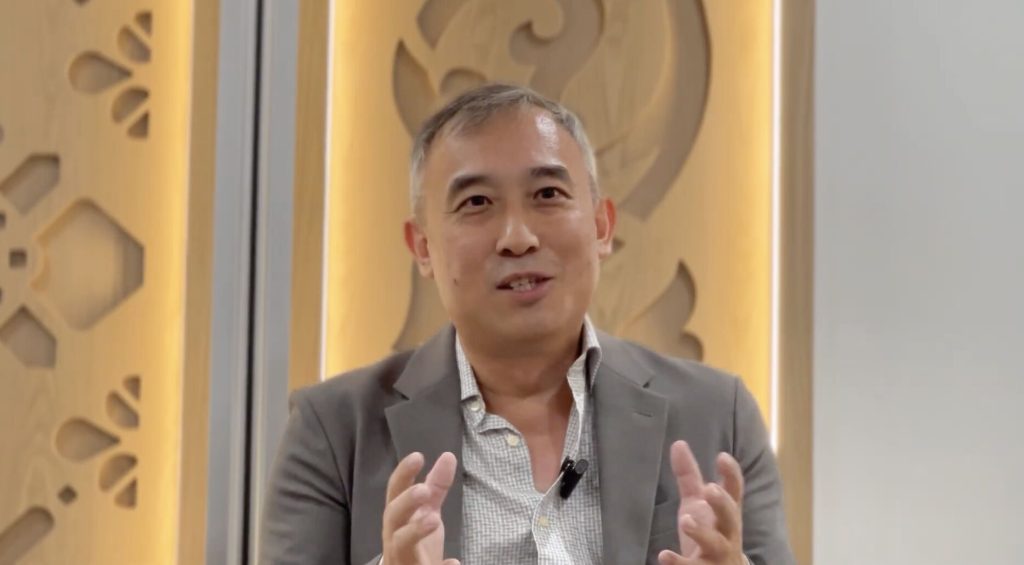
On stage with Yeoh Siew Hoon at WiT’s Travel Tech Thursdays in Kuala Lumpur last week, which focused on the growing business of live events tourism, Chua explained how he got here, and why he thinks a community built around sport is a better starting point for travel than the other way around.
An accidental entry into football
Chua’s CV doesn’t read like a sports executive’s. He trained in chemical engineering and worked across supply chain, pharmaceuticals, oil and gas, finance and corporate advisory.
“It’s a lot of coincidences that I got into this,” he said. Football had always been his recreational passion. Then, about a decade ago, his advisory firm worked on a high-profile football club takeover in Singapore and got noticed. A Spanish entrepreneur who wanted to bring Real Madrid to Singapore came calling. They helped him, became friends, and in 2018 he invited Chua to run the business.
Eight years on, Chua is firmly in the game.

A school, not an academy
The word that matters in the name, he said, is foundation.
“We are a school. We think like an institution. We call our players students, because our mission is to nurture them through sport.”
The school trains beneficiaries every week: children and youth from disadvantaged families, many living in charitable homes, some of them survivors of family abuse. What the school offers them is more than coaching. It’s a group to belong to and, through sport, a sense of meaning.
Globally, he said, Real Madrid’s foundation does extensive community work in Cambodia, Laos, remote parts of Thailand, India, Africa and Latin America.
The Robin Hood model
He stressed though that the Singapore school is not a charity. It is a private limited, for-profit company. The social work, Chua said, is simply “in our DNA”.
So how does it pay for it? “I sometimes tell people we’re a bit like Robin Hood,” he said. Fees from the weekly trainings that families pay for fund the coaches, equipment and jerseys for children who can’t afford them.
Government grants aren’t the answer, even though Real Madrid itself has asked him whether he gets any. “By the time you put in the submission and get the grant approved, the kids will probably have graduated from school,” he quipped.
Instead, for the past four or five years, the school has said yes to almost every charity that knocks. Earlier this year, Touch Community Services, one of Singapore’s largest Christian charities, asked the school to train 20 youths for a year-end competition and requested a quote. “We said no, we’ll just do it for free.” (The competition was eventually cancelled because of the haze.)

Why travel? Blame the rules
The move into tourism started with a practical problem. The school had been sending children overseas to compete, with their families in tow. Then Chua discovered that in Singapore, you cannot arrange transport and accommodation for Singapore residents without a licence.
He called the Singapore Tourism Board to ask. The advice: please go and get a licence.
“As Singaporeans, we try to stay within the boundaries of the law all the time,” he said. “That kind of impedes our creativity to some extent. I feel very strongly about that.”
Once the licence was in hand, the possibilities opened up. Owning the trip meant owning the experience, he said.
It’s not about the revenue
Asked if LuxLed could become a revenue stream to fund the school’s social mission, Chua pushed back. “Personally, I don’t see it that way, and I don’t think I want my team to see it that way.”
What matters, he said, is experience, so much so that the school has created a brand called Experience, which appears on its jerseys, training markers, footballs and basketballs.
The thinking came from watching the sidelines. Parents would drop their children at camp and sit there with nothing to do. So the school began ending camps with a match between parents and their kids. For many, it was the first time they had ever played a game with their child. “That itself is a memory,” Chua said. “A milestone.”
Grandparents, too, who often bring grandchildren to training and pay for classes out of love, get pulled in, with nutrition advice they can reinforce at home.
Travel is the natural next step: more milestone moments for whole families, multi-generational, outbound and inbound. When Disney Cruise Line began sailing from Singapore in March, Chua saw a bonding experience for his families and approached Disney to market Disney Cruise Singapore to his community. Disney said yes.
From sport to travel, not travel to sport
Plenty of travel agencies want a piece of sports travel. Chua’s advantage, he believes, is where he starts. “We started with a community of people already interested in sport. So for us, it’s about thinking: what other experiences related to sport can we offer them?”
Spain is the main outbound focus. A new tie-up with the Rafael Nadal Academy in Mallorca means LuxLed can now offer tennis and padel.
There is a philosophy behind racket games. Children, he said, need to be good with their legs, their hands, and a bat or racket. Football and basketball get risky past 40. Racket sports can carry you into your 60s and 70s.
The idea, in other words, is to take people through the whole life cycle of sport, without hurting themselves along the way.
A newcomer’s view of travel
After stints in heavily regulated industries such as pharma, energy and finance, Chua finds travel refreshingly open. “There’s a lot more room to be creative, and to think of more experiences you can offer your community.”
Sports tourism, though, still feels new to much of the trade. LuxLed recently joined NATAS, Singapore’s national travel agents’ association, which has shown real interest in what it does. But because the sector knows relatively little about sports tourism, Chua said, practical help has so far been limited. For now, he and his team are exploring and working out which experiences to curate for their families.
The ask: awareness
What does he need from the travel industry? “Simply awareness,” he said. “Everything new needs awareness, especially if you’re trying to commercialise it.”
He acknowledges he has a head start. “I’m quite fortunate because I have Real Madrid behind me, and that attracts attention.” The badge helped open the doors at Disney and at the Rafael Nadal Academy. Nadal, a lifelong Real Madrid fan, was invited this month to join the club’s board of directors, a move that, Chua said, cements the relationship even further.