In the news: This week it’s about all airlines and airports – Singapore Airlines’ NDC agreement with Skyscanner; ‘Drop and Fly” from Incheon airport; growth in April passenger traffic for APAC airlines
Airlines: SIA’s NDC connection with Skyscanner introduces direct way for customers to book flights
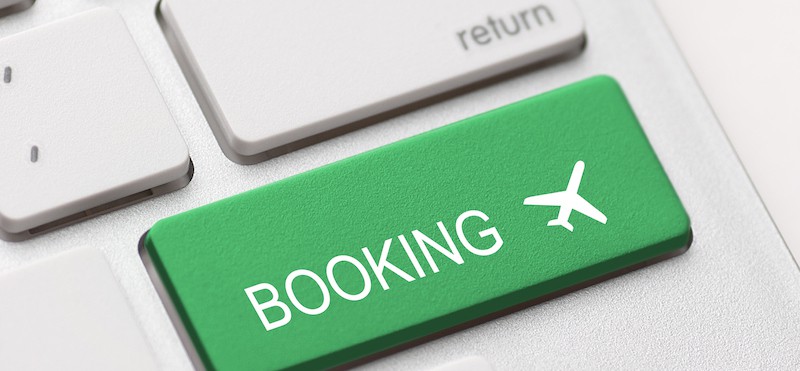
SIA customers will be able to book flights directly on Skyscanner (Image credit: scyther5/iStock-Getty Images)
Singapore Airlines (SIA) has launched its first New Distribution Capability (NDC) connection with Skyscanner to provide more convenience to customers making flight bookings.
Through the NDC agreement customers who choose to purchase SIA flights through Skyscanner will be able to do so directly, instead of having to be referred to the airline’s website to complete a booking.
SIA will develop its NDC capabilities by implementing ancillary services, such as the ability to select seats and the availability of personalised offers for its customers, in stages.
The carrier, however, added that “direct bookings on Skyscanner are currently limited pending testing but are expected to be rolled out progressively within the next few months.”
NDC is an industry-supported standard introduced by the International Air Transport Association (IATA) to address some of the industry’s current inventory distribution limitations. It creates a more efficient distribution system by supplementing the capabilities of third party channels to match those of the airline’s websites.
SIA recently obtained its Level 3 NDC Certification, which covers both Offer and Order management, under which an airline takes full control of the way fares are offered to customers as well as the booking, payment and ticketing processes once customers have chosen a fare that they wish to purchase.
“With an NDC Level 3 Certification we will also be seeking out even more connections with travel partners to improve distribution through SIA’s third-party sales channels,” said Mr Campbell Wilson, SIA senior vice president sales & marketing.
Hugh Aitken, senior director strategic partnerships at Skyscanner, believes the (Skyscanner) engine’s “direct booking capability is good for customers who can complete their booking with as little friction as possible”, and also good for airlines as they can showcase their up-sell options with an airline branded checkout flow.
In congratulating SIA on the introduction of this NDC connection Yanik Hoyles, IATA’s director, NDC Programme, said the airline “is taking a major step toward transforming airline distribution, bringing more booking options to air travellers in preparation for the new era of airline retailing that NDC enables.”
Airports: Now travellers can ‘Drop and Fly” from Incheon airport
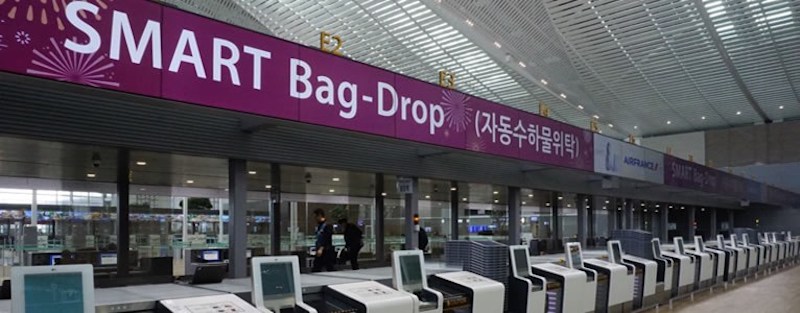
Incheon International has 48 Drop&Fly units. (Image credit: SITA)
Baggage drop for passengers using the new Terminal 2 at Seoul’s Incheon International Airport is smoother as it has deployed SITA’s self-service bag drop technology.
The solution simplifies the bag drop process, saving time for passengers, as well as makes more efficient use of terminal capacity and ensures more accurate baggage handling.
Drop&Fly, which has been in operation at the airport’s Terminal 1 since 2016, will help Incheon International prepare for its projected 100 million passenger arrivals in 2030.
SITA reveals the technology provides a safe and secure self-bag drop area. A sliding door and advanced sensors prevent tampering and the intrusion of unauthorised objects. It is fully customisable to the individual needs of the airport and is equipped with technology such as payment devices, baggage facing cameras and more. It can also provide live status and notifications on all bag drop units for ground agents, and real-time statistics to analyse trends and generate reports.
Incheon International currently has 48 Drop&Fly units, 14 at T1 and 34 at T2, with 30 more on the way.
Sang-il Kim, executive director of Smart Airport Group at Incheon International, said the airport was giving its passengers a “fantastic experience” by using the best technology available. “Deploying SITA Drop&Fly is part of our extensive modernisation programme that will help ensure Incheon International remains on top of the list of the world’s best airports.”
Sumesh Patel, SITA president, Asia Pacific, added passengers want self-service options as they like saving time and have control over their journey. “Self-bag drop is a win for the airport because it makes very efficient use of the available space and makes the baggage process more accurate and efficient.”
Incheon International had a record year in 2017, receiving over 60 million passengers. The introduction of Terminal 2 has increased capacity by a further 18 million passengers per year
Currently more than 55 airlines at more than 40 airports are connected to SITA BagDrop.
Aviation: APAC airlines carried 29mil passengers in April
Growth in business travel demand contributed to increased passenger traffic. (Image credit: Rawpixel/iStock-Getty Images)
Airlines in the Asia Pacific region saw healthy growth in passenger traffic in April 2018 as preliminary traffic figures from the Association of Asia Pacific Airlines (AAPA) show they carried a combined total of 29.8 million international passengers, a 9.3% hike over the same month last year.
The traffic growth was attributed to “major advanced and emerging market economies during the month, with positive confidence levels boosting growth in business travel demand,” said the association in a statement.
At the same time, affordable promotional airfares supported growth in the leisure travel markets,
Overall, demand in revenue passenger kilometres (RPK) increased by 8.3% year-on-year, ahead of the 7.2% expansion in available seat capacity. The average international passenger load factor edged 0.8 percentage points higher to 81.5% for the month.
Commenting on the results Andrew Herdman, AAPA director general, said: “During the first four months of the year Asia Pacific airlines saw carried an aggregate total of 118 million international passengers, a 7.3% increase compared to the same period last year.”
He foresees a positive market outlook for the rest of 2018, noting that “operating conditions remain challenging, with airlines still facing intense competition and the pressure of sharply higher fuel costs, up more than 30% compared to last year.”
• Featured image (SIA Airbus-A350-900XWB) credit: Singapore Airlines