
News Roundup: Latest study highlights growing demands of travellers and their online frustrations, new CEO for American Express GBT, AirAsia’s faster inflight WiFi
Study: What travellers want and their frustrations shopping online revealed

(Image credit: Aureliy/Getty Images)
There is growing frustration among travellers when buying travel online as many are undecided on which companies they can trust or what options best work for them.
Travelport in its latest study, Global Digital Traveler Research 2019, found that 50% of travellers are exasperated deciding who to trust online, up 6% on the 2018 study, while 43% are annoyed with the time needed to find the right option.
The study of 23,000 travellers from 20 countries also disclosed that when booking a flight four out of five travellers (86%) prioritise value over costs, with just one in five (18%) making the reservation solely on cost. This trend is apparent across all age groups led by baby boomers (91%) who favoured value marginally more than younger generations.
Travellers searching for value tend to use a combination of travel sites like TripAdvisor (42%), Kayak (38%) and Kiwi.com (36%).
Many though still find the human touch important, as 31% of the respondents said they spoke with travel consultants while planning their trips.
When it comes to personalisation travellers want more control and transparency. For flights 42% want to have add-ons like extra legroom, additional baggage allowance and meal upgrades. Bundled offers that make the process of adding extras easier are popular, with 25% opting for them.
A growing number of travellers are getting frustrated when personalising their experience. More than half of those surveyed voice displeasure at not being able to understand what is included as standard (52%, increase of 12% on 2018) and not knowing what add-ons are available (56%).
Another source of frustration for a third of respondents (35%) and 39% of Gen Y travellers are companies they regularly use but do not remember their preferences.
Technology is playing a big part in influencing decision making. Nearly three quarters (71%) consider it important whether an airline offers a good digital experience when booking a flight, up +3% on 2018. Over half (58%) also consider this when choosing accommodation, up +7% on 2018.
Most travellers (77%) said they have reviewed videos and photos posted by travel brands on social media, up 2% on 2018. Facebook is named as the most influential social media platform by all age groups except for Gen Z.
Augmented or virtual reality experiences are tools to help better plan trips, according to 48% of the respondents. Demand is greatest among Gen Y (61%) travellers, though still significant among all other age categories.
Technology, despite being a demand feature in planning travel, also frustrates 45% of travellers as they cannot access their booking information on their mobile devices any time they want, up 9% on 2018. This frustration is high among Gen Y (50%) and Gen Z (47%).
The use of voice search is growing, said Travelport, with 44% of the respondents using the technology to help manage travel – most popular with Gen Y travellers (61%). Most use it for weather information at their destinations (60%) and traffic updates (54%).
However, technology though useful is not always the answer. Two fifths (42%) of travellers are annoyed at not being able to speak to a human, up from 38% in 2018. This view is shared across all age groups, highest among baby boomers (43%).
Travelport’s chief customer and marketing officer Fiona Shanley said travellers as consumers wanted from travel providers and travel agents an experience that is “as simple and engaging as the best retailers.”
“Travelport’s latest global research shows that technology is key to this – from serving relevant and personalised offers to providing attractive propositions from trusted sources.”
People: Paul Abbot takes the helm of American Express GBT as CEO

(Image credit: American Express GBT)
American Express Global Business Travel (GBT) has appointed Paul Abbot as chief executive officer, replacing Doug Anderson who is stepping down after three years in the role.
Abbot, who will assume his new post on 1 October, joins GBT from American Express where he is currently chief commercial officer at the company’s global B2B payments business. He has also been a member of the GBT board for the last four years.
Before American Express Abbott was with British Airways where he started his travel career.
“It is a privilege to lead a talented team committed to delivering exceptional service and investing significantly in growth and technology-led innovation” said Abbott. “I look forward to engaging with colleagues, customers, and suppliers as we collaborate to advance the business travel experience together.”
In welcoming Abbot, executive chairman of the board at GBT Greg O’Hara said:. “At American Express Paul has led the rapid expansion of the B2B payments business around the world and introduced innovative new products and services for businesses of all sizes. This track record, combined with his experience in travel and background on the GBT board, make him the ideal person to lead GBT going forward.”
On Anderson’s tenure at the company O’Hara commented: “Doug steered GBT through the acquisition of HRG (Hogg Robinson Group) last year, which was the industry’s largest ever, as well as a full cultural transformation that has led to 18,000 of the most engaged team members in the business. He leaves GBT in an outstanding place to build on its strengths as it continues to invest in a bright future.”
GBT completed the acquisition of HRG, a global B2B travel management company, in July 2018.
The company said it is “now poised for its next phase of rapid organic growth and M&A activity.”
“Over the past three years GBT accomplished its technology transformation, M&A/Integration plans and commercial growth goals while delivering record performance and achieving clear status as the world’s leading business partner for managed travel,” added O’Hara.
Airlines: Faster inflight WiFi on AirAsia
(Image credit: AirAsia)
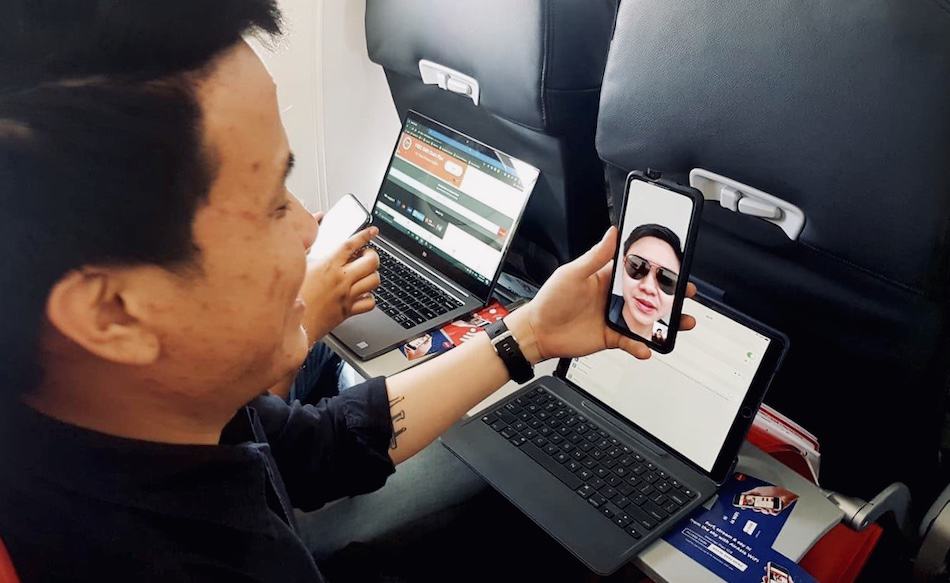
AirAsia is upgrading its inflight WiFi service, powered by ROKKI to provide high-speed inflight connectivity to guests.
Six aircraft operated by AirAsia Malaysia and two from AirAsia Thailand have been equipped with Inmarsat’s high-speed Ka-band platform, GX Aviation, which will be rolled out to the rest of the fleet over the next year.
Ka-band offers an enhanced inflight entertainment and connectivity (IFEC) experience beyond basic broadband, supporting real-time video, music streaming and more.
AirAsia group president (RedBeat Ventures) Aireen Omar said the introduction of Ka-band was “the next logical step” to “redefine the digital inflight experience” that allows its guests to stay connected and perform data-intensive activities such as live streaming.
“This also enables better real-time analytics, allowing us to serve up more personalised services to AirAsia’s 100 million guests annually.”
Added Inmarsat Aviation president Philip Balaam: “AirAsia’s launch of GX Aviation services is a significant milestone, as it brings to life the airline’s bold and innovative new digital offering for passengers.”
AirAsia’s new inflight WiFi is available via Internet plans, which are also redeemable with points from its BIG loyalty programme.
• Featured image credit: Giulio Fornasar/Getty Images