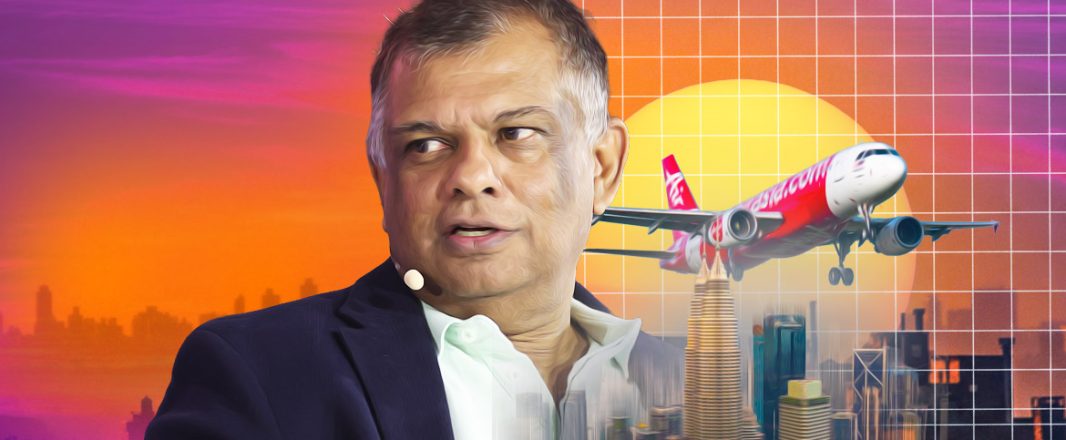
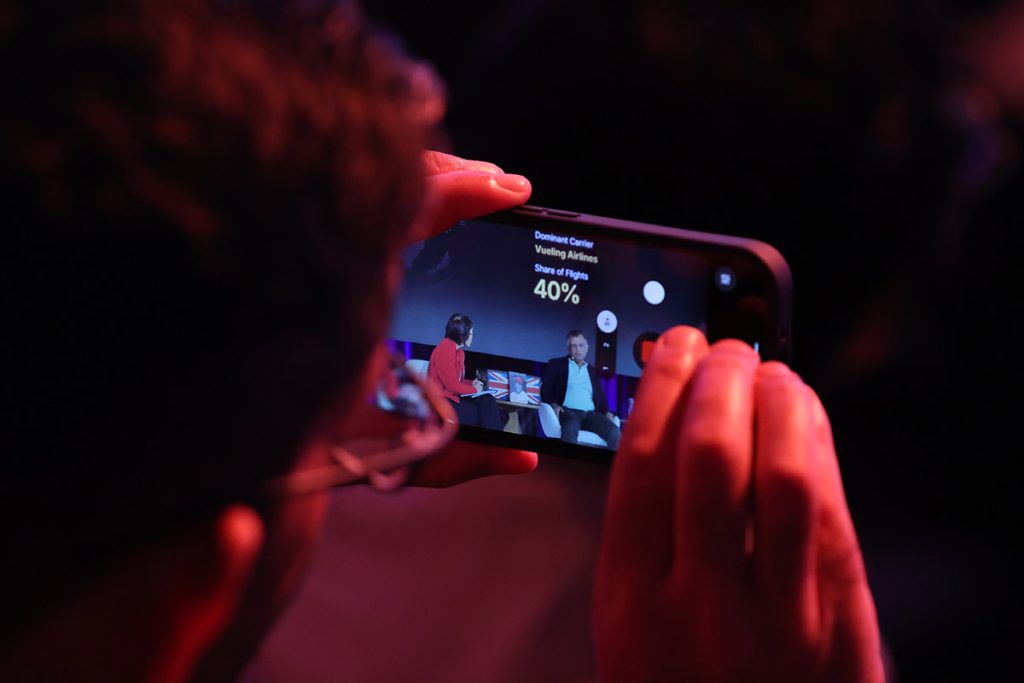
Tony Fernandes headlined WiT Singapore for the first time in 21 years, with the price of oil on his phone and a trail of headlines at his back. Do we still need heroes? He bought the answers along with him.
There is something about true disruptors. They mess with the molecules in the air. Sure, there’s no adequate scientific explanation for this. Yet in my writing career, I’ve seen it consistently.
Even in his latter years, Singapore’s Lee Kuan Yew could walk into a room, and the ballroom would seemingly hold its breath. People leant in, their pens suspended.
Since the day he first entered the airline business, Tony Fernandes has been similarly able to command a room. Yet rather than tension, audiences look on the AirAsia boss as you might a linguistic prize-fighter.
It is that Fernandes sense of oratorical daring – the way he slays the invisible dragons of regulation, establishment or convention, has become the stuff of legend. And the media, though he’ll goad and harass them at times, are undoubtedly his people.
On morning one of WiT Singapore 2026 at Marina Bay Sands, the air holds within it, a distinct buzz. Fernandes, now CEO and Non-Independent Executive Director of Capital A Berhad, the investment holding company and parent group of AirAsia, is headlining the conference.
Yet this time, an unwritten question mark hovers above us. We need the legend today: yet nobody quite knows what flames will appear. He arrives this time dogged by headlines. And like a late-stage Mohamed Ali, people ask themselves whether this latest round of sparring might just prove one fight too many.
Yet nobody voices this. A hero is in our midst. And no matter the odds, we want to believe.
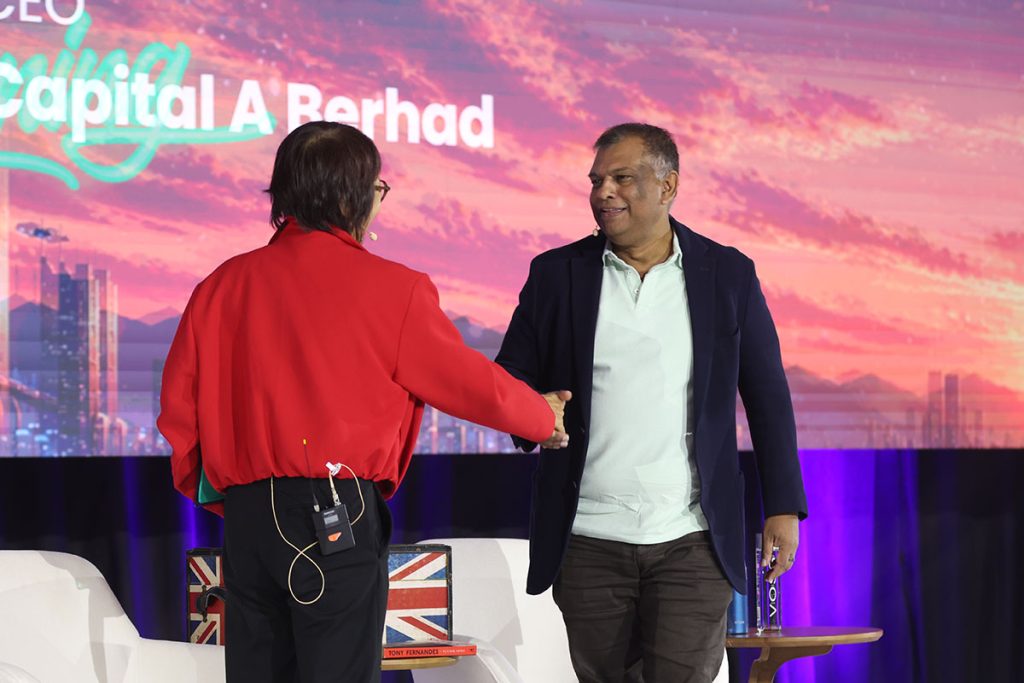
The box on the table
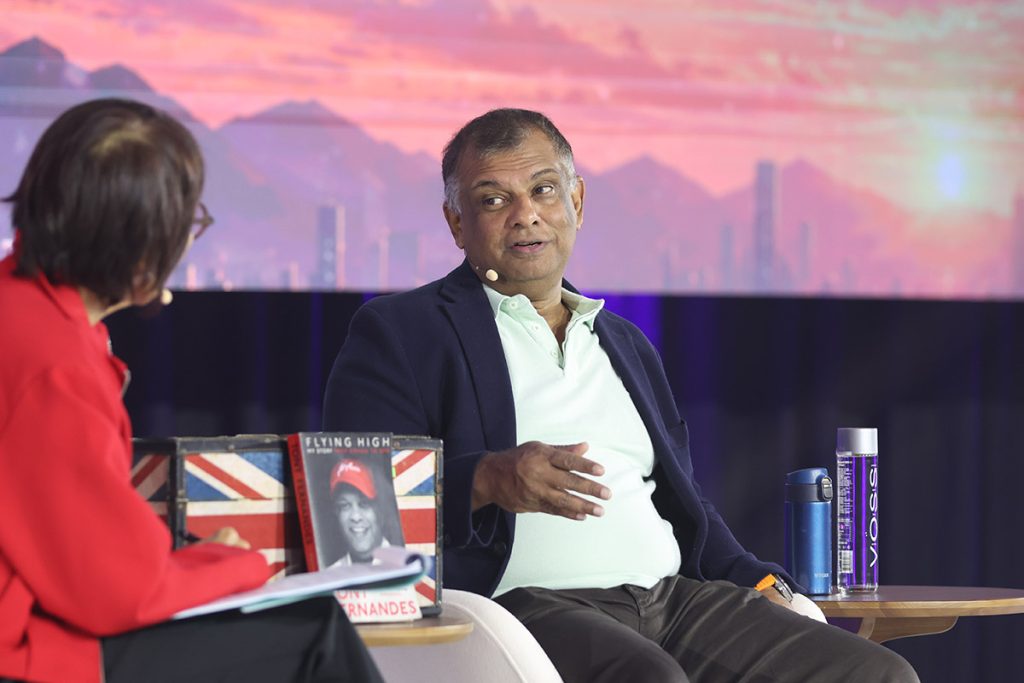
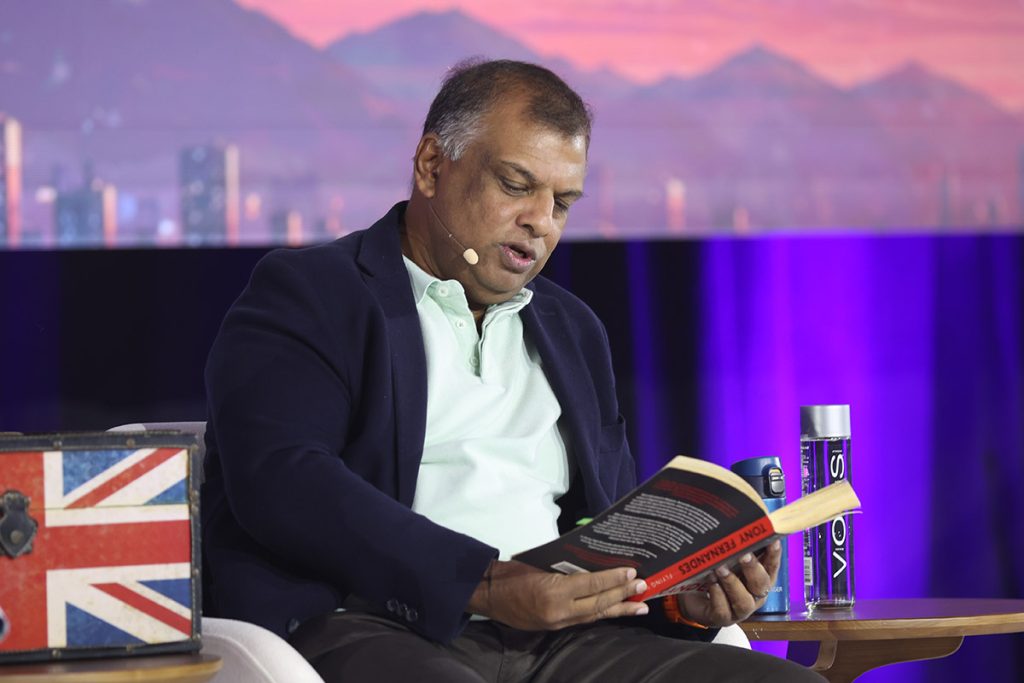
The set is simple. Two armchairs. A side table with a blue flask and a bottle of water. A giant screen shows a pink and orange sunset hanging over mountains and a city skyline. Between the chairs is a battered Union Jack tuck box – with a copy of Tony’s book Flying High propped against it, his own younger face grinning back from under a red AirAsia cap.
In the book, the original tuck box was the small chest that homesick English boarding school boys once kept their treats and treasures in. His own box was from Fernandes’ Epsom College days in the 1970s, returned to him decades later by an old friend. It still carried three stickers: from Qantas, the F1 Williams team, and West Ham FC. An airline, a Formula One team, and a football club.
The point of the story, which he’s told on book tours and stages since, is that even back then, the boy knew. He went on to build an airline; run a Formula One team; and chair Queens Park Rangers in the Premier League. Dare to dream, he wrote. Believe the unbelievable: then live that belief into reality.
It’s the kind of story we tell our kids about. The tale of a man who buys a small and previously dismissed airline for one Malaysian ringgit. In time, that same airline will reimagine flying as something the masses can afford – in a region where it had for decades belonged to the few.
Early AirAsia domestic flights did feel a little like the entire kampung was along for the ride. You got aboard rapidly, knowing each seat was on a first-come, first-served basis. Yet you tolerated it, because the planes were new and the ticket was cheap.
Yeoh Siew Hoon, WiT’s founder, asked Tony today, what three new stickers he would put on the box?
“Oh well, retirement,” he volleys back with trademark aplomb. She responds, just as fast. He isn’t allowed that sticker yet. Not with the company in the middle of a crisis. “Let’s start with that first,” he agrees. For now, stickers can wait.
The room laughs, and Fernandes warms up. Clearly, he is amongst his people. A room still rooting for the boy with the tuck box. And now, a man in the chair, ready for the next dragon.
No chaos vaccine
Recent headlines have certainly felt ferocious enough for AirAsia. In mid-September, media reports circulated suggesting an urgent need for fresh capital, amidst suggestions of sizeable liabilities and an under-utilisation of aircraft. Stock prices responded.
Fernandes called a press briefing to address what he called “inaccurate” reports. Most of the liabilities quoted, he insisted, were aircraft leases: no planes had been grounded for non-payment. As he told The Star directly: “We are good at managing cash, and we are strong in liquidity,” he clarified. “Things get blown out of proportion when it’s AirAsia,” Fernandes is quoted to have said: “I sneeze, it’s a big story.”
On stage today, he treats all this the way he always has – a part of the weather he flies into every day. “In the 25 years that I’ve been at AirAsia, crises existed,” he reflects, listing his battles as if describing his past scalps. “We’ve had everything from SARS, a tsunami, and obviously the ultimate, in COVID.”
Today’s environment is just another battle to be faced head-on. “Now we have this war, and people write a lot about it,” he reflects. “Some factual, some not.” This comes with the media territory, he notes.
Then he comes to the variable all carriers fear most. The barrel price of oil. “Every airline is having a challenge. I go to bed one evening in February, and it’s $85. You wake up, and it’s almost $200. And you’ve sold your tickets at $85. You can’t charge a surcharge,” he explains. “So of course there are going to be issues.”
Yet his motto remains, why waste a crisis. “Who knows where it’s going to go? Every morning, the first thing I do is, I’ll go to Al Jazeera to see what Donald Trump has said.”
Next, the deadpan Tony Fernandes we’ve come for: “You know, the big difference between COVID and this war is you could get a vaccine during COVID. You can’t vaccinate yourself against Donald Trump.”
Is it a fair fight?
We retell our hero stories, assuming the hero always picks the fight. Indeed, Fernandes once did. He took on legacy carriers, took on regulators. Took on the notion that flying belonged to the few, or that LCCs wouldn’t work in Asia.
In those days, you could see your opponent across the ring. Yet look at his fight card now. A war which distorts his biggest costs overnight. A news cycle that seeks to type an obituary, long before each quarterly result. Rivals with nation-states behind them.
“In Europe, and even in Asia, the national carrier has got huge amounts of capital,” he notes, listing what the pandemic cost AirAsia. “I borrowed money from Singapore at 17%. A loan shark would have been cheaper,” he bemoans.
And hovering over all of it, a new set of technologies in AI, that make us reframe leadership itself. If machines can forecast the fuel curve, reroute the fleet and answer the customer, what are our heroes there to achieve?
Is today even a fair fight? Not remotely. Yet Fernandes insists, he’ll once again prevail. “We’ll come out of this stronger for sure,” he notes. “And these aren’t robotic words.”
Yet they’re exactly the type of words we’ve come for. In a year when many would sooner run and hide, it is bracing to hear a travel leader argue that the difference between him and a script, is scar tissue.
“We went through COVID, where we lost $10 billion,” he recalls. “We had 26,000 staff, 260 planes on the ground. Then we came back, and we got most of our planes flying.” Such experiences steel him for the current moment: “We’re going to have a great quarter.”
The reason for his bullishness? People still want to fly. “The difference between now and COVID is, the demand is strong.” The recent task, as he sees it, has been about “realigning revenue to the new cost structure – and of course it takes a few months. But we’re kind of there now. We kind of feel our third-quarter results will tell the story.” Then the fourth quarter? “We’re feeling quite good about that.”
What sustains him through the dark days in between? “The brand is strong: people have trust in the brand,” he asserts. “So that’s the comforting thing. And secondly, our partners are really behind this. That again, is about 25 years of transparency, relationship building. Next year, we’ll be almost back to where we were in 2019.”
Yet of course, the room shouldn’t take this on faith alone. “Yeah, we’re feeling good. But let the numbers talk for themselves,” he advises. Then with a flash of the old street fighter: “But of course, you know, when you have idiotic reporters, you have to respond sometimes.”
Asked which of Capital A’s other businesses he is counting on, he doesn’t hedge. “I hope all of them. I mean, you know, I am optimistic. I have to be.” Optimism for him, is less a mood, and more a discipline that comes from building a 20-day hangar in the middle of a pandemic with loan-shark rates: “That took a lot of… I was going to say balls, but we’re in Singapore. So I’ll say guts.”
While the rules may not be fair, on the evidence of this display, this hero is still well in the fight.
The pioneer spirit
Yet while many want their arc of progress clean, part of the Tony Fernandes legend is also in the areas where he just dared to do it. Areas where sure, the record may not be the neatest: but it was the work of a true original. To take on a Formula 1 team. Or QPR in the Premier League. To have a go at an Expedia joint venture. This is a character who dares to do it, and who won’t die wondering.
Not forgetting of course, that the AirAsia plan was at first focused on long-haul to the UK: until Ryanair’s Conor McCarthy asked Tony how many people lived in Malaysia – suggesting he stop inventing something new and look closer to home.
He launched AirAsia just after September 11, 2001. Then later, he lived through the loss of QZ8501 in late 2014, which he wrote about in Flying High with unusual rawness, right down to the tears. His rule since? Be transparent, hold your hand up. Make it right.
Ultimately though, AirAsia has been successful with the mission and a pioneer for others to follow. “We did open the skies,” he reflects. “And I think following us, there were so many other low-cost carriers that came in, which is fantastic. We’re not protectionist.” In doing so, Kuala Lumpur has become the fourth biggest global mega hub, and biggest in Asia, with AirAsia accounting for 34% of capacity.
Overall, this greater access has democratised the region for its consumers. “I think low-cost has changed so much in this part of the world: brought so many jobs and created so many opportunities.”
He notes, “My goal is always about disruption.” Yet while we assume that this meant price alone, it also meant carving out new markets: “One of the things that people don’t realise about our disruption was that we went to many new destinations,” he notes. “Our network is really a massive asset.”
How many more battles?
“I could never retire,” he admits. “That’s just not in my DNA.” Then again, that doesn’t mean he won’t read the signs in his current role. “I also think good leadership is to know when to go, right? And too many leaders overstay.”
The test will be durability, he insists. “I don’t think I’ll be a decent leader if I leave and the company collapses. If I leave, and the next person does a better job, I’ve done a good job. I was prepared to go in 2020, then COVID came along. After we fixed it, I thought, ‘Okay, another year or two, and I can “ciao”. Then Donald Trump came along.”
For Fernandes, the idea was never just about selling seats. “AirAsia is much more than an airline. We create culture. We create inclusivity. There are many brand values, and so we’re beginning to license that brand up.”
A “very large hotel group”, he notes, is looking to create hotels under the brand, while mobile and the licensed MOVE brand, are creating broader customer value. “It’s not just the airline: it’s the master brand.”
Back to the tuck box
Asked what he might do after the airline, the answer is typically expansive. “I think every human should have good education and good health. I think the government can never look after everybody. Singapore does a very good job, but it’s a small country. That’s why it’s so well managed.
“But you know, in most countries, the state system cannot look after everybody, and private is too high cost. I’d love to create an AirAsia version of hospitals and education, so that the common man could have decent services.”
He has made a start, yet he knows how he’d like to branch out in future. “I started with the school I went to. We built it in Malaysia, and it’s doing really well. But that’s not affordable. We’re now looking at affordable models.”
And what of those tuck box stickers? “I think hospitals, and education, would be two of the stickers here. The third one would be low-cost.”
Once, the boy with the tuck box chose three stickers for himself. Today, the CEO with the oil price on his phone and the press at his back, chooses three more for everyone else. Look closely at what they are: fair-priced plane rides, schools and hospitals. AirAsia culture, rolled out of the hangar, and into society. One begins to understand what living a belief into reality must feel like.
As a parting gesture, Siew Hoon asks Tony to read from his own book’s final passage: “I’ve achieved the dreams I stuck to the tuckbox, but there are still so many challenging things to do. I may succeed or I may fail. If I fail, I’ll keep going until I succeed because I never give up.”
There’s a tear in his eye, as he seems to recognise that the mantra is exactly what he needs to motivate himself right now, and he reads it again.
The king has returned, to have his sense of fight restored.
Does our industry still need heroes? More than ever, precisely because today’s fight is at times less fair. Yet who knows: if Tony really could one day build the broader kingdom he describes, maybe one day there won’t be as many dragons left to slay.
Watch the full session here: