
TRAVEL is back and so is Asia – was the resounding sentiment at WiT Singapore 2022, which gathered more than 400 delegates from close to 30 countries in the first physical reunion of the online travel industry in Asia Pacific in three years.
With the theme of “Hello, New World”, the more than 80 speakers assembled talked about new trends that will shape traveller behaviour and how the industry needs to innovate and respond to those changes.
Here’s a quick summary of the key takeaways.
- The future is Asian
The world’s population is set to reach 8 billion next month and the bulk of the growth will be in Asia. The rising middle class in markets like India, Indonesia, the Philippines and Vietnam will continue to drive growth.
- Travel in Asia is back – two halves of the same coin
Asia was “first in, first out” and has largely been two worlds this year – South-east Asia where travel has rebounded and North Asia, just now reopening – other than China.
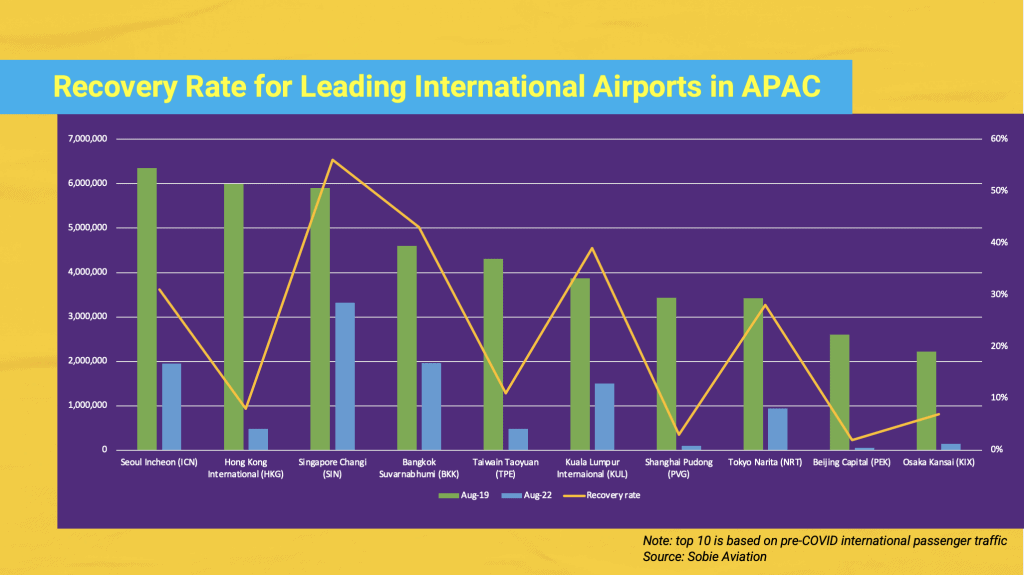
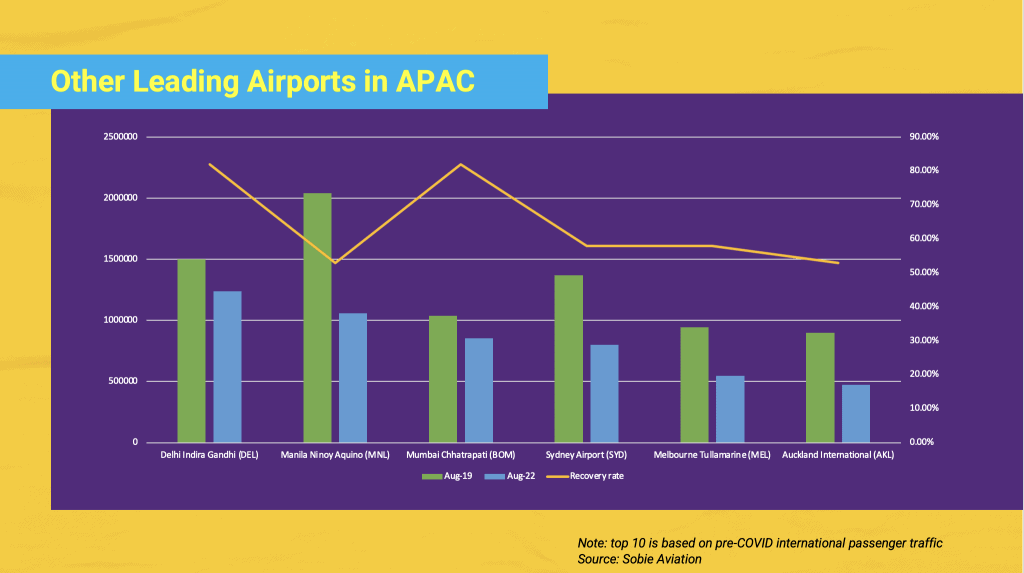
These two worlds are pretty apparent from these charts tracking recovery rate for international airports in APAC. (Source: Sobie Aviation)
 In summary
- All airports in Greater China have dropped out of the APAC top rankings entirely (there were four in the top 10 pre-pandemic)
- South Asia now has 3 airports in the top 10 (Delhi, Mumbai and Dhaka) compared to zero pre-pandemic
- Manila and Sydney are also now in the top 10
- Singapore is now number one by a wide margin, rising from the third spot pre-pandemic
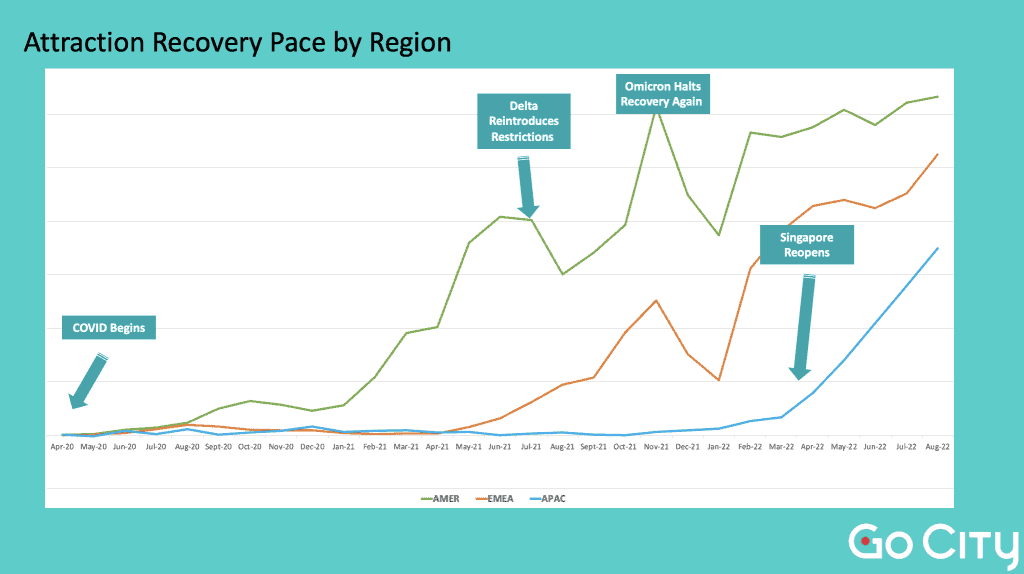 The recovery pace in attraction visitation shows similar trends. This chart from Go City shows that APAC recovery has been steady since March 22, but it is still nine to 12 months behind western markets, but it is quickly catching up. The opening of China should change that story considerably.
- Hooray, Japan’s open – let the race begin
The most palpable excitement was the re-opening of Japan, with almost every speaker mentioning it – from Agoda to Klook, Expedia, Trip.com and Booking.com. Japan is a significant market and all have been preparing for this day.
No one is more excited than Rakuten. Speaking at WiT, Yoshiyuki Takano, Head of Travel & Mobility Business, Senior Executive Officer, Rakuten Group Inc, said, “We welcome it very much. In July, we relaunched our inbound website and the number of transactions grew by about five times.”
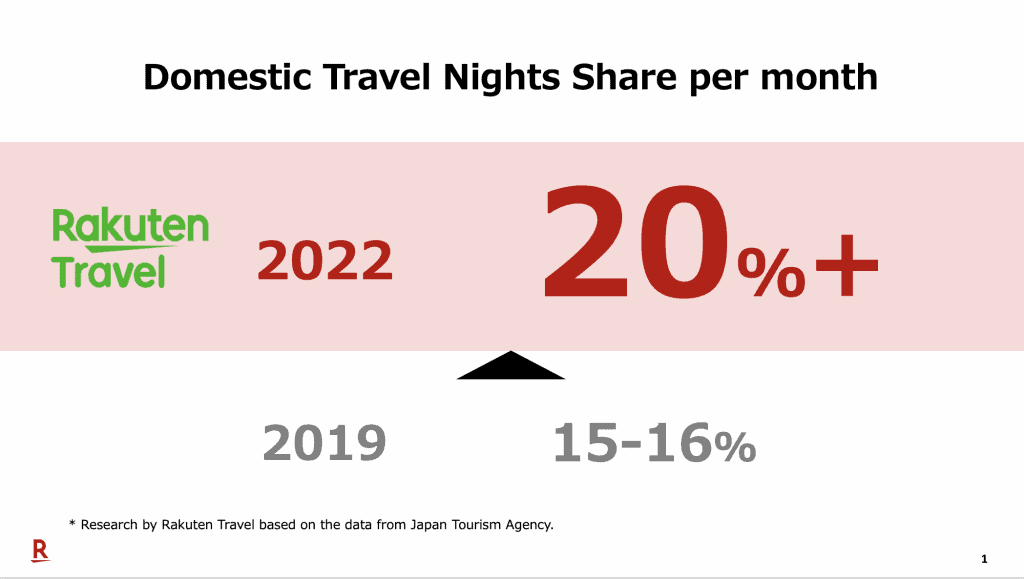
It solidified its dominance in the domestic market during the pandemic – its market share in hotel bookings has grown from 15-16% to more than 20%, said Takano, who added the company expanded and deepened its inventory, even including a sustainable travel category.
This position should hold it in good stead when global competitors return to the market.
Pre-pandemic, Expedia Group said it was responsible for driving every seven in 10 US travellers to Japan.
It will be interesting to see how the race to win in this market evolves. For now, everyone’s just relieved that it has opened.
- Uncertainty over China remains – but a blessing in disguise?
The frustration over the continued closure of China to travellers was also palpable. When CT Ooi, Associate VP, International Flight Business of Trip.com, was asked which trend he wished would fast forward, he mentioned, the opening of China – which immediately prompted a burst of applause from the audience. This was Asia travel’s superpower pre-pandemic and fed many destinations around the world.
However, there are some who believe this is a blessing in disguise. Already the travel industry has struggled to cope with pent-up demand. The phased reopening of Asia may be a good thing, giving the industry breathing room to recover in a more controlled manner.
And perhaps when inflation and rising costs dampen travel appetites from other markets, the pent-up demand from markets that have just opened, including China, will carry the industry through.
5. India is the breakout star
While the dragon slept, the elephant came out to dance. Indian travellers are now featuring among the top markets in destinations such as Singapore and Australia. It is now the third largest source of arrivals to Australia. Brent Anderson, regional general manager, South & South-east Asia for Tourism Australia said that as of July this year, the total number of visitors to Australia has bounced back to around 40% of pre-pandemic levels.
Due to its proximity and familiarity, Singapore formed Australia’s second biggest source market based on latest available data from June 2022, with India following at third place. OTAs in India are also having their breakout moment with brands like MakeMyTrip, Ixigo and Yatra seeing strong recovery as reported in this article.
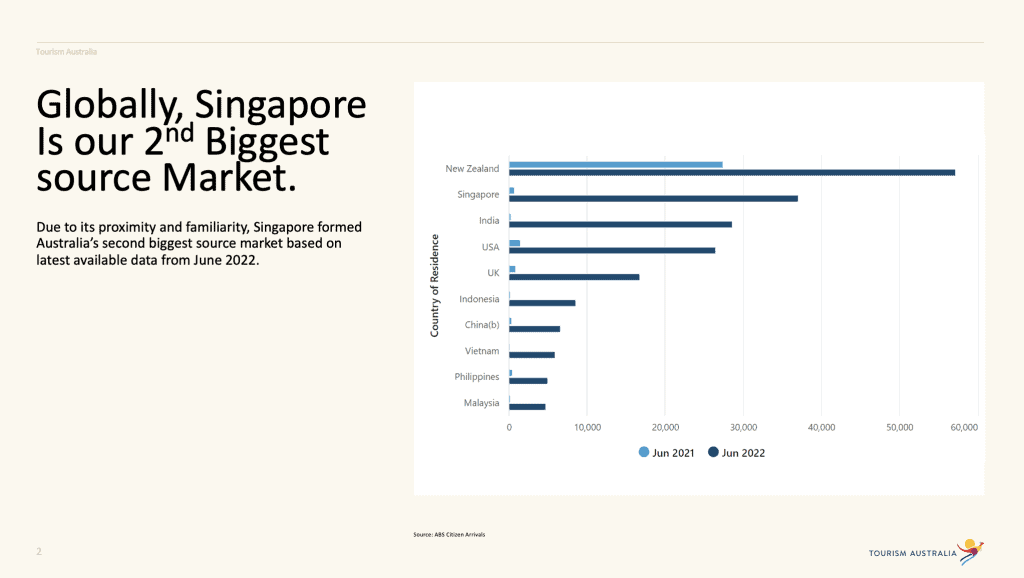
Singapore and India are now the second and third largest markets for Australia.
The pent-up demand from Singapore meanwhile is driving South-east Asia recovery, and is tipped to also do similar things for destinations in North Asia, particularly Japan, as they open up. Just as Singapore Airlines and Scoot drove recovery to Australia, watch what it does to Japan in the coming months.
The interesting question, is what will be the market opportunity for travel from India to North Asia destinations. Historically, Indians have tended to travel south; will they now travel northwards to Japan, for example? Could Japan seize the opportunity to attract the Indian traveller?
Watch this space.
- Short-form content rules
According to a Google-Kantar survey, as covered in this report, 56% of travellers in APAC are using video touchpoints in their travel journey, with India the highest at 81%.
The rise of short-form content is also being fuelled by TikTok, which claims to have over 1 billion monthly active users, with APAC growing fast. The hashtag #TravelTok claims to have over 3.5 billion views.
Said Tejveer Singh Bedi, Head of Travel, SEA, TikTok, “Today’s travellers are craving for entertainment through shortform videos. We can’t stop short of using social media as an outlet to inform consumers of what we sell. People want to be entertained – seeking creative, fun and authentic content more than ever; and livestreaming has also become increasingly popular in South-east Asia for travel products.”
- Payments everything, everywhere all at once
According to a study by payments company 2C2P, digital payments will account for 91% of transactions by 2025 across South-east Asia, so there’s no avoiding the inevitable. Digital wallets are proliferating across the region and gaining acceptance among the unbanked and consumers want to pay how they wish to pay – and travel vendors have to fulfil that demand.
SheueChee Beh, Head of Business Development, Merchant Services APAC, JP Morgan said it best, “Travel needs to think of fintech like a bank does. Know your customer and how they wish to pay.”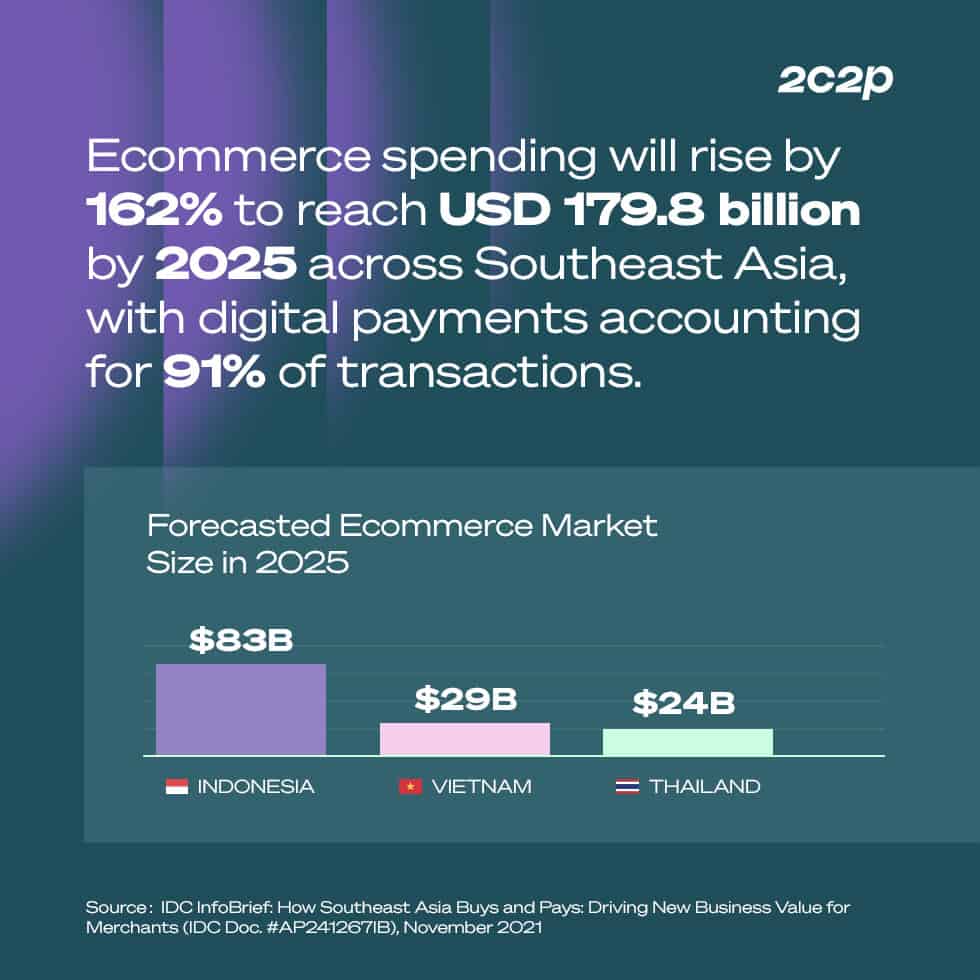
- Sustainability at the heart of everything
In almost every session at WiT, sustainability reared its inevitable head. Across the entire value chain, from airlines to airports to hotels to OTAs and the corporate travel sector, the travel industry knows it has to embrace its responsibility and act, collaboratively and individually – or else face the consequences of regulations and constrained growth imposed by governments.
While there were concerns raised about “green washing” – Cempedak and Nikoi’s owner Andrew Dixon said, “There’s too much marketing of what people intend to do – and still very little action on the ground” – Lee Cheh Hsien, director planning for the Sentosa Development Corporation, urged everyone in the room to do their part, however small a step.
“If people say you’re green washing, be prepared to defend it, communicate your actions well. It’s better than doing nothing.”
Welcome to the new world.