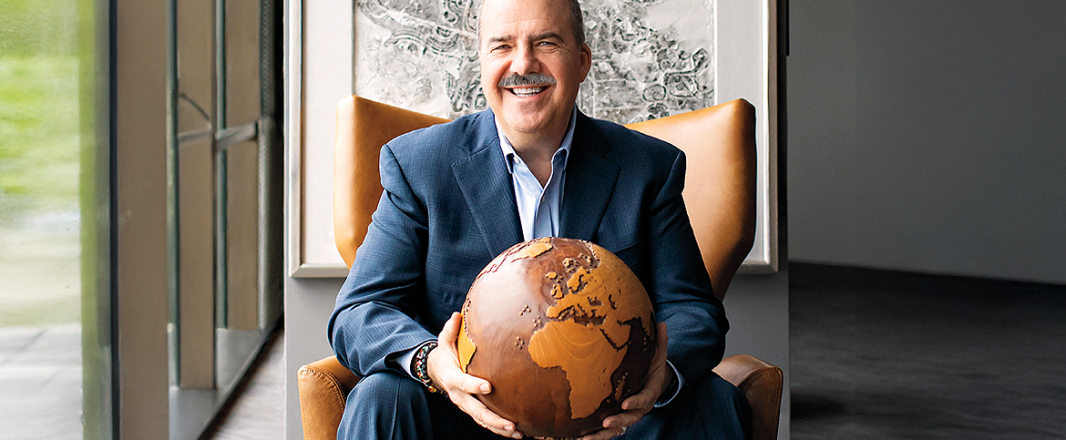
It’s a question he gets all the time, will technology replace the travel agent, and probably more so now with the acceleration of Generative AI and its implications on the full travel value chain. But Matthew Upchurch, CEO of Virtuoso, the world’s leading global network of agencies specialising in luxury and experiential travel, remains even more resolute today.
On a whistle stop through Singapore, Upchurch said, “Too many people focus on the idea that technology will replace us. In reality, it has only enhanced what we do.”
Certainly, it would seem that way. The business started by his father back in 1950 as Allied Travel to enable independent agencies in the US to share resources, people and technology has grown by leaps and bounds, to a global network of more than 20,000 advisors and partner to over 1,800 of the world’s best travel companies.
In an interview, celebrating 35 years of Virtuoso Travel Week last year, Upchurch recalled, “My family roots are in tour operation. But if you would have told me at 22 years old I would be hanging out with travel agents the rest of my life, I would have run for the hills
“Back in those days – and I mean no disrespect – being a travel agent was a clerical job. Airlines began cutting agency commissions by 15 percent trying to get rid of them. The feeling was travel agencies were dinosaurs.”
In 1986, alongside his father, Jesse, Upchurch rebranded Allied as Virtuoso. “The birth of the Virtuoso brand came from everyone looking at travel agents as the lowest common denominator. We needed to do something to show the consumer that these people are different. Advisors can add value before, during and after a trip.”
And he added, “It’s turned out to be an insanely powerful word and brand because there’s no translation for it in any country.”
On the rise of technology in travel, he said, technology has empowered advisors to work from anywhere and reach clients through social media, transforming the industry in unexpected ways.
This change has been driven in large part by millennials, who are digital natives but value the guidance of a trusted advisor, he said in the interview in Singapore. Many millennials see working with advisors as a form of luxury, appreciating the convenience and expertise they bring. “Of course, I could do it myself, but I don’t want to. That’s luxury,” Upchurch explains.
Generational shifts and the longevity revolution
With today’s longer life expectancies, travel caters to six generations simultaneously – something unprecedented. “Never in the history of the planet have we ever had six generations of people all travelling at the same time,” he said.
Upchurch calls this the “longevity revolution”, noting that people are living longer, healthier lives, which allows them to prioritise experiences over possessions.
“We’re seeing an entire re-prioritisation of spending on experiences rather than goods,” he says. The result? A booming travel industry with a more experience-oriented focus, fuelled by a generational shift and the growing influence of emerging economies.
For Upchurch’s father’s generation, luxury was seen as a rare treat, while his generation began to view it as part of daily life. His children, meanwhile, are true global citizens, viewing travel as an intrinsic part of their identity. These shifting perspectives have created a demand for travel that feels more authentic and participatory, rather than purely exclusive.
The new meaning of luxury: Diversity and personalisation
Luxury travel, Upchurch argues, has become more diverse than ever. “If I had to choose one word to describe luxury travel, it would be ‘diversity,’” he says. Today’s luxury is not about a one-size-fits-all experience; instead, it is about tailored experiences that reflect the multifaceted desires of modern travellers.
As he sees it – where luxury and budget travel once sat on opposite ends of the spectrum, they now form a more circular relationship. Today’s luxury travellers share a spirit of adventure and curiosity similar to that of backpackers. They want to explore, discover hidden gems, and be immersed in new cultures rather than passively observing from the sidelines.
The drive to experience the world in a genuine, engaging way has reshaped what travellers expect from their journeys.
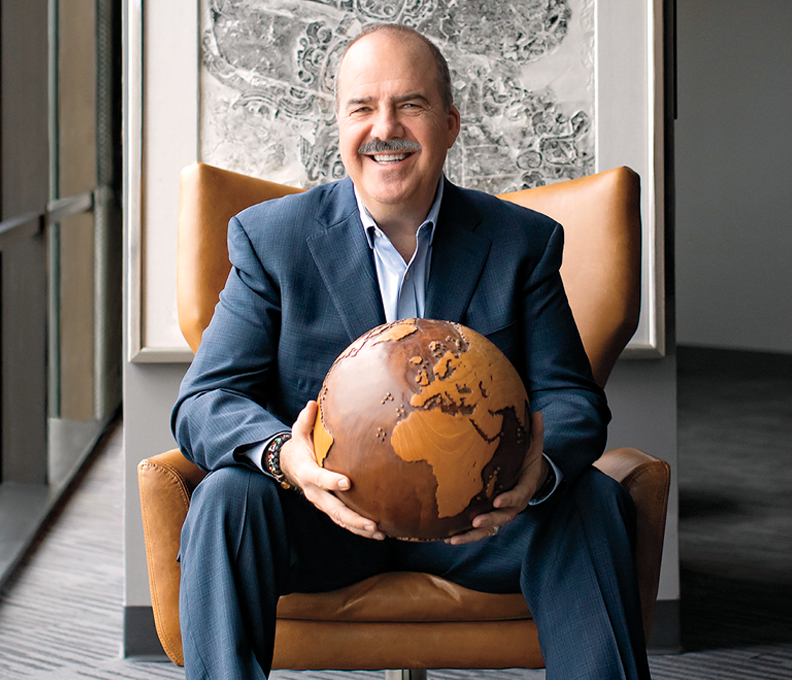
Matthew Upchurch: “Too many people focus on the idea that technology will replace us. In reality, it has only enhanced what we do.” Photo credit: Virtuoso
AI in Travel: Automating the predictable, humanising the exceptional
As Artificial Intelligence becomes more sophisticated, the luxury travel sector faces an important question: How do human advisors maintain relevance in an increasingly automated world? Upchurch’s answer lies in his now-famous phrase: “Automate the predictable so that you can humanise the exceptional.”
In practice, this philosophy means using AI to streamline routine tasks while preserving the personal elements that make luxury travel extraordinary. Upchurch sees AI as a powerful tool that frees advisors to focus on providing meaningful, personalised services. By automating logistical details, advisors can invest more time in understanding client preferences, building relationships, and curating unique experiences.
One innovative approach that Upchurch’s advisors use is three-way video calls with on-the-ground experts. If a client is interested in visiting Rwanda, for example, the advisor can set up a call with a local expert who brings firsthand knowledge to the conversation. This collaborative approach not only personalises the experience but also showcases the advisor’s role as a connector to a global network.
The Future of luxury travel: Keep the “Human” in humanity
Looking ahead, Upchurch envisions a future where luxury travel continues to evolve but remains grounded in human connection. For him, technology and human relationships are complementary, not contradictory.
“The power of human connection is central to who we are at Virtuoso,” he explains. As AI advances, it will be crucial for advisors to keep the “human” in humanity, leveraging technology to enhance rather than replace personal relationships.
As the industry progresses, Upchurch encourages advisors to focus on asking insightful questions, not just providing answers. “Answers are a dime a dozen,” he says. “What impresses clients today is when you ask a question they hadn’t thought of.”
This approach not only strengthens relationships but also highlights the advisor’s unique value in an information-rich world.