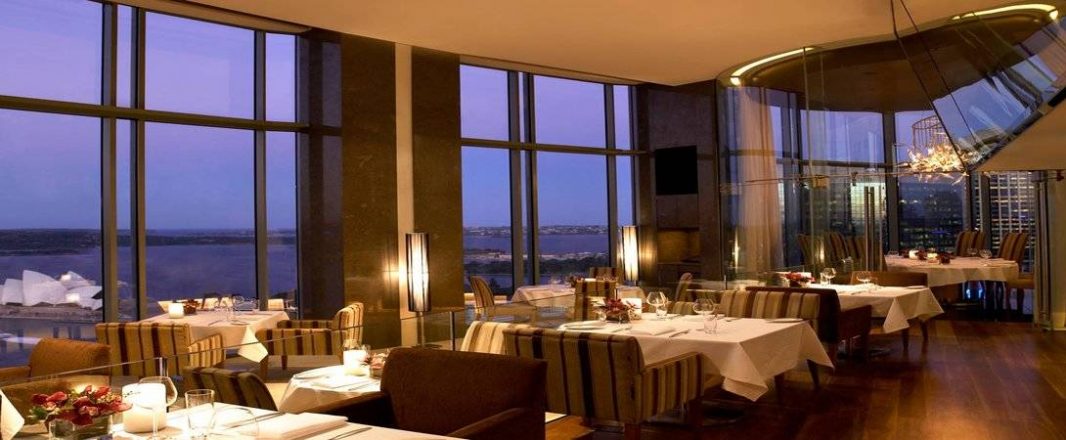

The day I met him at the Shangri-La Hotel, Sydney, he was bouncing like a kid who’s just found a candy store . Something good had happened – a difficult “people” issue had been resolved – and Donhauser is feeling on top of the world.
Donhauser is a born hotelier or rather, he was born into the business. He traces his hotel roots back three centuries when his ancestors ran the “Hotel to the 1000 year old Linden Tree” in Kirchberg am Wechsel, Austria. His parents owned another small hotel named “”Kaiser von Oesterreich”” which he sold and which has been converted into a bank.
“I was child labour in my parent’s hotel,” he said.
So with Donhauser, the conversation is always around people – staff and customers. Never mind how the industry has changed and all that, for him, the simple truth is, if you take care of people, everything will be fine.
It’s something he learnt from Robert Kuok, the owner of Shangri-La Hotels and Resortrs. “When I was interviewed by him, he said to me, if you work for me, you have a very easy job, only two tasks – look after the customer and look after the staff.”
Donhauser, who moved to Sydney for family reasons, clearly misses his people in Hong Kong where he ran the Island Shangri-La for seven years. “There is no better place to be a hotelier than in Hong Kong, they have the best staff in the world. They are independent, helpful and friendly.”
It’s been two years since he left but the memories remain fresh. He showed me the farewell video the staff in Hong Kong did for him. It was funny, sweet and touching. You can see Donhauser still chokes up at it and goodness knows, how many times he’s viewed it.
(Right: The Hotel of the 1000 Year Old Linden Tree)
So is it tougher then to run a hotel in Sydney the way he did in Hong Kong? “In Sydney, labour costs are very high so you have to reduce the number of levels and it’s very difficult to recreate the service levels we have in Asia,” he said.
“We have one-third fewer staff here than in Hong Kong but then we also have fewer food and beverage outlets.”
Donhauser is also a believer in longer stints than the usual two to three years that most general managers spend in one posting. “I don’t like to move. I like being a general manager and I prefer to be in just one hotel. I don’t have any ambition of becoming a vice president, I love being in a hotel.”
Staying for longer also means you have an opportunity to build attachments to the staff and that’s when you get your best from a team. “The first two years, you spend building the team but once the team comes together, things start kicking in and then you don’t want to move,” he laughed.
He said he had noticed a trend where hotels were not moving their general managers around as much as they used to. “As long as you don’t get stale but stay excited and interested, and keep an open mind, there’s a lot to be said for staying longer in one post.”
With two years under his belt in Sydney, Donhauser’s working hard to instill the customer-focused culture of Shangri-La into the hotel. And it’s working.
He recalled an incident. Once, from his office, he called the office of the local council where he lived to book a tennis court. He dialled a number and a friendly voice answered.
“I was surprised it was such a friendly, polite voice. She asked me when I would like to book the courts and I told her the time. She then said she would handle the booking and she would call me back to confirm.
“I asked her, how she could call me back when I hadn’t given her the number. She said, of course, I know your number. This is Minnie, from room service. I had dialled the wrong number.
“But it showed her responsiveness to the situation. Most people would have said, I am sorry, you’ve got the wrong number but she, without a moment’s hesitation, wanted to book the tennis court for me.”
“If staff have this kind of attitude, that’s everything in the hotel business.”
So what’s the bane of a general manager these days? Donhauser said emails are a killer. “I come in at 6.30am to handle the emails for two hours. Otherwise, I’d have no time for anything else.”
He also cited asset managers. “I enjoyed being a hotelier until the day they invented asset managers. That took away some focus from hospitality,” he laughed.