There are moments in aviation when the map doesn’t just shift – it tilts.
Routes that once felt permanent suddenly look provisional. Hubs that defined global connectivity can no longer be taken for granted. And airlines, accustomed to operating within finely tuned systems, find themselves navigating uncertainty that is anything but linear.
This was the prevailing sentiment at the Aviation Festival Asia held in Singapore this week, as airline chiefs gathered to discuss the turbulent skies amid the continuing conflict and uncertainty in the Middle East.
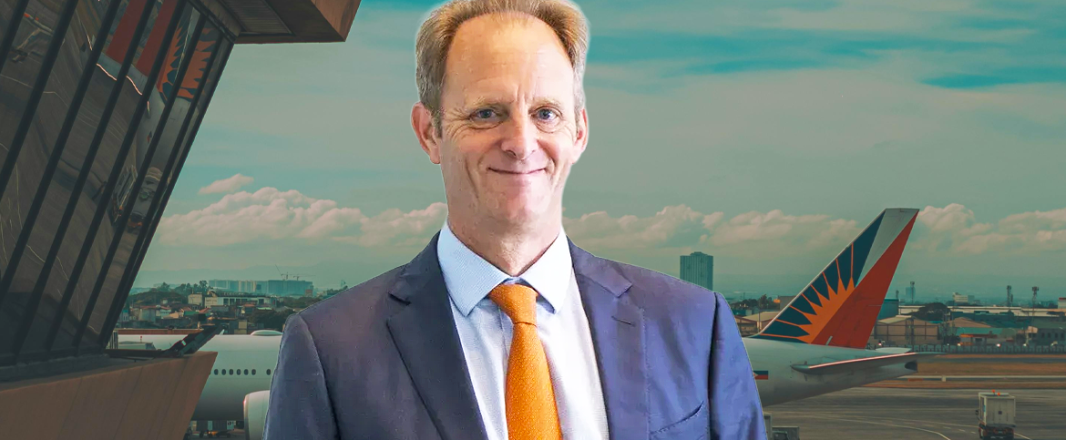
Kicking off the event was Philippine Airlines CEO Richard Nuttall who, in an interview on stage, spoke of how the conflict in the Middle East was one such moment – a disruption that is immediate in its impact, but far more profound in what it signals for the future of aviation.
A crisis that split the sky
Unlike Covid, which brought global demand to a standstill, this crisis is asymmetrical – almost surgical in how it disrupts.
Roughly half of the airline’s routes effectively shut down, while the other half are running at close to normal volumes, he observed.
This bifurcation is reshaping traffic flows in real time, he said.
Airspace closures over the Gulf – long one of the world’s most important aviation corridors – are forcing travellers and airlines alike to rethink geography. The result? A quiet but significant rerouting of global demand.
Traffic that once flowed westward through the Middle East is now bending east.
“For parts of South-east Asia, where passengers would have flown over the Gulf, they’re now looking to go east rather than west,” he said, noting that Philippine Airlines is already seeing uplift in transpacific demand.
The price of uncertainty
If routes are the visible layer of disruption, fuel is the invisible force driving everything beneath.
At current levels, Nuttall estimates that fares need to rise by as much as 30% to keep pace with fuel costs.
But pricing is not simply a function of cost – it is a test of market elasticity. Some routes can absorb increases while others cannot.
And timing matters.
March, for example, may outperform expectations due to shifting demand. April, however, tells a different story – with tickets sold before the crisis now colliding with higher operating costs.
“Fifty percent of April was pre-sold at pre-crisis rates, and we’re going to have the full brunt of the fuel,” he said.
Even as he was speaking on stage in Singapore, the Philippines became the first country to declare a state of emergency over what Philippine President Ferdinand Marcos called the “imminent danger” posed to the country’s energy supply.
Technology as shock absorber
If geopolitics introduces volatility, technology is increasingly the buffer.
Nuttal said Philippine Airlines’ transformation – already underway before the crisis – was proving timely.
The airline has spent the past year modernising legacy systems, improving operational reliability, and sharpening its strategic identity as a full-service carrier.
Much of this work is invisible to the passenger but critical in moments like these, he said.
From network planning models that recalibrate capacity based on shifting demand, to fleet optimisation that balances new fuel-efficient aircraft with flexible lease structures, technology enables agility.
It allows airlines to do something that was far harder in previous crises: adjust in real time, he said.
For example, with fleet strategy, new-generation aircraft coming into the fleet offer 25–30% better fuel efficiency, a critical advantage in a high-cost environment.
Equally important is optionality – the ability to scale capacity up or down without structural pain. “We’ve been very precise about calibrating forward… and we have the ability every year to parachute a couple of aircraft out without major pain,” Nuttall said.
Staying the course in a moving world
Yet for all the disruption, one principle remains unchanged: strategy cannot be rewritten with every crisis.
“If your strategy is going to change every time the airline industry goes through an upheaval… then it’s probably not the right strategy,” Nuttall said.
What changes instead is timing – for example, capital expenditure may be deferred, marginal routes adjusted and pricing recalibrated.
But the long-term vision – where to play, how to win – must hold. For Philippine Airlines, he said, that means doubling down on two core strengths: North America and the domestic market.
It also means continuing to invest in product, reliability and brand, even as uncertainty looms.
What’s critical is building an organisation that can absorb, adapt and emerge stronger, said Nuttal.
Beyond the immediate turbulence lies a deeper question, he said – what does this crisis reveal about the structure of global aviation?
If supply chains can be so easily disrupted, do they need to be redesigned? If traffic flows can shift so quickly, what does that mean for the dominance of traditional hubs? And if fuel – the lifeblood of aviation – is this vulnerable, what does resilience really look like?
“There’s got to be enough fuel in the world for us all to exist,” Nuttall reflected. “We just need to reinvent supply chains.”