
How Japan’s Section L uses tech and talent to create “fellowship among guests” at its apartment-hotels
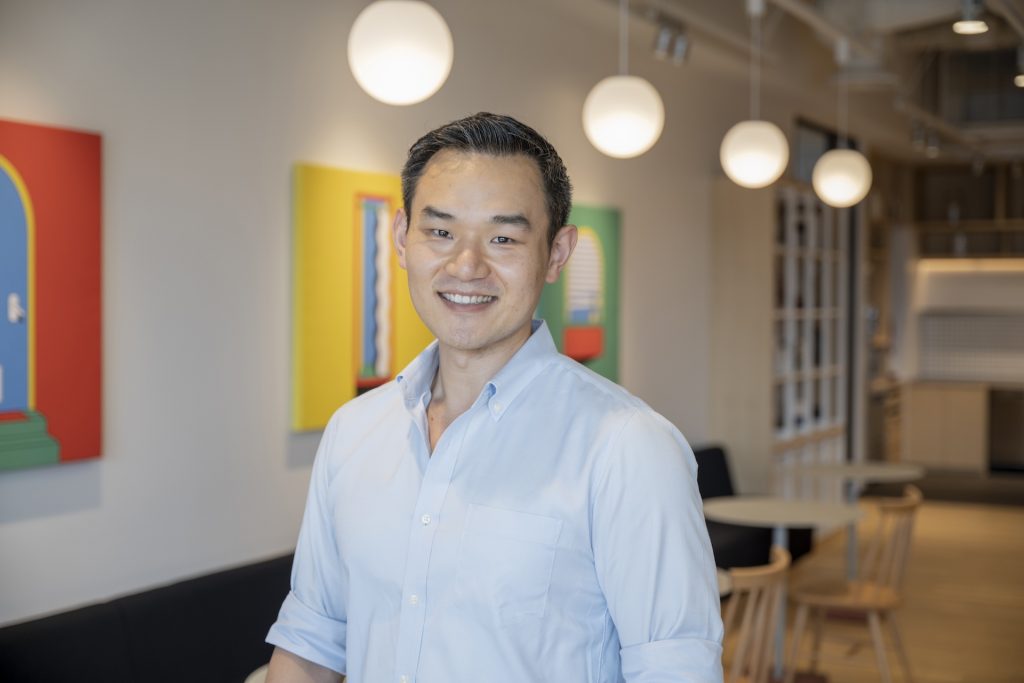
Howard Ho: “The long-term focus of our digital experience will be to guide our guests toward each other, creating opportunities for shared experiences, trip recommendations, neighborhood exploration, etc. Basically, a social network within our hotels where customers can easily contribute to each other’s trips, and harvest the deep crowd intelligence of fellow travellers.”
When Howard Ho was 18 and deciding which university to apply to, he chose hotel school “because I learned that I could take a wines course and drink wine in class every Friday, even before turning 21. That’s a big sell for an 18-year-old,” said the Taiwan-born hotelier.
Fortunately, it all worked out. “I do consider myself lucky because, within the first semester, I knew that I was in the right place. I loved learning about how hotels work, loved learning everything from hotel design, menu engineering to revenue management, brand strategy. Spending four years focused on hotels gave me a very grounded business education and most importantly, I loved spending time with fellow hoteliers in and outside of school. The camaraderie among hoteliers has kept me in this industry for the last 20 years.”
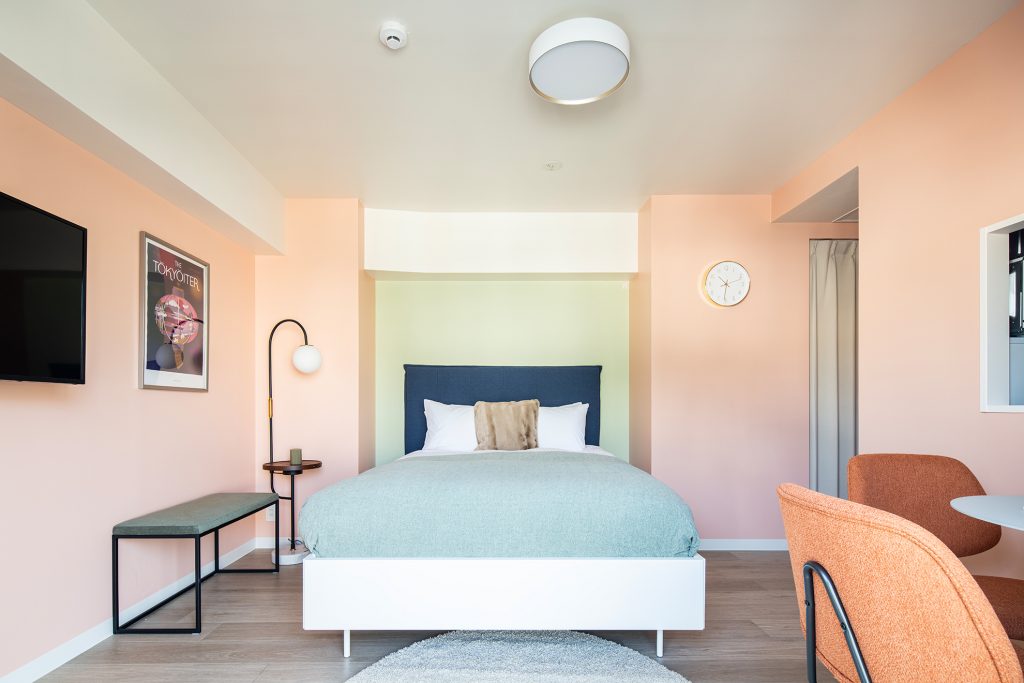
Today, Ho is the CEO of Section L, a new-breed Japanese hospitality brand focused on apartment-style accommodation, a company he founded in 2020 with three co-founders. They opened their first apartment-hotel, Section L Ginza East, in July 2020 and have since grown to a total of nine locations across Tokyo. By the end of 2023, they had hosted more than 100,000 guests.
Ho said he’s always had the entrepreneurial bug. “My parents ran their own business, so growing up, I always saw being a founder as a thing that I would ultimately do.”
His last corporate job was with Shangri-La Group, where he helped launch and manage the JEN by Shangri-La brand. It was during that time that he started to study the changes in how the hotel experience was delivered, and was inspired by Airbnb.
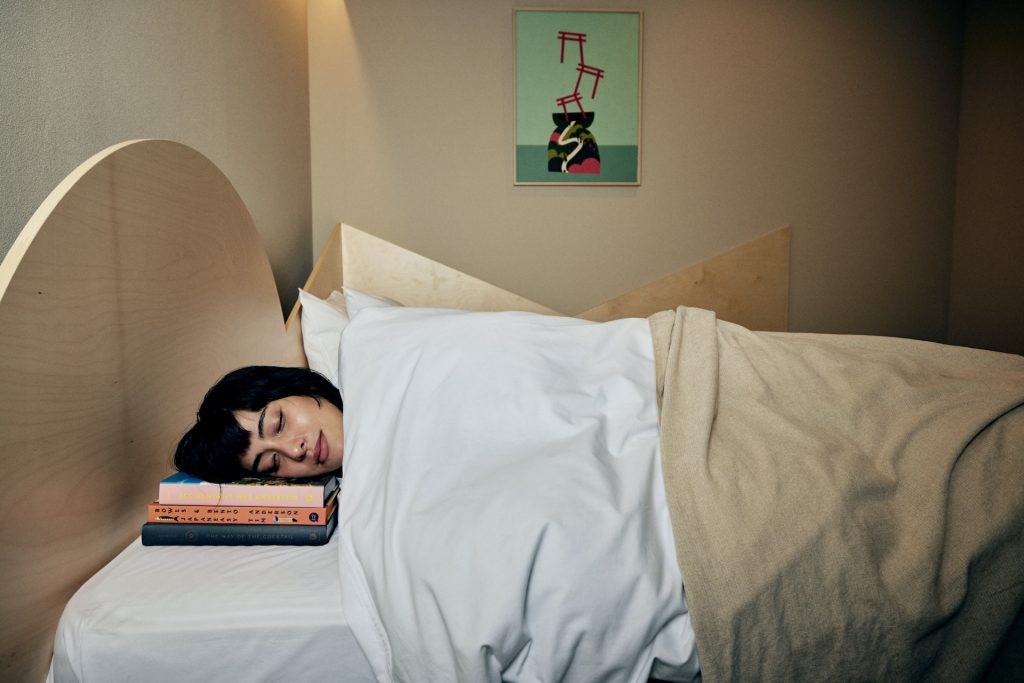
“When the wisdom and experience of long-stay guests meets the bright eyes and excitability of short-stay guests, magic happens.”
Inspired by Airbnb; how hotels without strangers became the mantra
“By allowing regular people to host guests, they made service providers much more personable. The person checking you into your Airbnb doesn’t stand behind a desk in a suit; she’s dressed casually, calls you by your first name, and really wants you to go to her favourite bar for their negroni. There’s a deeper authenticity to that experience.
“Airbnb also allowed for this mutual undertaking of goodwill and trust, where guests get to review the host, and hosts also get to review the guest (rather than the customer is always right). This makes the interaction much more balanced, much more reflective of human relationships in real life. Seeing how Airbnb redefined the host-to-guest dynamic inspired my co-founders and I to try and do the same for the guest-to-guest relationship.”
The trio thus came up with their hotels without strangers mantra, which is integral to a Section L experience.
Explained Ho, “Our travellers come to the city with a lot to offer – they’ve done their research, they’ve got friends/local experts in town, and more often than not they have experience roaming around Tokyo. By encouraging them to share these tips with others and even to share experiences, we can reinvent what it means to be a guest at a hotel. Over time, our guests become each other’s concierge and go-to for any help needed. The more they do for each other, the more meaningful and authentic the overall experience becomes. At some point, hotels can almostrun themselves, the same way countless members’ clubs do.
“We thought that apartment hotels were the best type of hotel to build fellowship among guests. When the wisdom and experience of long-stay guests meets the bright eyes and excitability of short-stay guests, magic happens.”
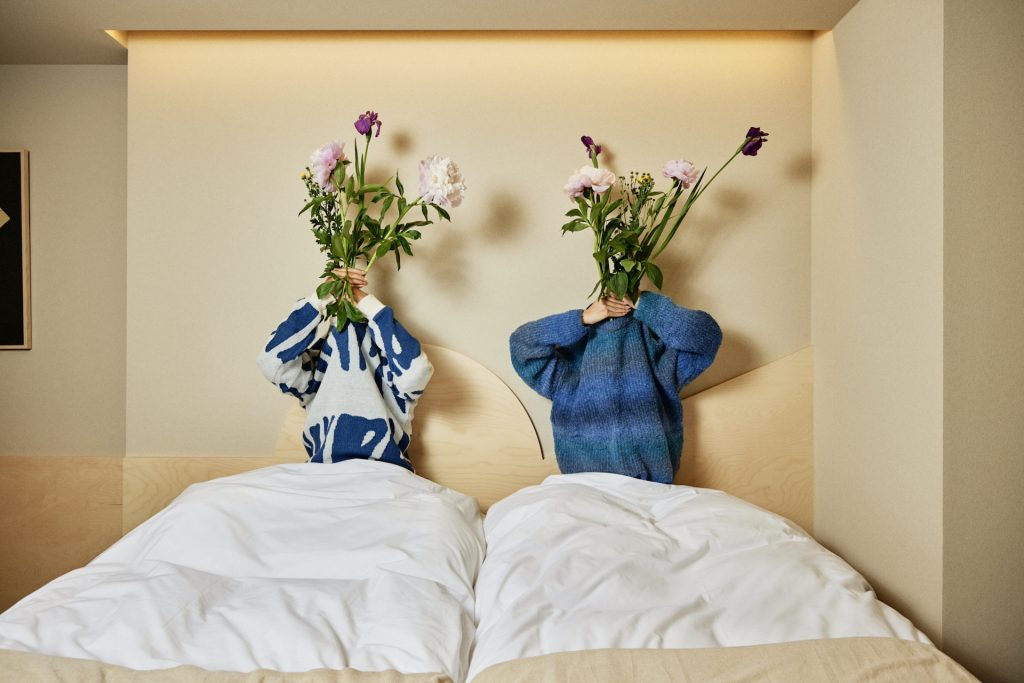
Using tech to deliver on the InterSection
Saying it is one thing, executing it is another and Ho said technology played a key part in delivering on the experience.
The first software module it developed was the check-in app, allowing for contactless self check-in during a time when it was needed the most – Covid. “These days, more than 50% of our guests use our online pre-check-in option so that when they arrive at property, it takes them less than 45 seconds to get their room number and door code,” said Ho.
“Our second module was built on top of our (third-party) PMS, to help us better visualize guest data and perform various back-office functions.
“Our third module was InterSection, which allows customers to communicate with the front desk, with each other (via group chat), reference house rules, see neighbourhood events and destinations. InterSection will be central to the hotels without strangers vision.
“The long-term focus of our digital experience will be to guide our guests toward each other, creating opportunities for shared experiences, trip recommendations, neighborhood exploration, etc. Basically, a social network within our hotels where customers can easily contribute to each other’s trips, and harvest the deep crowd intelligence of fellow travellers.”
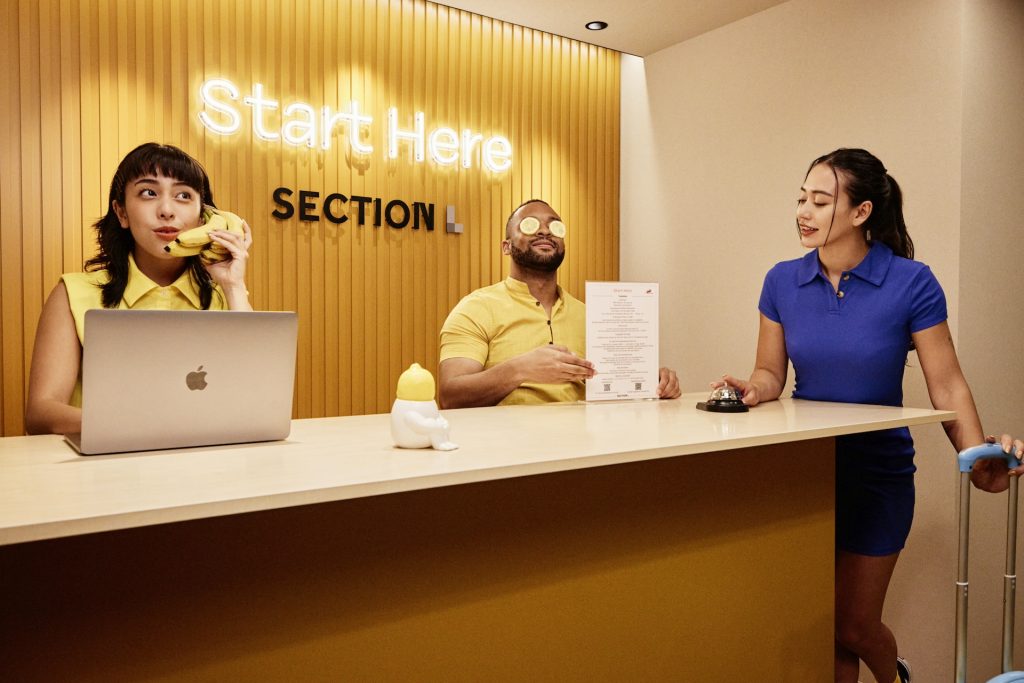
“We are working hard to become an employer of choice for talented foreigners in Japan. So far, across 70 team members there are 27 different nationalities represented.”
Role model of what openness looks like, a different future for Japan Inc
The other pillar needed to deliver on the “hotels without strangers” promise is talent and culture. Ho said it had to provide a role model of what openness looked like. “This is where our internal culture comes in. We are working hard to become an employer of choice for talented foreigners in Japan. So far, across 70 team members there are 27 different nationalities represented.
“To provide an inclusive and engaging environment for our colleagues, my leadership team and I place a lot of emphasis on listening well and acting on constructive feedback. We welcome opinions in all different directions, and try to facilitate this discourse by keeping a flat organisational structure where everyone is encouraged to reach out to me directly to catch up, talk about their work experience, give feedback.
“I think the future Japan Inc looks very different. It will consist of a much higher percentage of foreign talent. To retain a diverse and talented workforce, we will continue to listen and improve the way we work with each other.”
“When I look at the evolution of more prominent hotel groups, from legacy brands to relative newcomers, there is usually a real estate ownership component that has allowed these groups to thrive long-term.”
A rocky start, but belief in the future has paid off
Launching a hotel company in early 2020 though was not the best of timing. Said Ho, “The pandemic was the hallmark of our origin story. The day after we signed incorporation documents for Section L, schools closed in Japan. But to be honest, the early years were easy. We knew there’s a limit to what we can do. Investors were avoiding hotels, the world was suffering, in-person events were non-existent. We just had to do our part, try to fill rooms, build a good team, and prove that apartment hotels were a good business model for Japan.”
His past experience also helped. Early on, he had seen how travel was a highly-cyclical industry. “Less than a month into my freshmen year, 9/11 happened and the industry went to pieces. I saw how the graduating seniors had a really tough time seeking employment. Three years after graduation, the Global Financial Crisis happened, markets tanked, and I was put on unpaid leave.
“The pain was real each time, but each time our sector bounced back better than ever. It showed the undeniable importance of travel in everyone’s lives. I think my early experiences taught me to be patient for and confident in the sector’s inevitable recovery.”
Today, 90% of his customers are inbound travellers, with the major markets being USA, China and South Korea. It is averaging around 80% occupancy across all properties. “Guests love staying with us (high reviews on OTAs and NPS of more than 70),” he said.
Future growth, real estate and AI’s impact on jobs
So far, it’s grown via management contracts but Ho said a more balanced approach is now needed “where we can not only secure long-term management rights but also realise the upside generated by our operations. This means more exposure to real estate via master leasing and investment. We’ve already starting co-investing alongside certain owners, and are looking to form partnerships with asset managers to raise funds for future projects.
“When I look at the evolution of more prominent hotel groups, from legacy brands to relative newcomers, there is usually a real estate ownership component that has allowed these groups to thrive long-term.”
And the biggest challenge facing a young hotelier like him? “It always comes back to talent! I think a lot about how to optimize the triangle of Compensation, Culture and Vision – the necessary elements for recruitment and retention. For compensation, we’re a young company so at this stage we can only hope to match the market and offer long-term incentives like stock options.
“For culture, I think we’re doing a decent job. It helps to have a team with close to 30 different nationalities – it keeps things fresh and it keeps us on our toes as managers, because it becomes ever more important to take in feedback and opinions.“Vision is a challenge. It took me some time to finally condense our community-building philosophy into hotels without strangers. Now, we just need to repeat, repeat, repeat and make sure our people know exactly how that translates into each of their roles. We’re working on this – and on communicating better in general.
“It’s not always fun and games at a young company like ours, but I can truthfully say that we have team members who truly love Section L, who love working with each other. Alignment is tough, but overall I’m optimistic.”
And despite his belief in technology, Ho does not believe AI will replace jobs. “Guest-facing roles in hospitality will always require humans to a large degree. The human brain is the only organ that is open-loop, and it thrives on interaction with other humans. No guest experience can be complete without it. Back-office functions, however, should be powered by AI. I dream of the day when we can conduct full feasibility studies by speaking parameters and assumptions into a mic, and let Microsoft Copilot do the rest.
“I’m a novice on AI, to be honest.”